
DMV Practice Lab · Study & practice
No Turn on Red Sign
A NO TURN ON RED sign prohibits the indicated turn while the traffic signal is red. Stopping first does not cancel that restriction. Wait for a signal that permits the movement, then check the crossing and yield as required before turning. This illustrated guide connects the sign with the decision you need to make, explains a common mix-up and offers a related practice question. Read the sign at the actual location together with any supplemental plaques and lane markings. Local conditions can change the details of the response; a pictured example is a study aid.
Last checked: Nov 11, 2026 · By the DMV Practice Lab team
Meaning
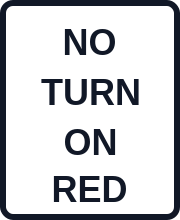
A NO TURN ON RED sign prohibits the indicated turn while the traffic signal is red. Stopping first does not cancel that restriction. Wait for a signal that permits the movement, then check the crossing and yield as required before turning.
Recognition
The sign uses a black word message on a white rectangular background. Read the full assembly for any direction, time, lane or other condition. A red signal and a prohibition sign must be read together rather than treating the sign as a reminder only to stop.
Sources: FHWA: MUTCD sign illustrations and descriptions, Part 2, regulatory or warning signs. Last checked: Nov 11, 2026. Last checked: Nov 11, 2026.
Practice now
No Turn on Red Sign
Practice modeStudy tools & help
Loading tools…
What the driver should do
Approach in the proper lane and stop at the required location. Keep the crosswalk and intersection clear while waiting. When a permitted signal appears, check for pedestrians, cyclists and other traffic before moving; the change of signal does not remove the need for observation.
Read the whole sign assembly
The sign uses a black word message on a white rectangular background. Read the full assembly for any direction, time, lane or other condition. A red signal and a prohibition sign must be read together rather than treating the sign as a reminder only to stop.
Placement, the direction the sign faces and any attached plaque matter. Look for the traffic path or space being controlled before acting. A rule for a neighboring lane or parking space should not automatically be applied to your own. If you cannot read the details in time, maintain control and choose a safe, lawful course.
A mistake to avoid
A common mistake is applying a familiar turn-on-red rule from another intersection. The posted restriction governs the movement it describes. Another mistake is edging forward into the crosswalk while waiting, which can block people even though the vehicle has not completed a turn.
Use the picture to learn a decision
After studying the sign, describe what you would do in your own words before trying the practice question. Identify the feature that separates it from a similar sign: a word message, an arrow, a symbol or the place where it is installed. Knowing the answer position is less useful than recognizing that feature on an unfamiliar road.
Frequently asked questions
What does the no turn on red sign mean?
A NO TURN ON RED sign prohibits the indicated turn while the traffic signal is red. Stopping first does not cancel that restriction. Wait for a signal that permits the movement, then check the crossing and yield as required before turning.
How do I recognize it?
The sign uses a black word message on a white rectangular background. Read the full assembly for any direction, time, lane or other condition. A red signal and a prohibition sign must be read together rather than treating the sign as a reminder only to stop.
What is a common mistake?
A common mistake is applying a familiar turn-on-red rule from another intersection. The posted restriction governs the movement it describes. Another mistake is edging forward into the crosswalk while waiting, which can block people even though the vehicle has not completed a turn.
Should I read the additional plaque?
Yes. Read any lane, time, distance or other condition together with the main sign. Confirm local rules rather than transferring a condition from another location.