Review 1 · Signals and intersections
Your light turns green while a pedestrian is still lawfully crossing your path. What should you do?
Correct answer: Wait and yield to the pedestrian.
A green light does not remove the duty to yield to people already lawfully in the crosswalk.
Source: Arizona Revised Statutes 28-645, A(1)(a). ↗ · Original question review: 2026-09-14
Review 2 · Signals and intersections
In Arizona, what is a solid yellow signal telling you?
Correct answer: Your green interval is finishing and red comes next.
Solid yellow is the warning between green and red. Brake for it when a smooth stop is possible; it is not a cue to hurry through before the red appears.
Source: Arizona Revised Statutes 28-645, A(2)(a). ↗ · Original question review: 2026-09-14
Review 3 · Signals and intersections
No sign prohibits a right turn on red. After stopping, what must you do before turning?
Correct answer: Yield to pedestrians and traffic moving with the signal.
A permitted right turn on red requires a stop and yielding to pedestrians and traffic with the right-of-way.
Source: Arizona Revised Statutes 28-645, A(3)(b). ↗ · Original question review: 2026-09-14
Review 4 · Signals and intersections
You are on a one-way street facing red and want to turn left onto a one-way street carrying traffic left. No sign forbids it. What is permitted?
Correct answer: Stop, yield, then turn left when safe.
Arizona permits this one-way-to-one-way left turn after stopping and yielding, unless a sign prohibits it.
Source: Arizona Revised Statutes 28-645, A(3)(c). ↗ · Original question review: 2026-09-14
Review 5 · Signals and intersections
A NO TURN ON RED sign faces your lane. The cross street looks empty. What should you do?
Correct answer: Wait for a signal that permits your turn.
A posted prohibition removes the usual permission to turn right after stopping at red.
Source: Arizona Revised Statutes 28-645, A(3)(b). ↗ · Original question review: 2026-09-14
Review 6 · Signals and intersections
Every traffic light at the intersection is dark. How should you approach?
Correct answer: Stop completely, then proceed cautiously when safe.
An inoperative Arizona traffic signal requires a complete stop before entering the intersection.
Source: Arizona Revised Statutes 28-645, C. ↗ · Original question review: 2026-09-14
Review 7 · Signals and intersections
Two cars reach a dark-signal intersection from different streets at about the same time. Both stop. Who yields?
Correct answer: The driver with the other car on the right.
When an inoperative signal produces a simultaneous arrival, the driver on the left yields to the driver on the right.
Source: Arizona Revised Statutes 28-645, C. ↗ · Original question review: 2026-09-14
Review 8 · Signals and intersections
You face a flashing red signal. What is required?
Correct answer: Stop and follow the right-of-way rules for a stop sign.
Flashing red requires a complete stop; proceed under the rules that apply after stopping at a stop sign.
Source: Arizona Revised Statutes 28-647, 1. ↗ · Original question review: 2026-09-14
Review 9 · Signals and intersections
What should you do at a flashing yellow signal?
Correct answer: Proceed with caution after checking for hazards.
Flashing yellow permits cautious movement rather than requiring a stop in every situation.
Source: Arizona Revised Statutes 28-647, 2. ↗ · Original question review: 2026-09-14
Review 10 · Signals and intersections
A pedestrian starts across with the walking-person signal. You want to turn across that crosswalk. What must you do?
Correct answer: Yield to the pedestrian.
Drivers must give the right-of-way to pedestrians crossing in the direction of a WALK indication.
Source: Arizona Revised Statutes 28-646, A(1). ↗ · Original question review: 2026-09-14
Review 11 · Signals and intersections
A pedestrian began crossing on WALK, but the hand signal appears before they finish. How should a turning driver respond?
Correct answer: Allow the pedestrian to finish reaching safety.
Someone already crossing on WALK may continue to the sidewalk or safety island when DON'T WALK appears.
Source: Arizona Revised Statutes 28-646, A(2). ↗ · Original question review: 2026-09-14
Review 12 · Signals and intersections
A stop-sign intersection has a crosswalk on your side. Where should you make the required stop?
Correct answer: Before entering that crosswalk.
Stop before entering the near-side crosswalk so it remains available to pedestrians.
Source: Arizona Revised Statutes 28-855, B. ↗ · Original question review: 2026-09-14
Review 13 · Signals and intersections
There is no crosswalk at a stop sign, but a stop line is clearly marked. Where do you stop?
FHWA — Standard Highway Signs / reviewed local presentation Correct answer: At the marked stop line.
Where no crosswalk exists, Arizona's stop-sign rule specifies the clearly marked stop line.
Source: Arizona Revised Statutes 28-855, B. ↗ · Original question review: 2026-09-14
Review 14 · Signals and intersections
A stop-sign intersection has neither a crosswalk nor a stop line. Where should you stop?
Correct answer: Before entering, at the nearest point with a view of approaching traffic.
Without a crosswalk or line, stop before the intersection at the nearest point where approaching traffic can be seen.
Source: Arizona Revised Statutes 28-855, B. ↗ · Original question review: 2026-09-14
Review 15 · Signals and intersections
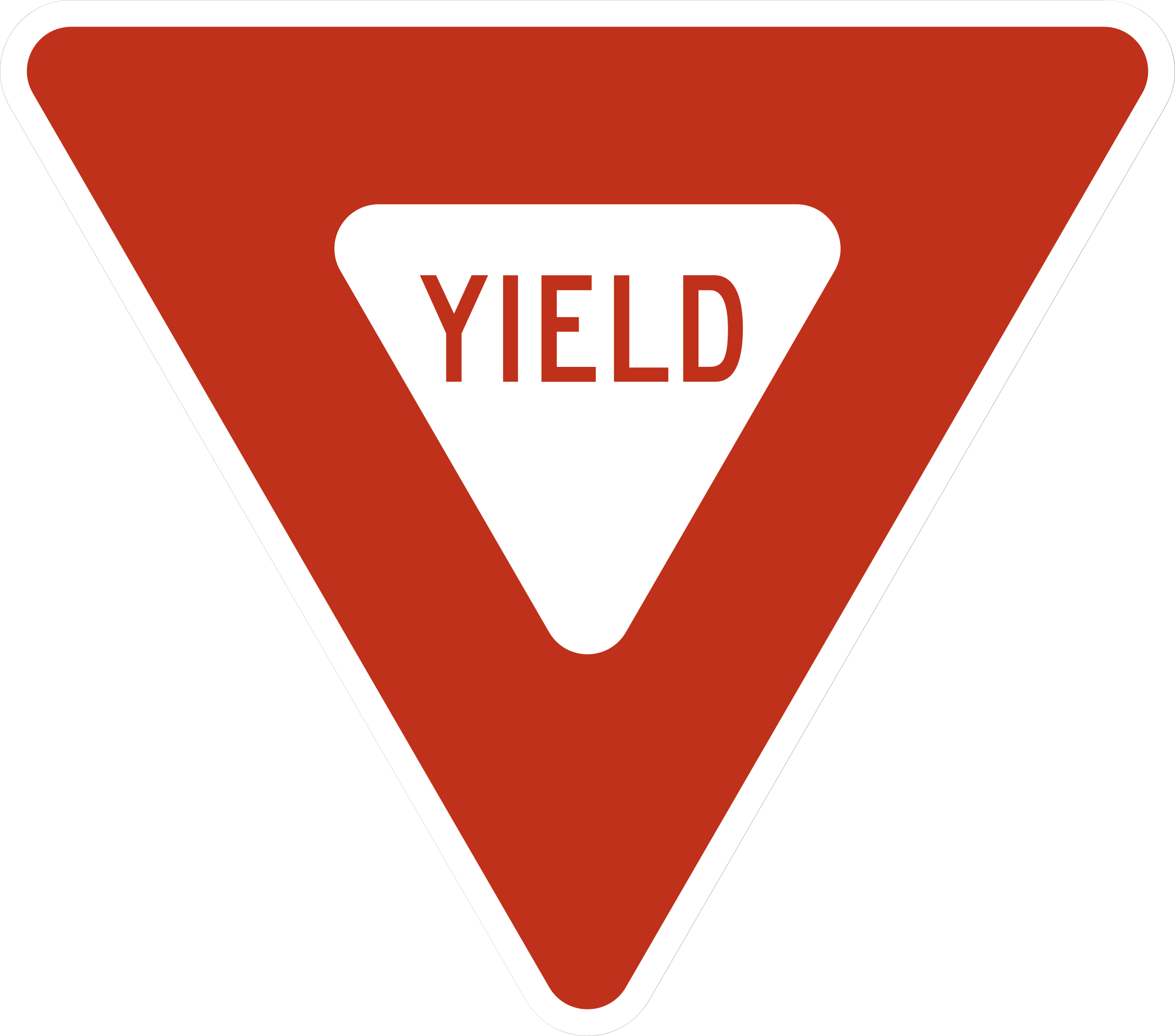
You approach a yield sign and a vehicle is close enough to conflict with your crossing. What should you do?
FHWA — Standard Highway Signs / reviewed local presentation Correct answer: Slow down and yield, stopping if needed.
Yield signs require a reasonable approach speed and yielding to traffic in the intersection or close enough to be a hazard.
Source: Arizona Revised Statutes 28-855, C. ↗ · Original question review: 2026-09-14
Review 16 · Signals and intersections
A green arrow permits your turn, but another vehicle is still lawfully clearing the intersection. What should you do?
Correct answer: Yield and make the indicated turn cautiously.
Even with a green arrow, you must yield to other traffic lawfully using the intersection.
Source: Arizona Revised Statutes 28-645, A(1)(b). ↗ · Original question review: 2026-09-14
Review 17 · Right-of-way and turns
At an uncontrolled four-way intersection, another vehicle arrives from your right at about the same time. What should you do?
Correct answer: Yield to the vehicle on your right.
For simultaneous arrivals at this type of intersection, the driver on the left yields to the driver on the right.
Source: Arizona Revised Statutes 28-771, A. ↗ · Original question review: 2026-09-14
Review 18 · Right-of-way and turns
Your street ends at an uncontrolled T intersection. A vehicle is approaching on the continuing street. Who yields?
Correct answer: You, because your street ends.
The terminating-road driver yields to traffic on the continuing road; the usual left-versus-right rule does not reverse this.
Source: Arizona Revised Statutes 28-771, A. ↗ · Original question review: 2026-09-14
Review 19 · Right-of-way and turns
You are entering a freeway from an acceleration lane as a vehicle on the freeway reaches the merge area. Who must yield?
Correct answer: You, as the entering driver.
Traffic entering from a ramp or acceleration lane yields to traffic on the main freeway roadway.
Source: Arizona Revised Statutes 28-771, C. ↗ · Original question review: 2026-09-14
Review 20 · Right-of-way and turns
You want to turn left across an oncoming car that is close enough to pose an immediate hazard. What is required?
Correct answer: Wait and yield to the oncoming car.
A left-turning driver yields to oncoming vehicles in the intersection or close enough to be an immediate hazard.
Source: Arizona Revised Statutes 28-772, Entire section. ↗ · Original question review: 2026-09-14