A compact Massachusetts reading view of 20 existing sourced practice explanations. Each card keeps the original question, correct answer and explanation together so that a qualified rule is not detached from its scenario.
A short sample of car driving questions. Read the handbook to cover the other topics you need.
Use this as a review aid after reading the handbook. It is not a state exam aid or a complete list of driving laws. Printing may use several pages; the layout does not shrink the text to promise a single sheet.
You can also use your browser’s Print menu. Review the preview for your paper size before saving.
Test-format qualifications
Passenger Class D learner's permit exam: 25 questions. 18 correct are needed to pass, subject to the separate requirements below. Published time limit for this format: 25 minutes.
The online overview specifies automatic failure for exceeding 25 minutes, two minutes of inactivity, or leaving the browser.
Source qualifications for this format
Seven allowed mistakes is derived from the published 18-of-25 requirement. A separate passing percentage is not published in the reviewed source.
The agency overview reports 35 available languages, but an authoritative complete list was not verified; languages remains null.
No published score-based early-stop rule was verified.
Application page facts were accessible in the agency search index; direct retrieval returned 403.
You want to turn right at a red light. There is no NO TURN ON RED sign. What must happen first?
Correct answer: Stop completely and yield to anyone in your path.
A permitted turn on red still requires a complete stop and yielding to pedestrians and vehicles.
Source: Massachusetts Driver's Manual, revised April 2026, p. 81 — Steady Red Circle. · Original question review: 2026-09-14
Review 2 · Signals and intersection signs
In Massachusetts, a steady red arrow points right and no sign prohibits a turn on red. Which rule applies?
Correct answer: The usual stop-and-yield rules for turning on red.
Massachusetts applies its circular-red turning rules to a red arrow in that direction. Other states may use a different rule.
Source: Massachusetts Driver's Manual, revised April 2026, p. 81 — Steady Red Arrow. · Original question review: 2026-09-14
Review 3 · Signals and intersection signs
When may a left turn on red be permitted in Massachusetts, after stopping and yielding?
Correct answer: From a one-way street onto another one-way street, if not prohibited.
The left-on-red permission is limited to one-way to one-way turns, with the same stop, yield and posted-restriction requirements.
Source: Massachusetts Driver's Manual, revised April 2026, p. 81 — Steady Red Circle. · Original question review: 2026-09-14
Review 4 · Signals and intersection signs
A signal is flashing red as you approach an intersection. How should you proceed?
Correct answer: Stop, give the right-of-way and continue when safe.
Treat a flashing red signal as a stop sign. Every approaching driver must make the required stop.
Source: Massachusetts Driver's Manual, revised April 2026, p. 81 — Flashing Red Circle. · Original question review: 2026-09-14
Review 5 · Signals and intersection signs
The light changes to steady yellow while you approach, and you can stop safely. What should you do?
Correct answer: Stop before entering the intersection.
Steady yellow warns that red is next. Stop when it is safe; do not start from a stopped position on yellow.
Source: Massachusetts Driver's Manual, revised April 2026, p. 81 — Steady Yellow Circle. · Original question review: 2026-09-14
Review 6 · Signals and intersection signs
What does a flashing yellow circular signal require?
Correct answer: Proceed cautiously while watching for conflicting traffic.
Flashing yellow is a warning, not a protected movement. Look both ways and proceed with care.
Source: Massachusetts Driver's Manual, revised April 2026, p. 81 — Flashing Yellow Circle. · Original question review: 2026-09-14
Review 7 · Signals and intersection signs
Your left-turn arrow is flashing yellow and an oncoming car is approaching. What should you do?
Correct answer: Yield and wait for a safe gap before turning.
A flashing yellow arrow permits a yielding turn, not a protected turn. Check both oncoming traffic and pedestrians.
Source: Massachusetts Driver's Manual, revised April 2026, p. 81 — Flashing Yellow Arrow. · Original question review: 2026-09-14
Review 8 · Signals and intersection signs
Your light is green, but traffic beyond the intersection leaves no space for your car. What should you do?
Correct answer: Wait outside the intersection until there is room.
Green does not authorize blocking an intersection. Enter only when you can get completely through.
Source: Massachusetts Driver's Manual, revised April 2026, p. 81 — Steady Green Circle. · Original question review: 2026-09-14
Review 9 · Signals and intersection signs
You are turning left on a circular green light without a protected arrow. Who must you yield to?
Correct answer: Oncoming traffic and people crossing your intended path.
A circular green does not give a left-turning driver priority over oncoming traffic, pedestrians or bicycles in the path.
Source: Massachusetts Driver's Manual, revised April 2026, p. 82 — Steady Green Circle. · Original question review: 2026-09-14
Review 10 · Signals and intersection signs
Both upper red lights on a pedestrian hybrid beacon are steady. What must a driver do?
Correct answer: Stop for the pedestrian crossing.
Steady red on this pedestrian beacon requires a stop. Do not confuse it with the later flashing-red phase.
Source: Massachusetts Driver's Manual, revised April 2026, p. 82 — Pedestrian Hybrid Beacon. · Original question review: 2026-09-14
Review 11 · Signals and intersection signs
A pedestrian hybrid beacon has changed to flashing red. What is the correct action?
Correct answer: Stop, then proceed cautiously if the crossing is clear.
In the flashing-red phase, drivers stop and may then proceed carefully when clear. The beacon does not use a conventional green phase.
Source: Massachusetts Driver's Manual, revised April 2026, p. 82 — Pedestrian Hybrid Beacon. · Original question review: 2026-09-14
Review 12 · Signals and intersection signs
Amber lights on a rectangular rapid flashing beacon are flashing for a pedestrian. What should you do?
Correct answer: Stop for the pedestrian at the crossing.
The RMV manual directs drivers to stop for pedestrians when this pedestrian-activated beacon is flashing.
Source: Massachusetts Driver's Manual, revised April 2026, p. 82 — Rectangular Rapid Flashing Beacon. · Original question review: 2026-09-14
Review 13 · Signals and intersection signs
All traffic signal lights at an intersection are dark because of a power failure. How do you treat it?
Correct answer: As a stop sign in every direction, proceeding cautiously.
When signals are blacked out, the manual calls for an all-way-stop approach. Check that other drivers are yielding.
Source: Massachusetts Driver's Manual, revised April 2026, p. 82 — Traffic Signals Not Working. · Original question review: 2026-09-14
Review 14 · Signals and intersection signs
The pedestrian countdown reaches zero while someone is still crossing. What must you do?
Correct answer: Yield to the person already in the crosswalk.
A person already in the crossing keeps the right-of-way when the countdown ends. Do not force the person out of the way.
Source: Massachusetts Driver's Manual, revised April 2026, p. 82 — Pedestrian Signals. · Original question review: 2026-09-14
Review 15 · Signals and intersection signs
A stop sign has a painted stop line before a crosswalk. Where should you make the required stop?
FHWA — Standard Highway Signs / reviewed local presentation
Correct answer: Before the painted stop line.
Stop before a marked stop line or crosswalk, then yield and proceed carefully when safe. Slowing down is insufficient.
Source: Massachusetts Driver's Manual, revised April 2026, p. 86 — Stop and Yield Signs. · Original question review: 2026-09-14
Review 16 · Signals and intersection signs
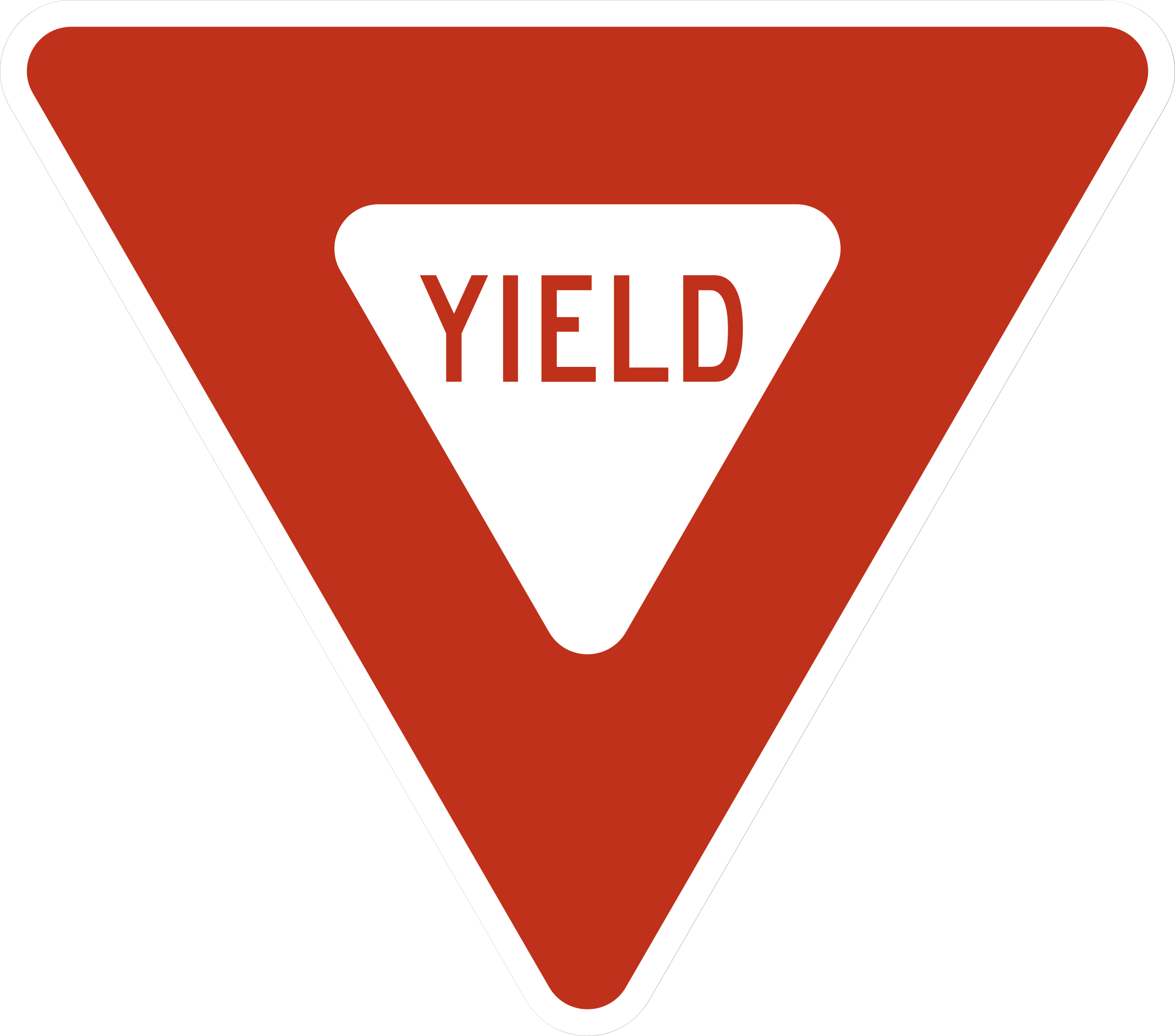
You approach a YIELD sign and traffic prevents a safe entry. What should you do?
FHWA — Standard Highway Signs / reviewed local presentation
Correct answer: Stop and wait until you can give way safely.
A yield sign requires slowing and being prepared to stop. Stop whenever traffic conditions require it.
Source: Massachusetts Driver's Manual, revised April 2026, p. 86 — Stop and Yield Signs. · Original question review: 2026-09-14
Review 17 · Right-of-way, turns and school buses
At an uncontrolled intersection, a vehicle is approaching from your right. What should you do?
Correct answer: Yield to that vehicle and proceed only when clear.
Massachusetts requires yielding to traffic entering or approaching from the right at an uncontrolled intersection.
Source: Massachusetts Driver's Manual, revised April 2026, p. 100 — Intersections Not Controlled by Signs or Signals. · Original question review: 2026-09-14
Review 18 · Right-of-way, turns and school buses
At an all-way stop, another driver made a complete stop before you. Who normally proceeds first?
Correct answer: The driver who stopped first, when it is safe.
Vehicles proceed in the order they stopped. Still check that the intended movement is safe.
Source: Massachusetts Driver's Manual, revised April 2026, p. 100 — Four-Way Stop. · Original question review: 2026-09-14
Review 19 · Right-of-way, turns and school buses
You and a vehicle directly to your right stop at an all-way stop at the same time. What should you do?
Correct answer: Yield to the driver on your right.
For simultaneous stops, yield to the vehicle directly on your right rather than trying to force priority.
Source: Massachusetts Driver's Manual, revised April 2026, p. 100 — Four-Way Stop. · Original question review: 2026-09-14
Review 20 · Right-of-way, turns and school buses
Your car is leaving a private drive to join a public road. What does Massachusetts require?
Correct answer: Stop, then let road traffic, cyclists and people on foot go first.
Coming out of a driveway, you have to stop and give way to everyone using the road or sidewalk, in both directions, before you pull out.
Source: Massachusetts Driver's Manual, revised April 2026, p. 100 — Private Roads, Driveways, and Unpaved Roads. · Original question review: 2026-09-14