Read an existing practice question, consider its choices, then reveal the answer and explanation. This set has 20 sourced cards selected from the existing New Jersey printable sample.
A short sample of car driving questions. Read the handbook to cover the other topics you need.
Use Tab to reach a card’s answer control and Enter or Space to open it, or tap the control. This works without JavaScript. Cards do not record a score, save an attempt or change your quiz progress.
Recall the rule, then check the source
Card 1 · Stop-line position
A red light faces you, with a painted stop line before the crosswalk. Where should your car stop?
Beside the signal pole
Before the stop line
In the crosswalk
At the far edge of the intersection
Show answer for card 1
Correct answer: Before the stop line
The marked stop line identifies the stopping position. Stop behind it and leave the crosswalk clear.
Source: 2026 New Jersey Driver Manual, pp. 67, 217, Intersections; Road Markings / White stop lines. Reviewed 2026-09-12. · Original question review: 2026-09-12
Card 2 · Completely dark traffic signal
All signal lights at an intersection are dark after a power failure, and no officer is directing traffic. How should you treat the intersection?
As a through road
As flashing yellow
As uncontrolled, without a required stop
As a four-way stop
Show answer for card 2
Correct answer: As a four-way stop
The manual directs drivers to treat a completely unlit signal as a four-way stop. Stop, check traffic and proceed only when safe.
Source: 2026 New Jersey Driver Manual, pp. 68, 213, Uncontrolled Intersections; Unlit Signal. Manual cites N.J.S.A.39:4-81; Reviewed 2026-09-12. · Original question review: 2026-09-12
Card 3 · Left turn across oncoming traffic
You have a circular green light and want to turn left. An oncoming car is close enough that your turn would cross its path. What should you do?
Turn first on the green
Turn and expect others to slow
Wait and yield to the oncoming car
Follow the car ahead through without checking again
Show answer for card 3
Correct answer: Wait and yield to the oncoming car
A left-turning driver yields to oncoming traffic. A circular green light is not a protected left-turn arrow.
Source: 2026 New Jersey Driver Manual, pp. 67, 74, 212, Controlled Intersections; left-turn diagram; Green Light. Reviewed 2026-09-12. · Original question review: 2026-09-12
Card 4 · Normal lane on a multilane road
The right lane is open and available. You are not passing, preparing for a left turn, or following a different posted lane assignment. Where should you normally drive?
In the far-left lane
Wherever fewer cars follow
In the center lane regardless of the available right lane
In the lane nearest the right edge
Show answer for card 4
Correct answer: In the lane nearest the right edge
The marked-lane rule normally places a vehicle in the available right-hand lane, subject to the specified exceptions and lane designations.
Source: 2026 New Jersey Driver Manual, p. 65, Keeping to the Right. P.L.2013, c.86 §1, complete R.S.39:4-88(a)–(e), especially (a) and (d); effective 2013-08-07; Reviewed 2026-09-12. · Original question review: 2026-09-12
Card 5 · Cooperating when overtaken
Another car is passing you on the left. Which response helps it finish safely?
Accelerate to hold your place
Hold your lane and ease off your speed
Move toward the center line
Match its speed until it returns behind you
Show answer for card 5
Correct answer: Hold your lane and ease off your speed
Stay in the proper lane and slow to make the pass easier. Resume your normal speed after the passing vehicle is well ahead.
Source: 2026 New Jersey Driver Manual, p. 97, Passed by Another Vehicle. Manual cites N.J.S.A.39:4-87; Reviewed 2026-09-12. · Original question review: 2026-09-12
Card 6 · Railroad lights still flashing
A train has passed and the crossing gate is rising, but the red warning lights still flash. What should you do?
Proceed when the gate clears the car
Remain stopped until all warnings end and it is safe
Follow the first car across
Cross if no train is visible
Show answer for card 6
Correct answer: Remain stopped until all warnings end and it is safe
Do not cross until the gates are raised, bells have stopped and red lights have stopped flashing. Then confirm that crossing is safe.
Source: 2026 New Jersey Driver Manual, pp. 76, 212, Stop at Railroad Crossings; Flashing Red Light. Reviewed 2026-09-12. · Original question review: 2026-09-12
Card 7 · Safe Passing: lower posted limit
A posted 20-mph road leaves no safe lane change or four-foot clearance past a cyclist in a bicycle lane. What should you do?
Slow to 20 mph or less, ready to stop; pass only if safe
Use 25 mph because that replaces any lower limit
Pass at 20 mph even if the cyclist would be endangered
Cross a prohibited line to guarantee four feet
Show answer for card 7
Correct answer: Slow to 20 mph or less, ready to stop; pass only if safe
The fallback is 25 mph or a lower posted speed, with readiness to stop. It never authorizes an unsafe pass or violating a no-passing restriction.
Source: 2026 New Jersey Driver Manual, pp. 146, 150, 151, Safe Passing Law; Bicycles, Skateboards, and Inline Skates. P.L.2024, c.11 §1, C.39:4-92.4(b)(3), within complete §1(a)–(d); effective 2024-05-02; Reviewed 2026-09-12. · Original question review: 2026-09-12
Card 8 · Coolant preparation
Your car needs coolant before cold weather. What should guide the type you use?
Match the color of the coolant already in the tank
The mixture recommended for a neighbor's different car
The specifications in the vehicle owner's manual
Use one universal mixture without checking compatibility
Show answer for card 8
Correct answer: The specifications in the vehicle owner's manual
The cooling system needs sufficient coolant meeting the vehicle manufacturer's specifications; inspect for leaks too.
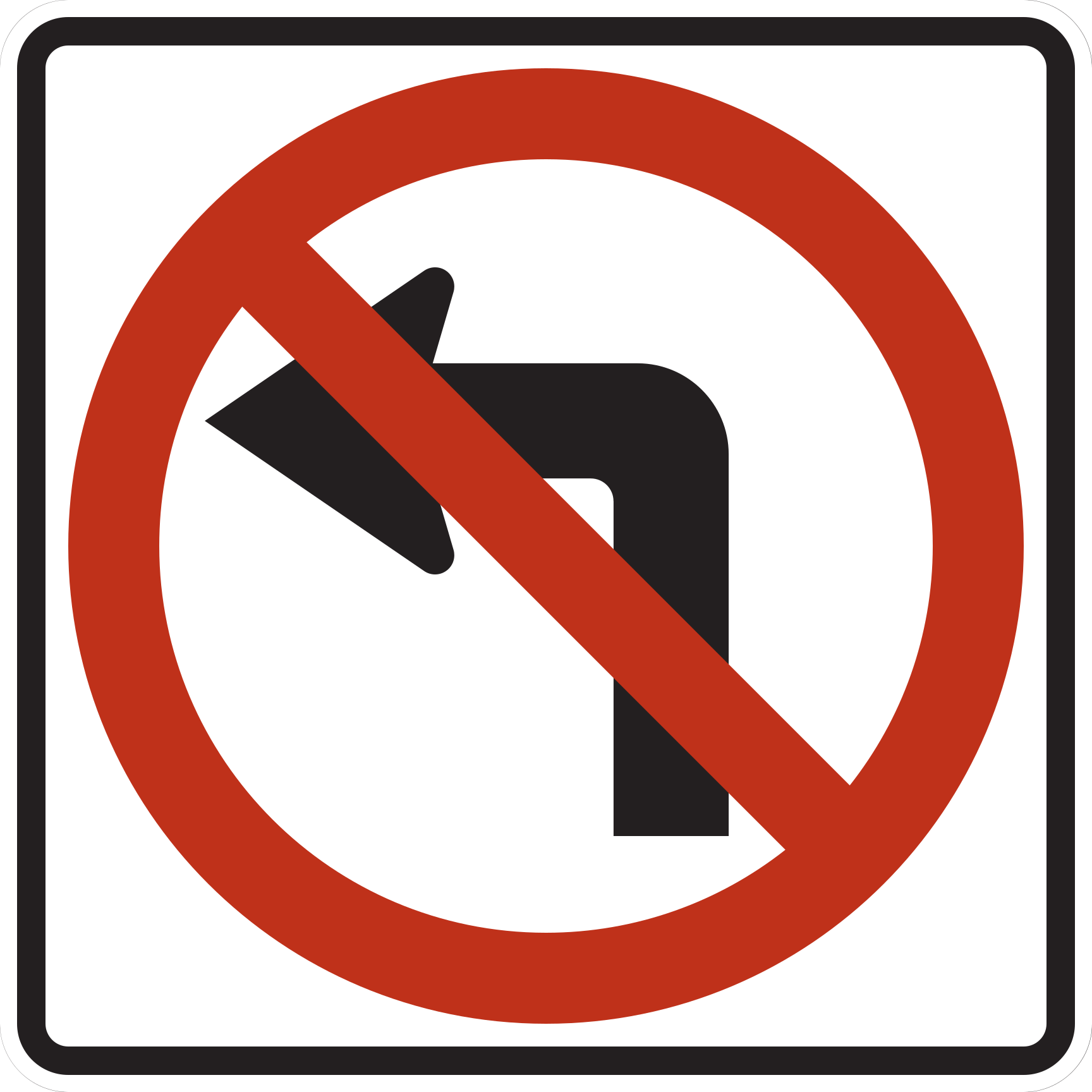
At your approach to a crossroads, this sign has no time or vehicle-exception plaque. Which movement does it prohibit?
FHWA MUTCD / Standard Highway Signs — source and adaptations in /signs/LICENSES.md
Driving straight through the crossroads.
Turning left onto the intersecting road.
Turning right onto the intersecting road.
Changing lanes before reaching the crossroads.
Show answer for card 15
Correct answer: Turning left onto the intersecting road.
The crossed-out left-turn arrow means NO LEFT TURN. The pictured sign prohibits that movement from the approach; no displayed plaque creates an exception for a time or vehicle class.
Source: FHWA MUTCD, 11th Edition with Revision 1 (December 2025), Section 2B.26, paragraphs 01–03, R3-2; p. 89 · Original question review: 2026-09-12
Card 16 · Warning signs
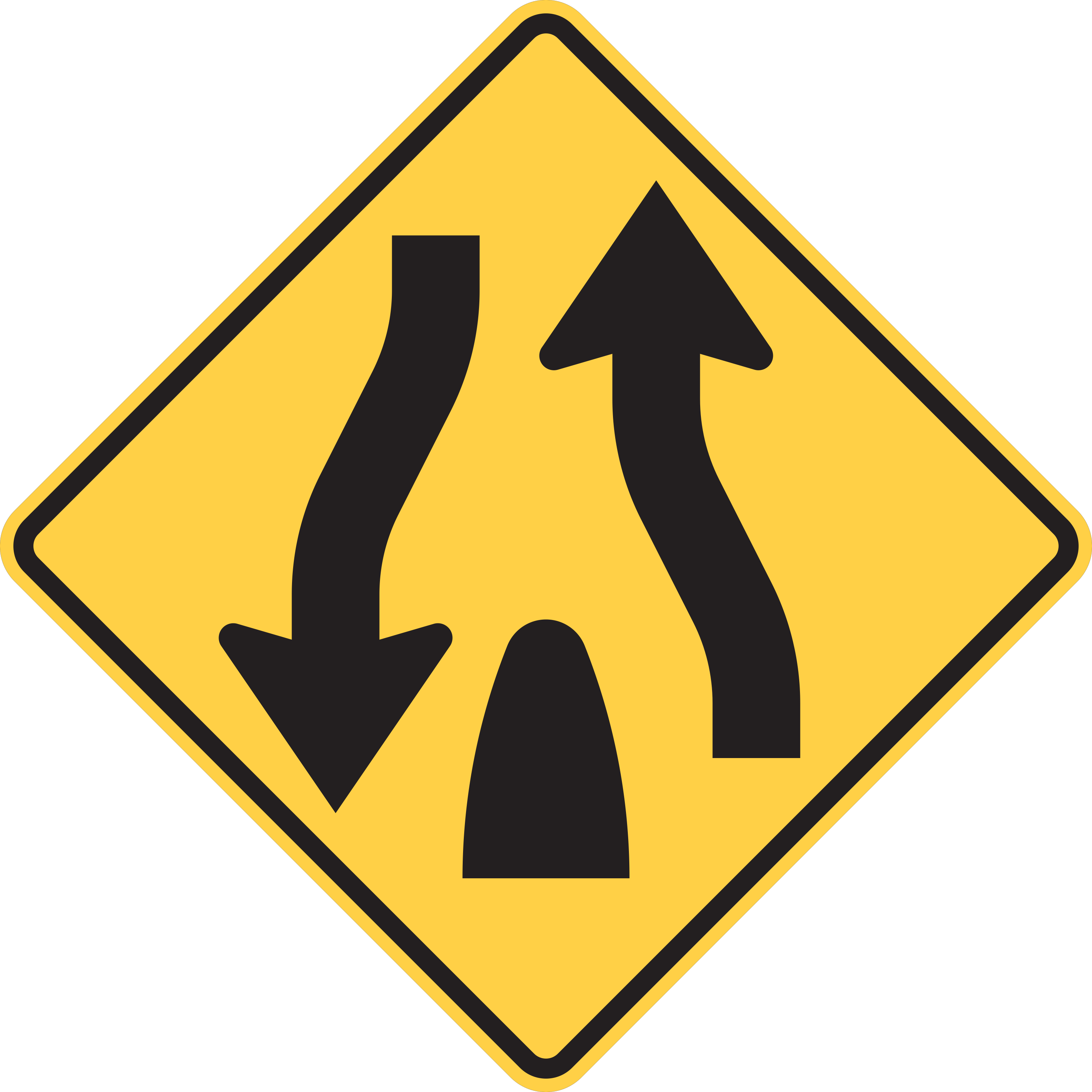
You have been driving beside a median. What change does this sign warn you to expect?
FHWA MUTCD / Standard Highway Signs — source and adaptations in /signs/LICENSES.md
The median widens into a traffic island.
The roadway becomes one-way in your direction.
A new divider begins between the directions.
The physical divider between directions ends.
Show answer for card 16
Correct answer: The physical divider between directions ends.
DIVIDED HIGHWAY ENDS warns that a physically divided section is ending, with two-way traffic ahead. It does not announce that opposing traffic disappears.
Source: FHWA MUTCD, 11th Edition with Revision 1 (December 2025), Section 2C.21, paragraphs 01–02, W6-2; p. 170 · Original question review: 2026-09-12
Card 17 · Warning signs
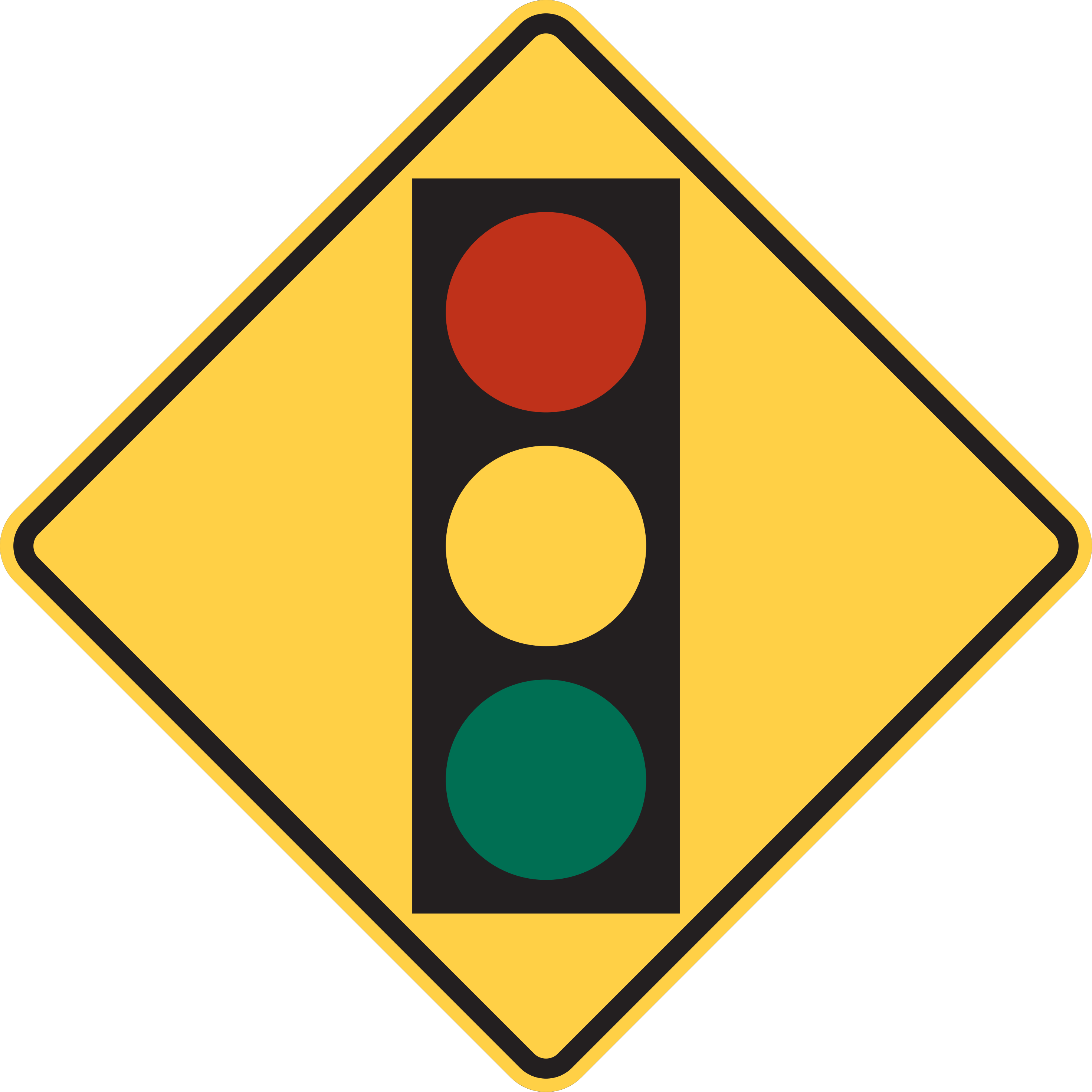
Before a curve, you pass a yellow sign bearing this symbol. What information does it provide?
FHWA MUTCD / Standard Highway Signs — source and adaptations in /signs/LICENSES.md
The next signal currently displays red.
The next signal operates only after dark.
A camera enforces the next red signal.
A traffic control signal is ahead.
Show answer for card 17
Correct answer: A traffic control signal is ahead.
SIGNAL AHEAD gives advance notice of a traffic signal. The three printed colored circles are part of the symbol; they do not report a current signal phase, operating schedule, or camera-enforcement program.
Source: FHWA MUTCD, 11th Edition with Revision 1 (December 2025), Section 2C.35, paragraphs 01–10, W3-3; p. 177 · Original question review: 2026-09-12
Card 18 · Permit validation
A New Jersey special learner has finished the approved course but the permit has not been validated for practice driving. What must happen before family-supervised practice begins?
Begin practice using the course receipt.
Have the permit validated by MVC.
Wait until the first road-test appointment.
Ask the supervising adult to sign the permit instead.
Show answer for card 18
Correct answer: Have the permit validated by MVC.
Course completion must be followed by MVC permit validation before practice driving. The instructor or family member cannot substitute a private signature for that validation.
Source: 2026 Driver Manual, p. 20, opening paragraphs. · Original question review: 2026-09-12
Card 19 · Darkness within the total
A New Jersey learner covered by the 50-hour practice requirement has completed 50 hours, but only six during darkness. What is still needed for the darkness requirement?
Four more hours during darkness.
Two more hours during darkness.
No more hours because the total is 50.
Ten additional hours during darkness.
Show answer for card 19
Correct answer: Four more hours during darkness.
At least 10 of the supervised practice hours must occur during darkness. Six leaves four still required; the requirement does not mean 50 daytime hours plus 10 more in darkness.
An eligible New Jersey driver has completed the probationary year and meets the age and other upgrade requirements. What upgrade method does the current MVC workflow offer?
Wait for an automatic upgrade with no transaction.
Retake the knowledge test instead of requesting an upgrade.
Upgrade the probationary license online.
Have the driving school exchange the license.
Show answer for card 20
Correct answer: Upgrade the probationary license online.
The current first-license workflow links an online basic-license upgrade. Completing the year alone does not perform the transaction. This current procedure differs from the manual's older office-only wording.
These are selected learning examples, not state examination questions or complete handbook coverage. Read the original source when a condition or exception is unclear.