Read an existing practice question, consider its choices, then reveal the answer and explanation. This set has 20 sourced cards selected from the existing North Carolina printable sample.
A short sample of car driving questions. Read the handbook to cover the other topics you need.
Use Tab to reach a card’s answer control and Enter or Space to open it, or tap the control. This works without JavaScript. Cards do not record a score, save an attempt or change your quiz progress.
Recall the rule, then check the source
Card 1 · Safe driving
During a long trip, you keep yawning and cannot recall the last few miles. What should you do?
Leave traffic at a safe stopping place and rest.
Turn up the radio and continue to the destination.
Drive faster to finish before you become more tired.
Follow another car closely to help you stay focused.
Show answer for card 1
Correct answer: Leave traffic at a safe stopping place and rest.
These are warning signs of drowsiness. Stop in a safe place and rest instead of trying to force yourself to continue driving.
Source: North Carolina Driver Handbook, Revised May 2025 (printing 09/25), p. 40: Chapter 4 - Your Driving, Driver Safety - Drowsy Driving · Original question review: 2026-09-13
Card 2 · Seat belts
Your car has front airbags. How does that affect the need to use its seat belts?
The airbags supplement properly worn seat belts.
The airbags replace seat belts for front-seat adults.
Seat belts matter only when an airbag warning is on.
Seat belts are needed only on trips outside town.
Show answer for card 2
Correct answer: The airbags supplement properly worn seat belts.
Airbags are supplemental protection, not substitutes for seat belts. Use the belt correctly even when the airbag system is working.
Source: North Carolina Driver Handbook, Revised May 2025 (printing 09/25), p. 43: Chapter 4 - Your Driving, Protecting Yourself and Your Passengers - Seat Belts · Original question review: 2026-09-13
Card 3 · Slow vehicles
A farm machine ahead looks far away on an open road. Why should you assess the gap early?
You may close the distance quickly because it is moving much more slowly.
Its large size guarantees that it is moving near your speed.
It will necessarily leave the road before you catch it.
A distant vehicle cannot affect your next driving decision.
Show answer for card 3
Correct answer: You may close the distance quickly because it is moving much more slowly.
The difference between road speed and slow farm-equipment speed can make the gap disappear quickly. Notice the situation early and adjust before you reach the machine.
Source: North Carolina Driver Handbook, Revised May 2025 (printing 09/25), p. 52: Chapter 4 - Your Driving, Safe Driving Around Farm Equipment (continued) · Original question review: 2026-09-13
Card 4 · Passing
You are considering a pass on a two-way road, but a hill hides part of the oncoming lane. What should you do?
Begin the pass and decide at the crest whether to continue.
Rely on the absence of visible headlights beyond the hill.
Follow another passing vehicle without checking the road yourself.
Wait until you can confirm enough clear road for the complete pass.
Show answer for card 4
Correct answer: Wait until you can confirm enough clear road for the complete pass.
Do not start a pass unless you can see enough clear roadway to complete it and return safely. Hidden oncoming traffic cannot be ruled out just because you cannot see it.
Source: North Carolina Driver Handbook, Revised May 2025 (printing 09/25), p. 55: Chapter 4 - Your Driving, Passing · Original question review: 2026-09-13
Card 5 · Freeway exits
You pass your intended interstate exit before you can safely leave. What should you do?
Stop on the shoulder and back to the ramp.
Cut across the separation area while the ramp is still visible.
Continue to the next exit and reroute.
Make a turn through the median to approach the exit again.
Show answer for card 5
Correct answer: Continue to the next exit and reroute.
Continue to the next exit. A missed turn is not a reason to back up, cross the separation area or turn around on the interstate.
Source: North Carolina Driver Handbook, Revised May 2025 (printing 09/25), p. 65: Chapter 4 - Your Driving, Entering and Exiting the Interstate · Original question review: 2026-09-13
Card 6 · Railroad emergencies
Your car stalls on railroad tracks and will not move. What is the immediate priority?
Get everyone out and well away from the tracks, then report the emergency from safety.
Keep everyone seated while repeatedly trying the starter.
Walk along the tracks to check whether a train is coming.
Stay beside the car to wave approaching trains to a stop.
Show answer for card 6
Correct answer: Get everyone out and well away from the tracks, then report the emergency from safety.
Evacuate immediately and move everyone away from the vehicle and tracks. From a safe location, report the emergency using the crossing's emergency contact information; do not assume a train can stop for you.
Source: North Carolina Driver Handbook, Revised May 2025 (printing 09/25), p. 62: Chapter 4 - Your Driving, Railroad Crossing Safety - Railroad related emergencies · Original question review: 2026-09-13
Card 7 · Vehicle safety
Which approach gives the proper target for a routine tire-pressure check?
Use the highest pressure molded on the tire sidewall as the target.
Set every car to the pressure used by a neighbor's car.
Lower a warm tire's pressure until it matches an unverified estimate.
Use the vehicle manufacturer's recommended cold pressure when the tires are cool.
Show answer for card 7
Correct answer: Use the vehicle manufacturer's recommended cold pressure when the tires are cool.
Check cool tires against the vehicle manufacturer's recommendation, such as the vehicle label or owner's manual. A tire-sidewall maximum or another car's setting is not the recommended pressure for your car.
Source: North Carolina Driver Handbook, Revised May 2025 (printing 09/25), p. 67: Chapter 4 - Your Driving, Vehicle Equipment - Tires; NHTSA Winter Weather Driving Tips - Tires · Original question review: 2026-09-13
Card 8 · Safe driving
A work zone appears to leave all travel lanes open. Why should you still be especially alert?
Open lanes mean the work cannot affect traffic.
Only machinery standing in your lane needs attention.
Nearby work and unexpected activity can create hazards or distract drivers.
Maintaining the usual speed removes the need to scan the work area.
Show answer for card 8
Correct answer: Nearby work and unexpected activity can create hazards or distract drivers.
A work zone can affect safety even without a closed lane. Watch traffic and the work area for unexpected movement while keeping your attention on driving, rather than watching the work as a spectator.
Source: North Carolina Driver Handbook, Revised May 2025 (printing 09/25), p. 70: Chapter 4 - Your Driving, Hazardous Driving - Work Zones · Original question review: 2026-09-13
Card 9 · Weather
Floodwater covers the road ahead, and you cannot see its surface. What is the safest choice?
Do not enter; find a safe alternative route.
Follow a larger vehicle and use its wake as a guide.
Drive through slowly because low speed proves the water is safe.
Assume familiar pavement remains intact beneath the water.
Show answer for card 9
Correct answer: Do not enter; find a safe alternative route.
Do not drive into a flooded road. Water depth and current can be misleading, and the road beneath may be washed away; familiarity or another vehicle's passage does not make it safe.
Source: North Carolina Driver Handbook, Revised May 2025 (printing 09/25), p. 73: Chapter 4 - Your Driving, Driving in Flood Conditions · Original question review: 2026-09-13
Card 10 · Emergencies
Your disabled car is stopped where passing traffic leaves no safe working space. What should you do about repairs?
Start repairs as long as the hazard lights are flashing.
Ask a passenger to stand in the lane while you work.
Call for assistance instead of attempting repairs in the exposed area.
Work quickly so there is less need to arrange assistance.
Show answer for card 10
Correct answer: Call for assistance instead of attempting repairs in the exposed area.
Do not attempt vehicle repairs where you are exposed to passing traffic. Warning lights do not create protected working space; get appropriate roadside assistance.
Source: North Carolina Driver Handbook, Revised May 2025 (printing 09/25), p. 76: Chapter 4 - Your Driving, Emergencies - Breakdowns · Original question review: 2026-09-13
Card 11 · Circular green signal
Your circular signal turns green, but a pedestrian is still lawfully crossing your path. What does the green permit you to do?
Proceed immediately because the new green clears your path
Move close enough to make the pedestrian hurry
Proceed only after yielding to the pedestrian
Use the horn and continue without waiting
Show answer for card 11
Correct answer: Proceed only after yielding to the pedestrian
Green permits movement with due care; it does not cancel the rights of pedestrians or vehicles already entitled to proceed. Do not treat a green light as a guarantee that the path is clear.
Source: NCDMV Driver Handbook, revised May 2025, printing 09/25, current-linked 108-page PDF metadata modified September 10, 2026; Chapter 5 Signals, Signs and Pavement Markings; p. 80; Traffic Signals - circular green. Current corroboration read September 13, 2026: G.S. 20-158(b)(2a), green-light paragraph; full section and exceptions read. · Original question review: 2026-09-13
Card 12 · Flashing yellow turn arrow
A flashing yellow left arrow is displayed while oncoming vehicles continue through the intersection. How should you decide when to turn?
Yield and turn only when the conflicting path is clear
Turn immediately because the arrow stops oncoming traffic
Wait for oncoming drivers to wave you across their path
Treat the flashing arrow as an instruction to turn without delay
Show answer for card 12
Correct answer: Yield and turn only when the conflicting path is clear
The flashing yellow arrow permits the indicated turn, but it is not protected from oncoming traffic. Yield to conflicting vehicles and pedestrians before turning.
Source: NCDMV Driver Handbook, revised May 2025, printing 09/25, current-linked 108-page PDF metadata modified September 10, 2026; Chapter 5 Signals, Signs and Pavement Markings; p. 81; Flashing Yellow Arrow Traffic Signal Heads. Current corroboration read September 13, 2026: NCDOT Signal Design FAQ, FYA answer; NCDOT November25,2024 Wilson signal release, safe-gap paragraph. Neither is a new legal timing rule. · Original question review: 2026-09-13
Card 13 · YIELD sign
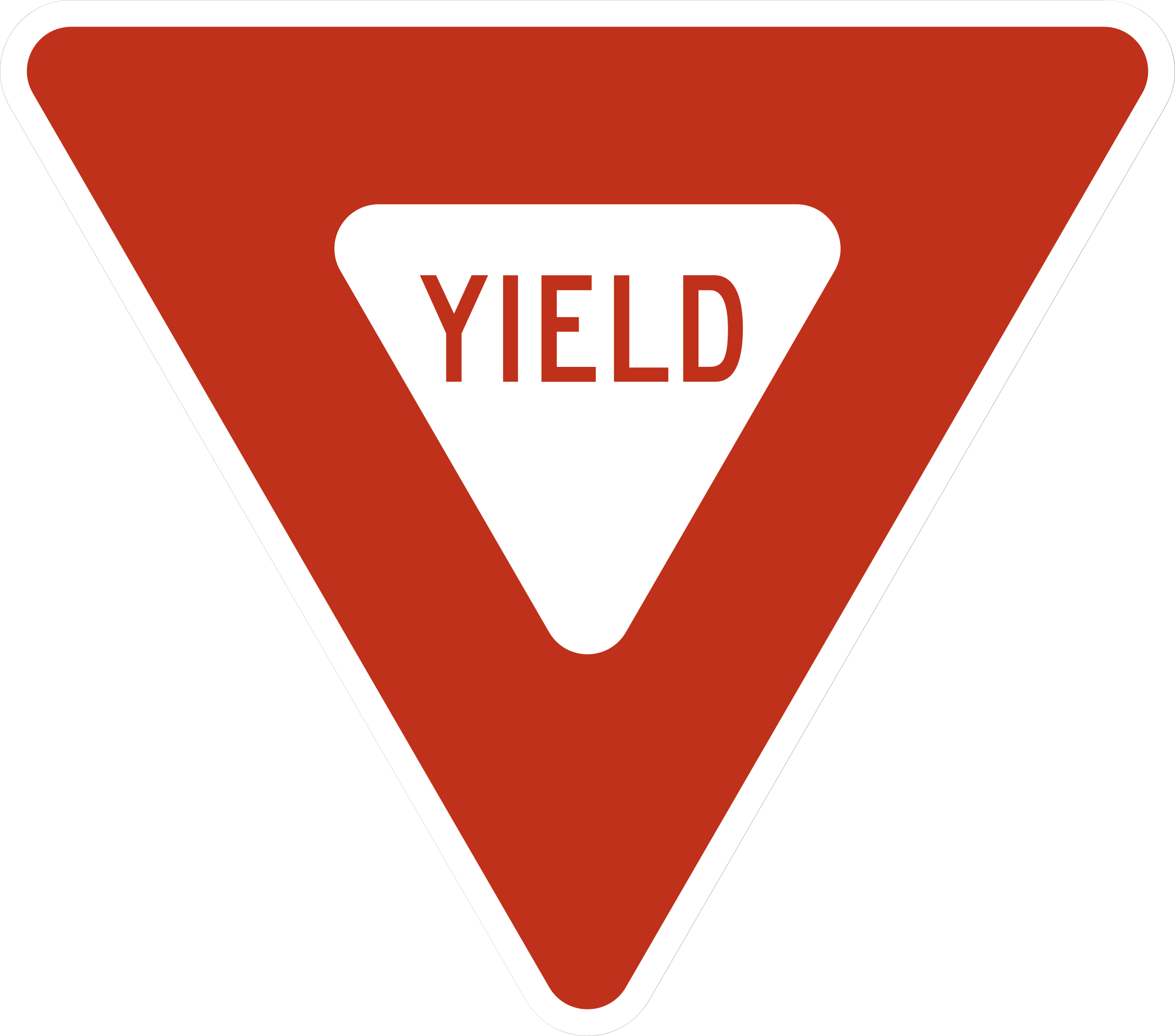
At the pictured sign, entering now would force traffic on the intersecting street to brake. What should you do?
FHWA MUTCD / Standard Highway Signs — source and adaptations in /signs/LICENSES.md
Enter because this sign gives your approach priority
Continue at the same speed and let that traffic adjust
Stop only if another driver sounds a horn
Stop and wait rather than interfere with that traffic
Show answer for card 13
Correct answer: Stop and wait rather than interfere with that traffic
Yield requires slowing and giving way. When entry would interfere with traffic having the right-of-way, stop and wait; a horn is not the trigger.
Source: NCDMV Driver Handbook, revised May 2025, printing 09/25, current-linked 108-page PDF metadata modified September 10, 2026; Chapter 5 Signals, Signs and Pavement Markings; p. 83; Regulatory Signs - YIELD. · Original question review: 2026-09-13
Card 14 · Signal ahead warning
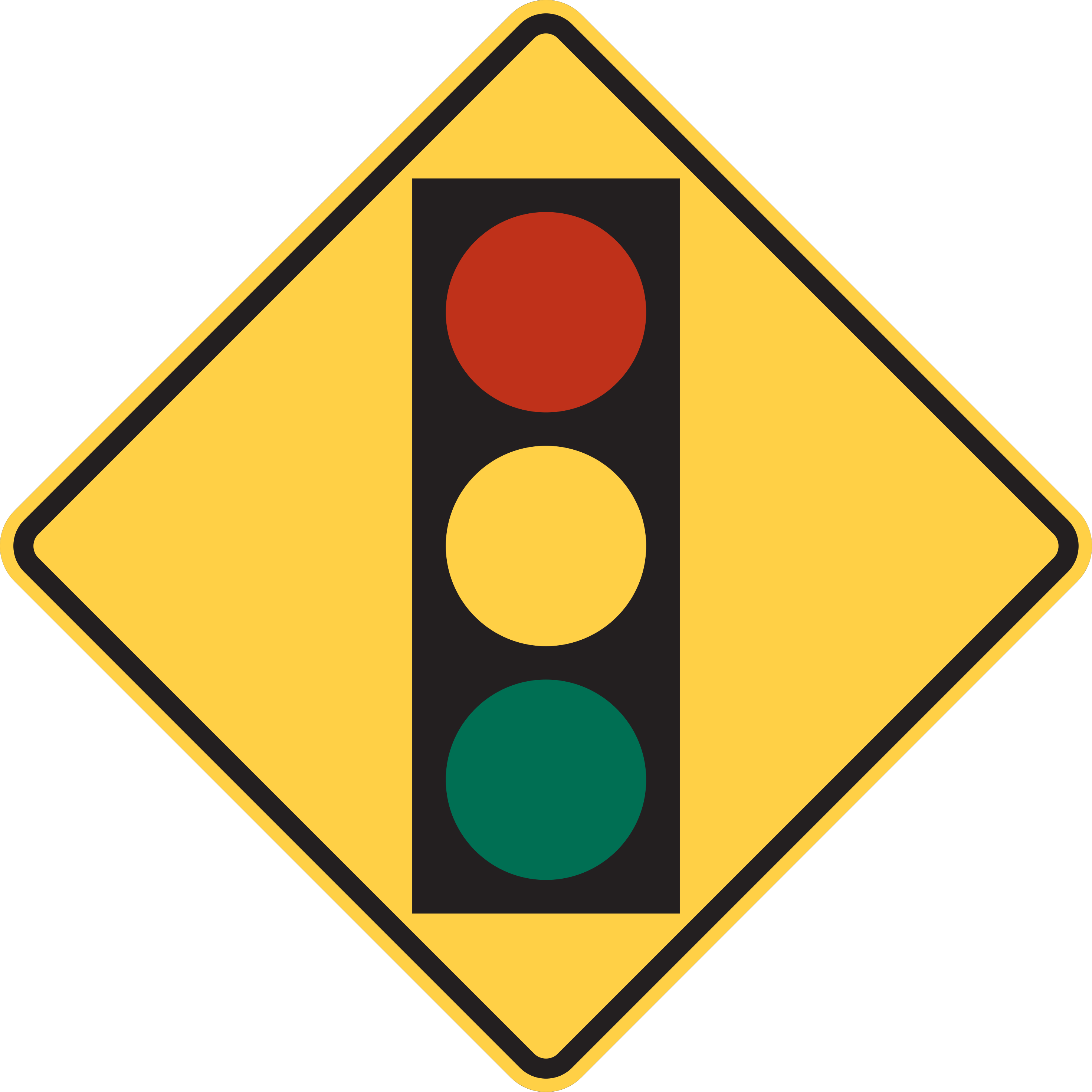
What should you expect beyond this yellow warning sign as you approach the next junction?
FHWA MUTCD / Standard Highway Signs — source and adaptations in /signs/LICENSES.md
A green light that lets you continue without checking
A mandatory stop at the warning sign itself
A traffic signal whose actual indication you must check
A three-lane road with one color assigned to each lane
Show answer for card 14
Correct answer: A traffic signal whose actual indication you must check
The symbol warns that a traffic signal is ahead. The colored circles on a printed sign do not tell you the signal's present display.
Source: NCDMV Driver Handbook, revised May 2025, printing 09/25, current-linked 108-page PDF metadata modified September 10, 2026; Chapter 5 Signals, Signs and Pavement Markings; p. 87; Warning Signs panel - Signal Ahead. · Original question review: 2026-09-13
Card 15 · Hospital service sign
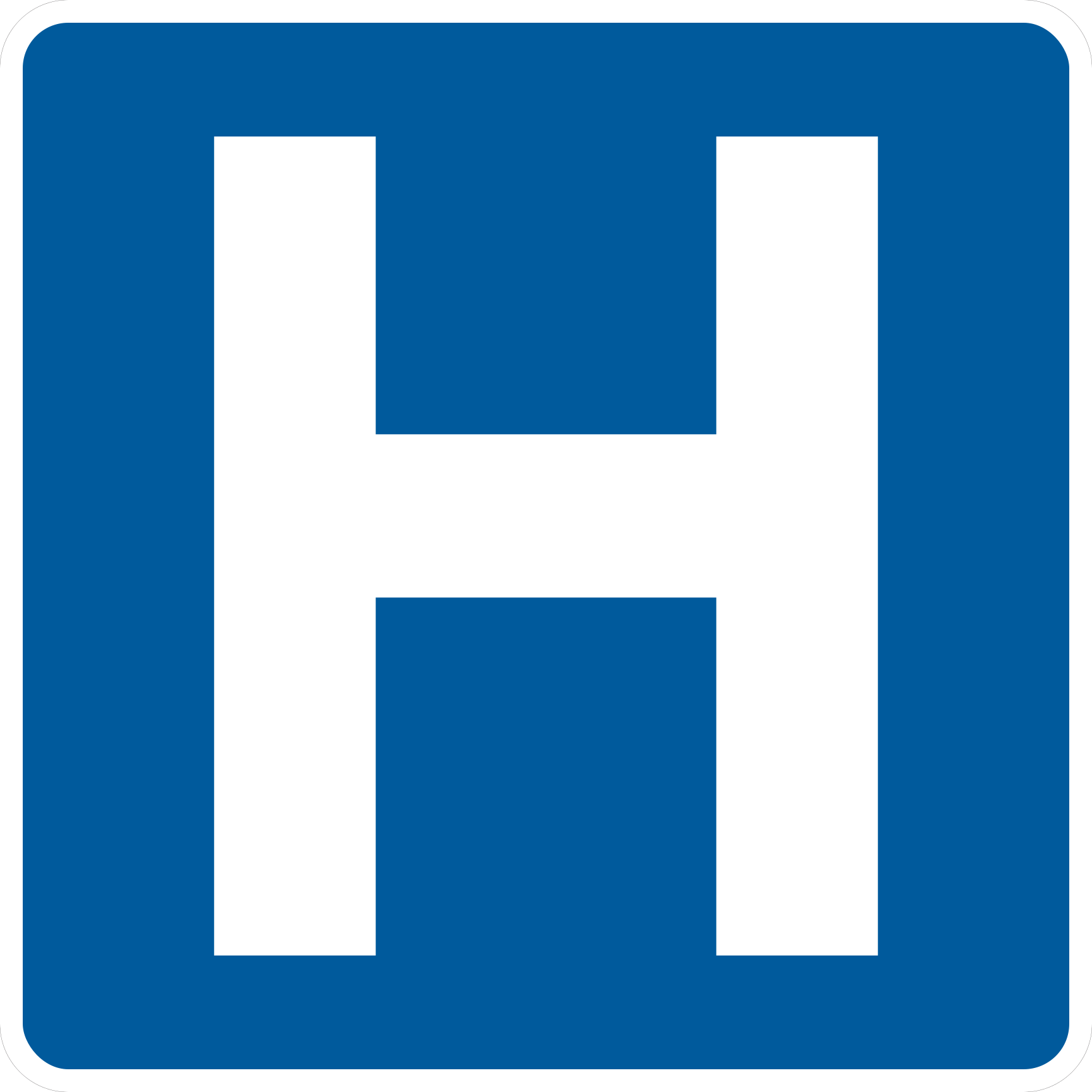
While looking for medical assistance, you see this blue service sign. Which facility does it identify?
FHWA MUTCD / Standard Highway Signs — source and adaptations in /signs/LICENSES.md
A hotel
A highway maintenance depot
A hospital
A public parking garage
Show answer for card 15
Correct answer: A hospital
The white H on a blue background identifies hospital service. It does not identify lodging or promise that every type of treatment is available at every facility.
Source: NCDMV Driver Handbook, revised May 2025, printing 09/25, current-linked 108-page PDF metadata modified September 10, 2026; Chapter 5 Signals, Signs and Pavement Markings; p. 85; Guide/Informational Signs - hospital. · Original question review: 2026-09-13
Card 16 · Distracted driving
You need to enter a complicated destination into your navigation system. What is the safest plan?
Enter one line at a time while the car is moving.
Hold the device beside the windshield while typing.
Enter it while safely parked before driving.
Wait for a straight road so you can type without turning.
Show answer for card 16
Correct answer: Enter it while safely parked before driving.
Programming or reading navigation can take attention away from traffic. Finish the task while safely parked, rather than combining it with driving.
Source: North Carolina Driver Handbook, Revised May 2025 (printing 09/25), p. 41: Chapter 4 - Your Driving, Distracted Driving - Distractions · Original question review: 2026-09-13
Card 17 · Vehicle safety
You are installing a child restraint that is suitable for the child's size. What should you use to check the installation?
Only the restraint instructions, without checking vehicle compatibility.
Only the vehicle manual, without checking the restraint's instructions.
The restraint instructions and the vehicle owner's manual.
The attachment method used for a previous seat, without rechecking.
Show answer for card 17
Correct answer: The restraint instructions and the vehicle owner's manual.
A suitable child restraint must also be installed correctly. Follow both the restraint manufacturer's instructions and the vehicle owner's manual, rather than assuming one installation method fits every vehicle.
Source: North Carolina Driver Handbook, Revised May 2025 (printing 09/25), p. 44: Chapter 4 - Your Driving, Child Safety (continued); NHTSA Car Seats and Booster Seats - Car Seat Overview · Original question review: 2026-09-13
Card 18 · Speed and space
If your reaction time stays the same but you drive faster, what happens before you even begin braking?
The car travels the same distance until braking starts.
The car travels less distance because the engine is faster.
Only braking distance changes; reaction distance does not.
The car travels farther during that reaction time.
Show answer for card 18
Correct answer: The car travels farther during that reaction time.
At a higher speed, the car covers more road during the same time spent recognizing and responding to a hazard. Braking distance also matters, but it does not replace reaction distance.
Source: North Carolina Driver Handbook, Revised May 2025 (printing 09/25), p. 52: Chapter 4 - Your Driving, Basic Driving Skills and Rules - Adjusting Your Speed to Driving Conditions · Original question review: 2026-09-13
Card 19 · Passing
You have nearly overtaken another car on a two-way road. What must your planned return gap allow?
A return as soon as your front bumper is ahead of theirs.
A return without forcing the passed driver to brake to avoid you.
A return that depends on the passed car creating extra space.
A return based only on whether that driver flashes the headlights.
Show answer for card 19
Correct answer: A return without forcing the passed driver to brake to avoid you.
Plan the whole pass, including a safe return to your lane. Do not cut in so closely that the vehicle you passed must brake to avoid a collision.
Source: North Carolina Driver Handbook, Revised May 2025 (printing 09/25), p. 55: Chapter 4 - Your Driving, Passing · Original question review: 2026-09-13
Card 20 · Roundabouts
At a multilane roundabout, when should you choose the lane that the signs and markings indicate for your destination?
After entering, by changing lanes near the desired exit.
Before entering, then follow that lane through the roundabout.
By entering either lane and copying the vehicle ahead.
By always selecting the outside lane regardless of the markings.
Show answer for card 20
Correct answer: Before entering, then follow that lane through the roundabout.
Choose the appropriate lane before entering and follow the signs and markings. Current NCDOT guidance says not to change lanes within the roundabout; a generic outside-lane rule does not replace the actual lane layout.
Source: North Carolina Driver Handbook, Revised May 2025 (printing 09/25), p. 59: Chapter 4 - Your Driving, Roundabouts - Multi-Lane Roundabout; current NCDOT Roundabouts - Multilane Roundabout · Original question review: 2026-09-13
These are selected learning examples, not state examination questions or complete handbook coverage. Read the original source when a condition or exception is unclear.