A compact Texas reading view of 20 existing sourced practice explanations. Each card keeps the original question, correct answer and explanation together so that a qualified rule is not detached from its scenario.
A short sample of car driving questions. Read the handbook to cover the other topics you need.
Use this as a review aid after reading the handbook. It is not a state exam aid or a complete list of driving laws. Printing may use several pages; the layout does not shrink the text to promise a single sheet.
You can also use your browser’s Print menu. Review the preview for your paper size before saving.
Test-format qualifications
Class C: The question count is not confirmed in the reviewed agency sources. Agency passing statement: 70%.
Source qualifications for this format
DPS confirms at least 70% to pass. No exact Class C question count was confirmed. The site's 30-question practice length must not be presented as a verified DPS test length. No current time limit, complete language list or early-stop policy was confirmed.
A 16-year-old with a Texas learner license is practicing. Which arrangement meets the supervision rule?
Correct answer: A licensed adult age 21 or older sits in the front passenger seat
The supervising licensed adult must be at least 21 and beside the learner in the front passenger seat. Following in another vehicle does not meet that requirement.
A 17-year-old provisional driver plans a recreational drive at 1 a.m. Which rule applies?
Correct answer: Driving from midnight to 5 a.m. is restricted, with specified exceptions
Texas uses midnight to 5 a.m. Work, school-related activities and emergencies are exceptions; a recreational trip is not one of those listed exceptions.
Does buying the legally required minimum liability insurance guarantee that every cost of a major crash will be covered?
Correct answer: No; damages can exceed the policy limits
TDI warns that minimum limits may be insufficient for an expensive or multi-vehicle crash. A legal minimum and complete financial protection are different things.
A circular red light is flashing at an intersection. How should you handle it?
Correct answer: Stop, then proceed only when the stop-sign right-of-way rules allow
A flashing red signal requires a complete stop and the yielding rules that apply after a stop sign. It is not an automatic permission to enter after stopping.
Source: §544.008(a) ↗ · Original question review: 2026-09-12
Review 6 · Stopping position
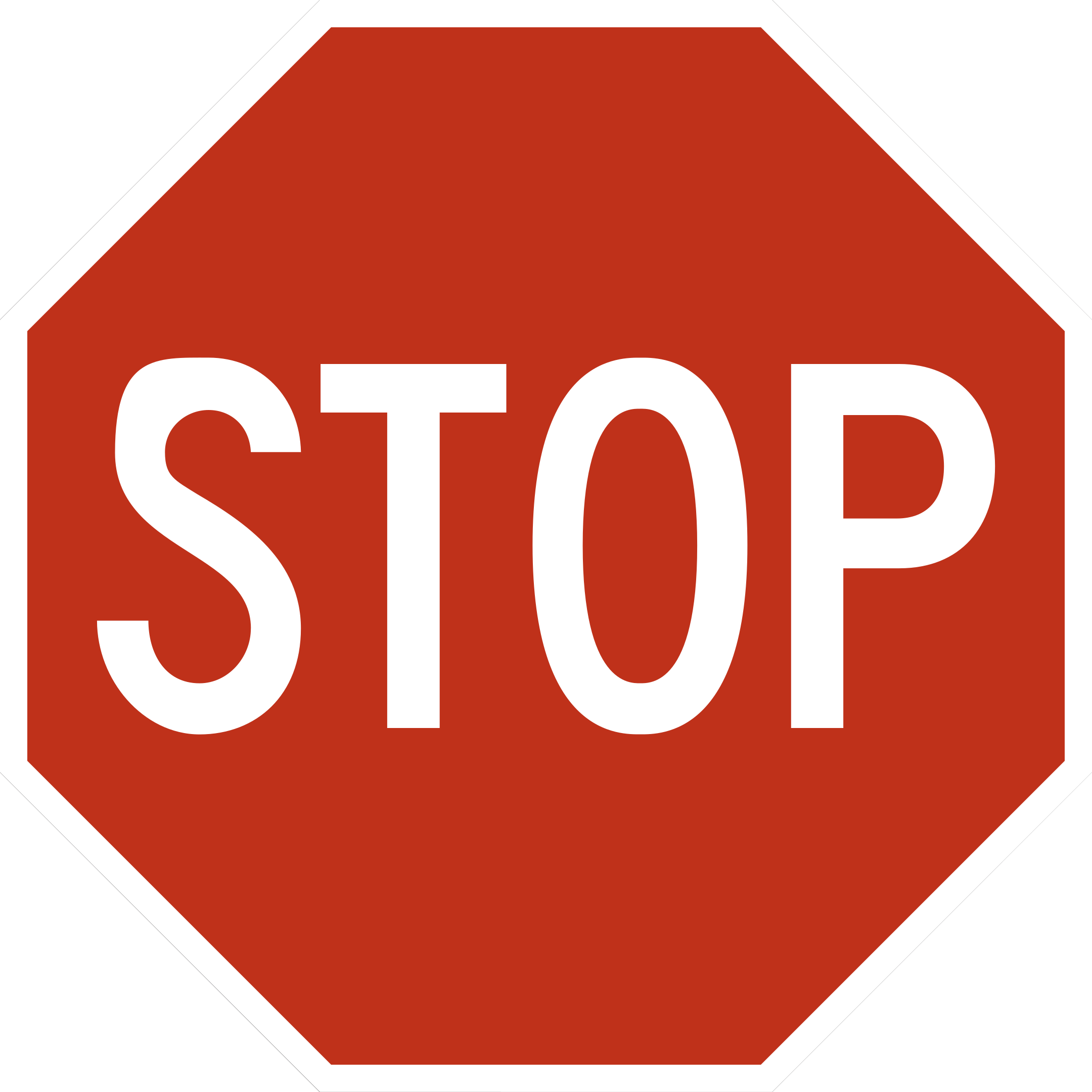
A stop sign has a clearly marked stop line before the crosswalk. Where should your vehicle stop?
FHWA — Standard Highway Signs / reviewed local presentation
Correct answer: At the stop line before crossing it
Use the marked stop line. Without one, stop before the near-side crosswalk; if neither exists, stop at the nearest safe viewing point before the intersecting roadway.
Source: §544.010(c) ↗ · Original question review: 2026-09-12
Review 7 · Railroad parking
You plan to leave your car parked near a railroad crossing, not to load or unload. What is the required minimum distance from the nearest rail?
Correct answer: 50 feet
Ordinary parking within 50 feet of the nearest rail is prohibited. Do not confuse this parking distance with the 15–50-foot stopping range when a train requires you to stop.
On an ordinary one-way street, parallel parking is permitted at either curb. Which direction should your parked car face?
Correct answer: The authorized direction of traffic
The general one-way parking rule requires the vehicle to face the authorized traffic direction and be parallel and within 18 inches of the curb used. Local ordinances can regulate the arrangement.
Source: §545.303(b) ↗ · Original question review: 2026-09-12
Review 9 · Leaving parking
You are ready to pull away from a parking space, but a cyclist is approaching alongside. What must you do?
Correct answer: Wait until moving out can be done safely
A stopped or parked vehicle may not begin moving unless it can do so safely. Check for road users before leaving the space.
Source: §545.402 ↗ · Original question review: 2026-09-12
Review 10 · Low-speed move over
You cannot move over for a covered roadside vehicle, and the posted speed limit is 20 mph. What maximum speed applies?
Correct answer: 5 mph
When the posted limit is below 25 mph, the slow-down alternative is no more than 5 mph. The purpose is to protect people working beside traffic.
You have stopped for a school bus. Which event can permit you to continue, while still checking for children?
Correct answer: The bus driver signals that you may pass
TxDOT lists the bus moving, its flashing lights stopping, or the bus driver signaling permission as release conditions. A driver behind you cannot release the bus stop.
A barrier blocks a flooded roadway, but another vehicle drives around it. What should you do?
Correct answer: Obey the barrier and turn around safely
Never drive around a flood barrier. Another driver’s action and four-wheel drive do not make the crossing safe or lawful.
Source: TxDOT Texas Road Tips 2024 — Violations and Cautions, p. 20–21 (PDF page 13) · Original question review: 2026-09-12
Review 16 · Minor crashes
No one is injured after a crash, and your car can be driven safely out of traffic. What should you do?
Correct answer: Move it out of the traffic flow to a safer place before exchanging information
For this situation, Texas requires moving the drivable vehicle out of the flow of traffic. Moving to safety is not the same as leaving the scene without fulfilling your duties.
Source: TxDOT Texas Road Tips 2024 — Collisions, p. 4–5 (PDF page 5) · Original question review: 2026-09-12
Review 17 · Rear-seat belts
An adult rides in the back seat of a passenger car equipped with seat belts. What should the passenger do?
Correct answer: Wear the seat belt properly
The rear seat is not a general exemption from restraint use. TxDOT instructs adults and children to be properly restrained in every seat.
Source: TxDOT Texas Road Tips 2024 — Safety Seats and Seat Belts, p. 16–17 (PDF page 11) · Original question review: 2026-09-12
Review 18 · One lane bridge
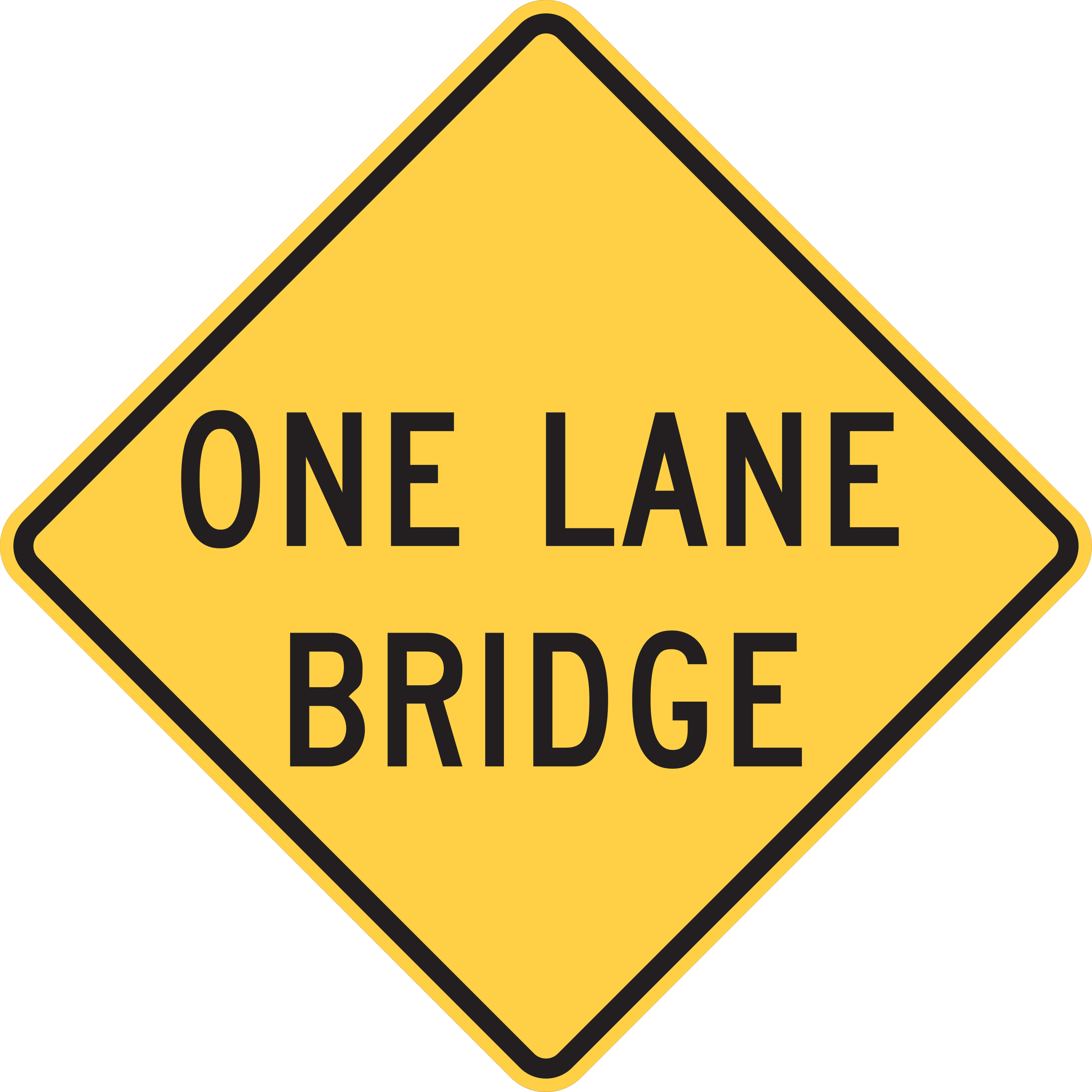
What should you know about the upcoming bridge from this sign?
FHWA MUTCD / Standard Highway Signs — source and adaptations in /signs/LICENSES.md
Correct answer: Only one lane crosses it
The bridge is wide enough for a single lane. Vehicles from either end may use it, so slow down, look for approaching traffic, and be ready to wait. The sign gives neither direction priority.