A compact Virginia reading view of 20 existing sourced practice explanations. Each card keeps the original question, correct answer and explanation together so that a qualified rule is not detached from its scenario.
A short sample of car driving questions. Read the handbook to cover the other topics you need.
Use this as a review aid after reading the handbook. It is not a state exam aid or a complete list of driving laws. Printing may use several pages; the layout does not shrink the text to promise a single sheet.
For normal steering, which grip gives you better control of the wheel?
Correct answer: Hold the rim with your fingers and thumbs.
Use a secure finger-and-thumb grip and a relaxed, upright posture. Pushing with your palms alone is not the grip recommended by the handbook.
Source: Virginia Driver's Manual, DMV 39 (April 27, 2026), p. 14: Section 3 - Safe Driving, Hand Position · Original question review: 2026-09-13
Review 2 · Roundabouts
At a yield-controlled roundabout entrance, a circulating vehicle is approaching your entry path. What is the safe choice?
Correct answer: Wait for a suitable gap without forcing it to brake for you.
Traffic entering a roundabout yields to traffic already circulating. Enter only when the path and gap are safe, also checking for pedestrians and bicyclists.
Source: Virginia Driver's Manual, DMV 39 (April 27, 2026), p. 16: Section 3 - Safe Driving, Roundabouts; continued on p. 17; corroborated by VDOT Roundabout webpage, updated March 27, 2026, What is a roundabout · Original question review: 2026-09-13
Review 3 · Awareness
You signal before a turn, with another driveway between you and your intended turn. What should you remember?
Correct answer: Another driver may misunderstand where you intend to turn.
A turn signal gives direction, not an exact destination. Stay alert for a driver who misunderstands your intention and pulls into your path.
Source: Virginia Driver's Manual, DMV 39 (April 27, 2026), p. 18: Section 3 - Safe Driving, Turn Signals · Original question review: 2026-09-13
Review 4 · Awareness
A quiet rural road has hedges close to the pavement and several farms. What deserves special attention?
Correct answer: Hidden driveways and slow vehicles that may enter ahead.
Rural driving calls for attention to hidden intersections, driveways and slow-moving farm vehicles, along with curves, hills and changing road conditions.
Source: Virginia Driver's Manual, DMV 39 (April 27, 2026), p. 19: Section 3 - Safe Driving, Searching - When driving in rural areas · Original question review: 2026-09-13
Review 5 · Bicycles
Before crossing a shared-use path at a driveway, where should you look for approaching bicyclists?
Correct answer: In both directions along the path.
Bicyclists may approach from either direction on shared-use paths and two-way facilities. Look both ways before crossing their path.
Source: Virginia Driver's Manual, DMV 39 (April 27, 2026), p. 20: Section 3 - Safe Driving, Sharing the Road - Bicycles · Original question review: 2026-09-13
Review 6 · Large vehicles
A truck ahead swings left as it prepares for a right turn. What should you do with the space between it and the curb?
Correct answer: Stay out of it and allow the truck room to complete the turn.
A large vehicle may need a wide approach to a turn. Do not squeeze between it and the curb, where its turn can close the available space.
Source: Virginia Driver's Manual, DMV 39 (April 27, 2026), p. 21: Section 3 - Safe Driving, Sharing the Road - Trucks, Tractor-Trailers, Buses and RVs, Wide Turns · Original question review: 2026-09-13
Review 7 · Night driving
An oncoming driver leaves bright headlights on. What helps you keep a useful view without adding glare for that driver?
Correct answer: Avoid staring into the beams and keep checking your road ahead.
Do not retaliate with high beams or stare into the glare. Briefly use the road side as a reference while continuing to check ahead and the other vehicle's position.
Source: Virginia Driver's Manual, DMV 39 (April 27, 2026), p. 23: Section 3 - Safe Driving, Hazardous Conditions - Night Driving · Original question review: 2026-09-13
Review 8 · Weather
On packed snow, you have ample room for an ordinary planned slowdown before a turn. Which approach is best?
Correct answer: Reduce speed early and use gentle control inputs.
Packed snow can be as slippery as ice. For an ordinary planned maneuver, slow early and brake gently; this is not an emergency-braking instruction for every brake system.
Source: Virginia Driver's Manual, DMV 39 (April 27, 2026), p. 23: Section 3 - Safe Driving, Hazardous Conditions - Snow · Original question review: 2026-09-13
Review 9 · Alcohol and drugs
A new medicine's label mentions dizziness, but you are unsure how that affects driving. What should you do before taking the wheel?
Correct answer: Check the driving warnings and ask a pharmacist or clinician.
Some prescription and nonprescription medicines can impair driving. Follow the warnings and get professional advice if unsure; do not change prescribed treatment on your own.
Source: Virginia Driver's Manual, DMV 39 (April 27, 2026), p. 25: Section 3 - Safe Driving, Dangerous Driving Behaviors - Drunk and Drugged Driving, medication labels; corroborated by FDA Some Medicines and Driving Don't Mix, How to Avoid Impaired Driving · Original question review: 2026-09-13
Review 10 · Vehicle safety
Your car has front and side air bags. How should that affect belt use?
Correct answer: Use the safety belt; air bags supplement its protection.
Air bags are designed to work with safety belts, not replace them. Their presence does not remove the need for proper restraint.
Source: Virginia Driver's Manual, DMV 39 (April 27, 2026), p. 27: Section 4 - Air Bags; corroborated by NHTSA Air Bags, Protection · Original question review: 2026-09-13
Review 11 · Stop sign
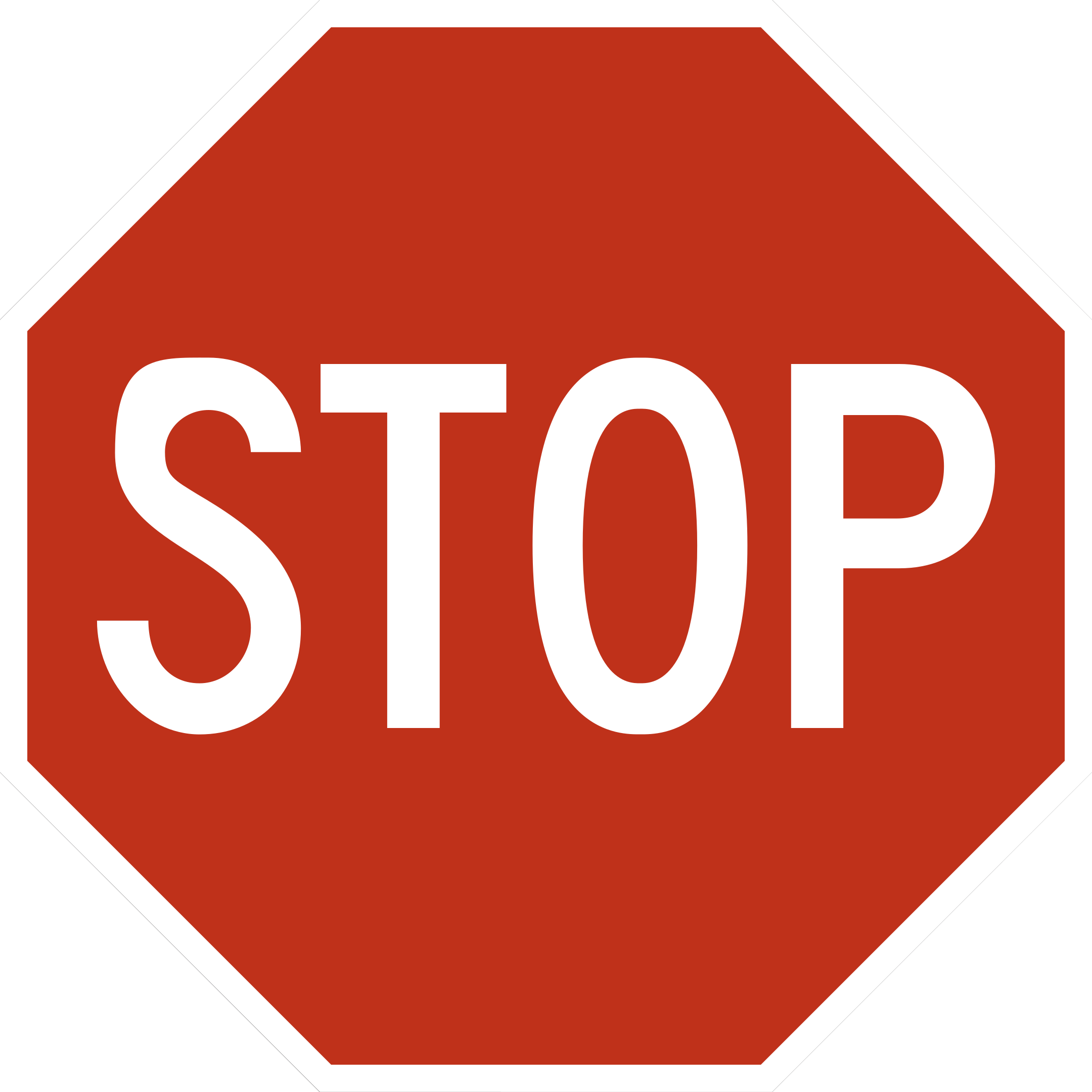
You face this sign at a junction. What instruction does it give before you continue?
FHWA MUTCD / Standard Highway Signs — source and adaptations in /signs/LICENSES.md
Correct answer: Make a complete stop
The red octagon requires a complete stop. It is different from a yield sign, an advance warning of a stop, and a sign prohibiting entry.
Source: Virginia Driver's Manual, DMV39 (April 27, 2026), current-linked 40-page PDF; Section2 Signals, Signs and Pavement Markings, p. 6; Traffic Signs - Sign Shapes: Octagon (Stop). Complete text and diagrams reviewed September13,2026. Road-sign recognition/meaning only; no signal or pavement-marking rule. Illustration: existing FHWA 2009 panel, verified against the Virginia example; design provenance only, not an adoption claim. · Original question review: 2026-09-13
Review 12 · Keep Right sign
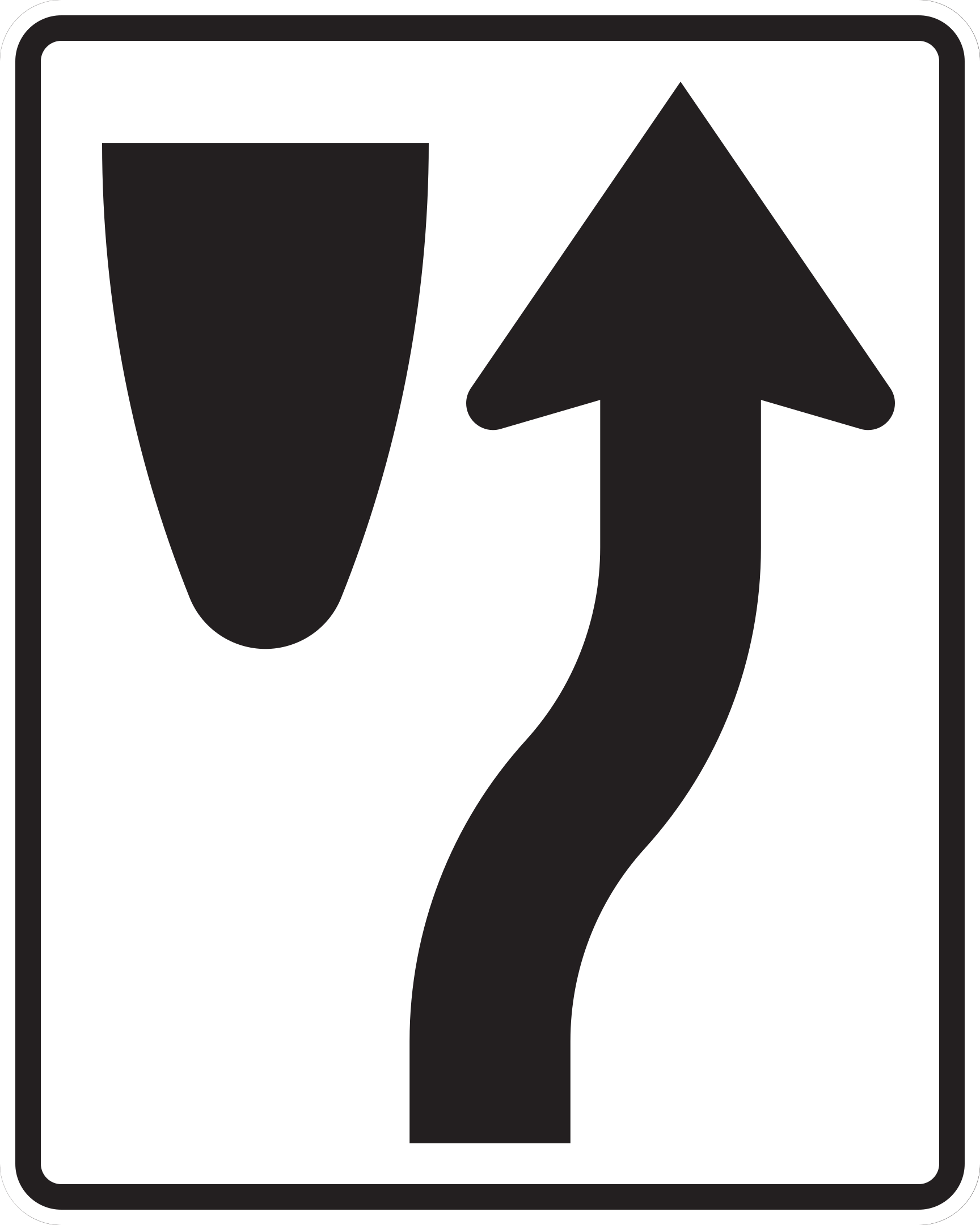
A driver reaches the island marked by this sign. Which side does the sign direct traffic to use?
FHWA MUTCD / Standard Highway Signs — source and adaptations in /signs/LICENSES.md
Correct answer: The right side of the island or obstruction
Keep Right directs traffic past the right side of the island, median or barrier shown by the symbol. It does not direct a turn at another junction.
Source: Virginia Driver's Manual, DMV39 (April 27, 2026), current-linked 40-page PDF; Section2 Signals, Signs and Pavement Markings, p. 7; Regulatory signs: Keep Right. Complete text and diagrams reviewed September13,2026. Road-sign recognition/meaning only; no signal or pavement-marking rule. Illustration: existing FHWA 2009 panel, verified against the Virginia example; design provenance only, not an adoption claim. · Original question review: 2026-09-13
Review 13 · Divided highway ends warning
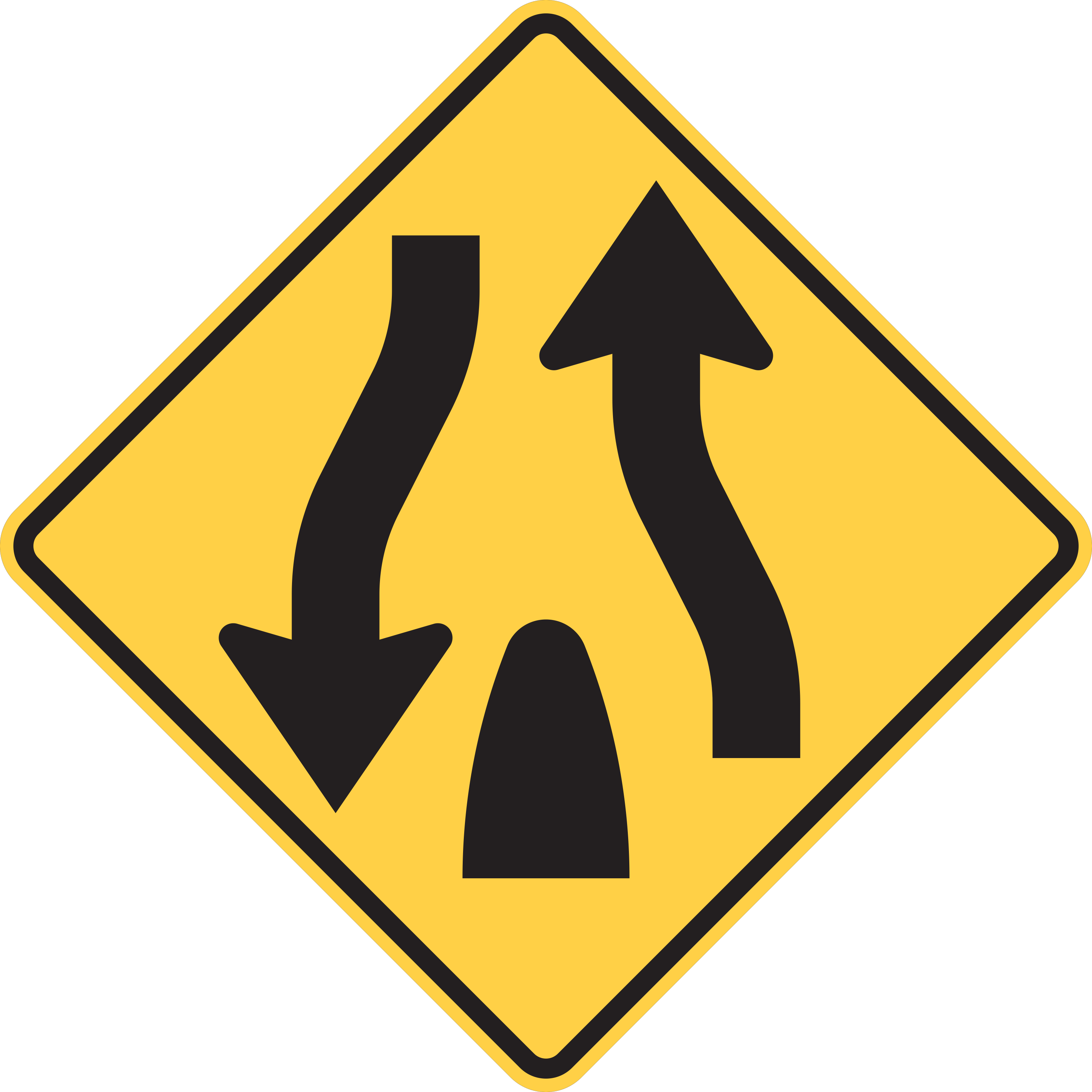
After passing this sign, what kind of road should you be ready for?
FHWA MUTCD / Standard Highway Signs — source and adaptations in /signs/LICENSES.md
Correct answer: Two-way traffic with no median or divider between directions
The symbol shows the divider stopping near the bottom of the sign: the divided highway ends. Ahead, vehicles traveling both ways share one roadway with nothing between them, so keep right and watch for oncoming traffic.
Source: Virginia Driver's Manual, DMV39 (April 27, 2026), current-linked 40-page PDF; Section2 Signals, Signs and Pavement Markings, p. 8; Warning signs: Divided Highway Ends. Complete text and diagrams reviewed September13,2026. Road-sign recognition/meaning only; no signal or pavement-marking rule. Illustration: existing FHWA 2009 panel, verified against the Virginia example; design provenance only, not an adoption claim. · Original question review: 2026-09-13
Review 14 · Yield Ahead warning
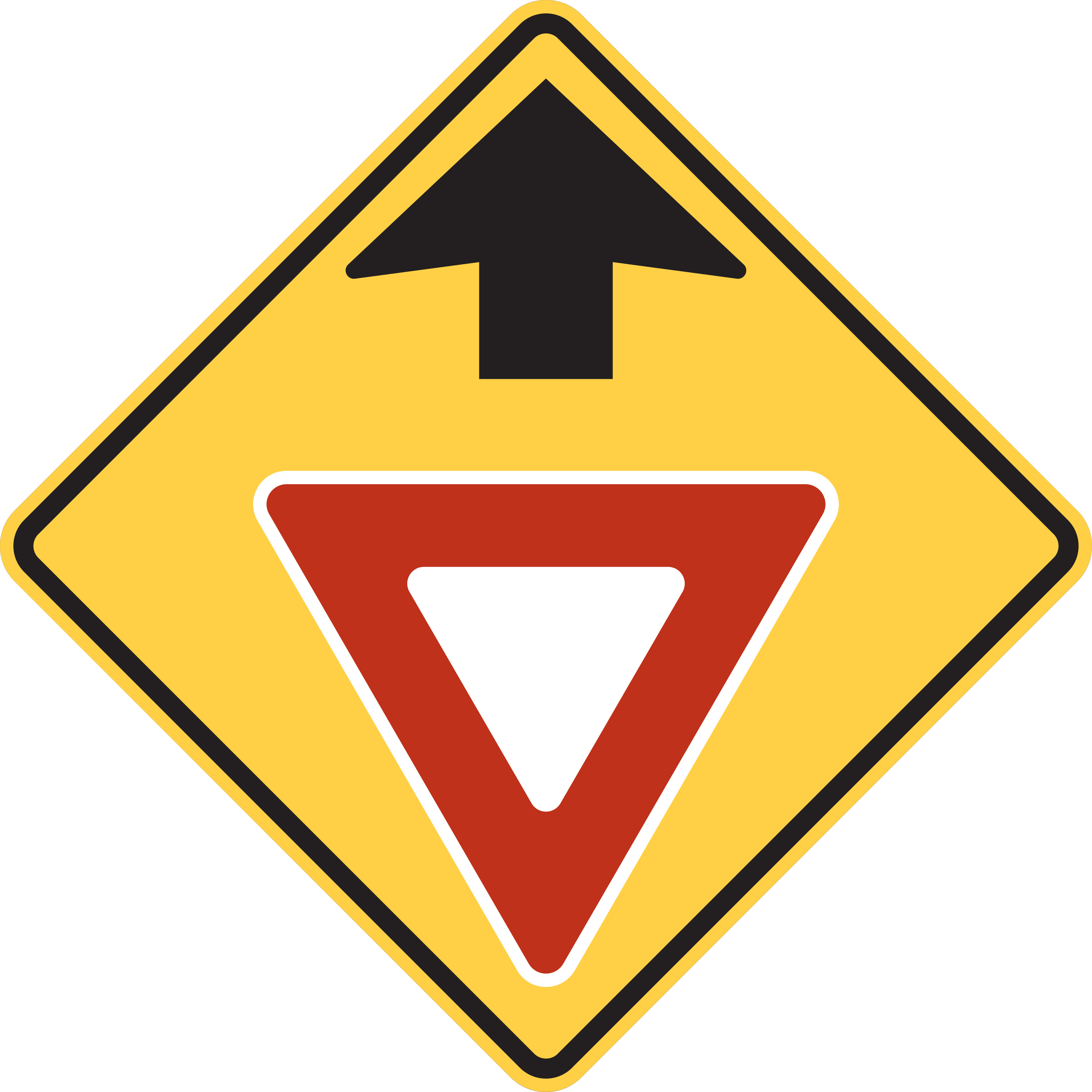
The triangular symbol is inside a yellow diamond below an upward arrow. What control is being announced?
FHWA MUTCD / Standard Highway Signs — source and adaptations in /signs/LICENSES.md
Correct answer: A yield sign farther ahead
The upward arrow over the yield symbol is advance warning of a yield sign. It announces a later control rather than replacing it with a stop or lane-use rule.
Source: Virginia Driver's Manual, DMV39 (April 27, 2026), current-linked 40-page PDF; Section2 Signals, Signs and Pavement Markings, p. 8; Warning signs: Stop Ahead/Yield Ahead. Complete text and diagrams reviewed September13,2026. Road-sign recognition/meaning only; no signal or pavement-marking rule. Illustration: existing FHWA 2009 panel, verified against the Virginia example; design provenance only, not an adoption claim. · Original question review: 2026-09-13
Review 15 · Deer Crossing warning
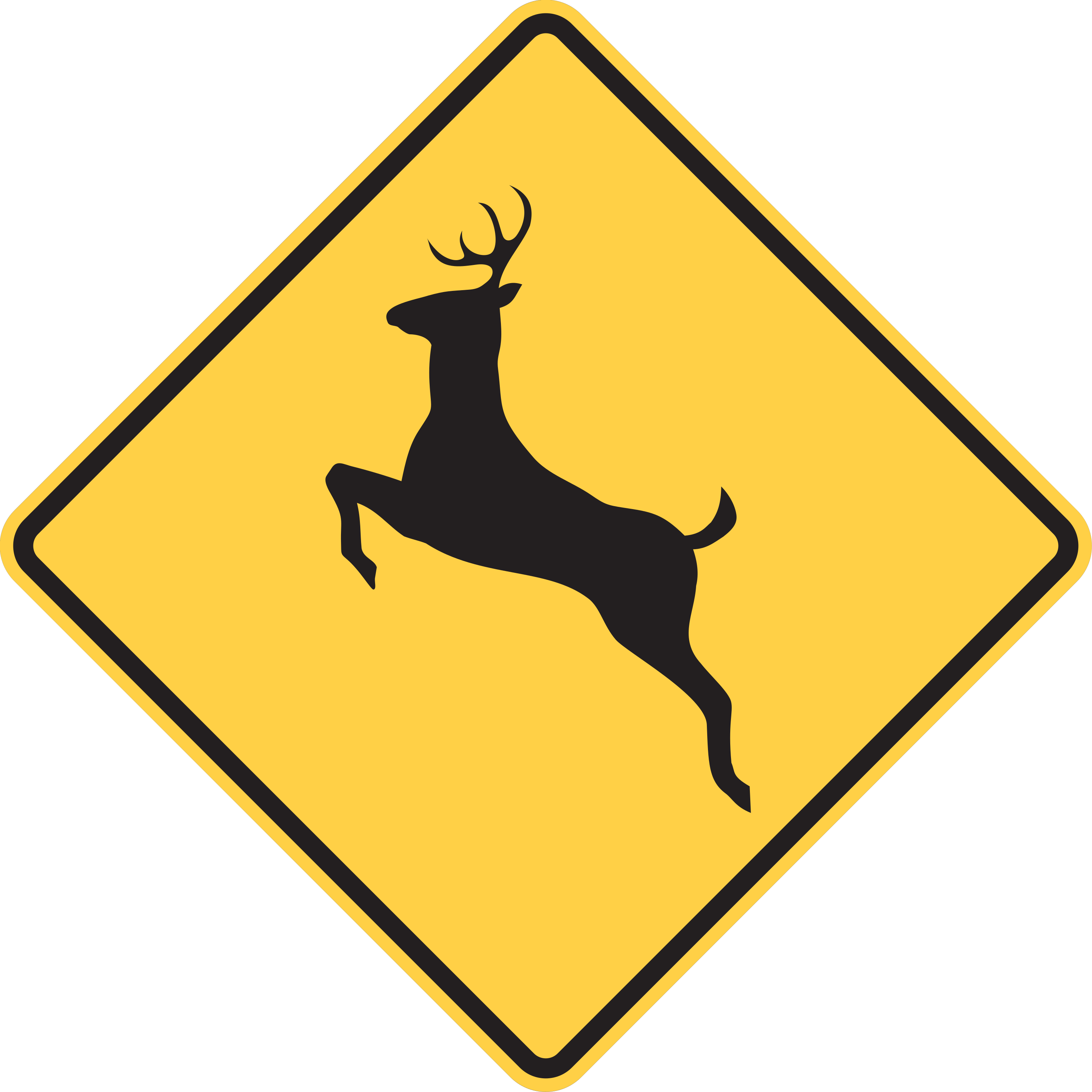
Text-description practice: A yellow diamond contains a leaping deer silhouette. What does it identify?
FHWA — Standard Highway Signs / reviewed local presentation
Correct answer: An area where deer may cross the roadway
The deer silhouette warns of an area where deer cross. Be alert and ready to slow or stop; the sign is not an animal-only route or an unconditional stop control.
Source: Virginia Driver's Manual, DMV39 (April 27, 2026), current-linked 40-page PDF; Section2 Signals, Signs and Pavement Markings, p. 8; Warning signs: Deer Crossing. Complete text and diagrams reviewed September13,2026. Road-sign recognition/meaning only; no signal or pavement-marking rule. · Original question review: 2026-09-13
Review 16 · Speed and space
A road's posted speed felt comfortable earlier, but rain now makes the pavement slippery. What should guide your speed?
Correct answer: The speed that lets you drive safely in the present conditions.
A posted limit does not make that speed safe in poor conditions. Reduce speed when weather or road conditions require it.
Source: Virginia Driver's Manual, DMV 39 (April 27, 2026), p. 14: Section 3 - Safe Driving, Speed Limits · Original question review: 2026-09-13
Review 17 · Lane choice
You are preparing to move into a middle lane. A vehicle on the far side is signaling toward that same gap. What should you do?
Correct answer: Delay the move until you know the gap will remain clear.
A lane-change check must include drivers moving into the same lane from elsewhere. A signal announces intention; it does not reserve the gap.
Source: Virginia Driver's Manual, DMV 39 (April 27, 2026), p. 17: Section 3 - Safe Driving, Changing Lanes · Original question review: 2026-09-13
Review 18 · Following distance
Which observation lets you measure a following gap in seconds?
Correct answer: Time from the lead car passing a fixed landmark until you pass it.
Use the same fixed point for both vehicles and count the elapsed seconds. Then allow the gap needed for speed, road conditions and visibility.
Source: Virginia Driver's Manual, DMV 39 (April 27, 2026), p. 19: Section 3 - Safe Driving, Maintaining a Space Cushion - following-distance method · Original question review: 2026-09-13
Review 19 · Awareness
Before a planned slowdown, why should you know what traffic is doing behind you?
Correct answer: It helps you recognize a close or rapidly approaching follower.
Rearview checks help you understand whether a driver is closing quickly or tailgating. Keep monitoring the road ahead and communicate a planned slowdown.
Source: Virginia Driver's Manual, DMV 39 (April 27, 2026), p. 19: Section 3 - Safe Driving, Searching - Look behind · Original question review: 2026-09-13
Review 20 · Parking
You are ready to open your street-side door after parking. What should come first?
Correct answer: Look for passing vehicles, bicyclists and pedestrians.
Before opening a door, check for road users who could strike it or be forced to swerve. Being parked does not remove that hazard.
Source: Virginia Driver's Manual, DMV 39 (April 27, 2026), p. 22: Section 3 - Safe Driving, Parking - exiting your vehicle · Original question review: 2026-09-13