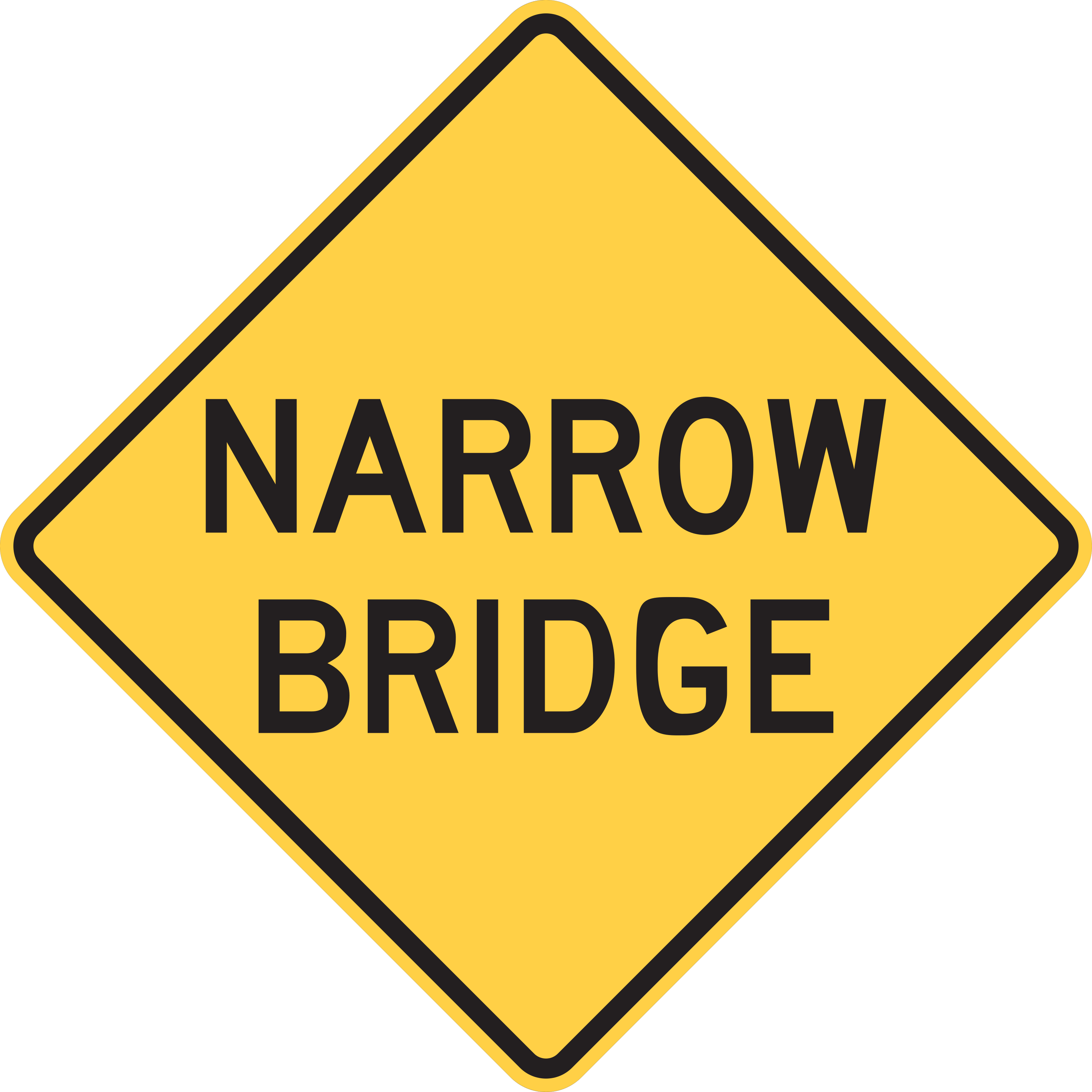
A compact Florida reading view of 20 existing sourced practice explanations. Each card keeps the original question, correct answer and explanation together so that a qualified rule is not detached from its scenario.
A short sample of car driving questions. Read the handbook to cover the other topics you need.
Use this as a review aid after reading the handbook. It is not a state exam aid or a complete list of driving laws. Printing may use several pages; the layout does not shrink the text to promise a single sheet.
You can also use your browser’s Print menu. Review the preview for your paper size before saving.
Test-format qualifications
Class E: 50 questions. 40 correct are needed to pass. Agency passing statement: 80%.
Source qualifications for this format
The county licensing authority confirms 50 questions and 40 correct. Ten errors is derived by subtraction. FLHSMV requires English for all license exams from February 6, 2026. A universal office-test time limit and early-stop policy were not confirmed; online-provider timing must not be generalized.
Your lane and the lane next to you are separated by a dashed white line. When traffic allows, what may you do?
Correct answer: Change lanes after checking traffic and signaling
A dashed white line divides lanes going the same way, and its gaps show that crossing is allowed. Florida still expects a signal, a mirror check and a glance over your shoulder, and a move only once the next lane has room.
Source: Florida Driver License Handbook rev. 08/2023, p. 43: White lane lines · Original question review: 2026-09-12
Review 2 · Wrong-way reflectors
Red reflectors on the edge lines face you as you enter a highway ramp. What should you recognize?
Correct answer: You are entering the ramp in the wrong direction
Red reflectors facing the driver warn of wrong-way travel. Pull over immediately and correct direction when it is safe.
Source: Florida Driver License Handbook rev. 08/2023, p. 69: Wrong-way reflectors · Original question review: 2026-09-12
Review 3 · Drawbridge gates
A drawbridge gate is still rising after an opening. There appears to be room for your car beneath it. What should you do?
Correct answer: Wait until the gate is fully raised and the controls permit travel
Do not drive under or around a drawbridge gate while it is opening or closing. Wait for a permitted, clear crossing.
Source: Florida Driver License Handbook rev. 08/2023, p. 55: Drawbridge gates · Original question review: 2026-09-12
Review 4 · Entering a roundabout
You reach the entrance to a roundabout while a car is circulating toward your entry point. What should you do?
Correct answer: Yield and enter behind it when a safe gap opens
Traffic already circulating has priority. Watch the entry crosswalk as well as the circulating lane.
Source: Florida Driver License Handbook rev. 08/2023, p. 63: Entering a roundabout · Original question review: 2026-09-12
Review 5 · Passing on the right
A car ahead is waiting to turn left, but the only way around it is onto the shoulder outside the main travel lane. May you pass that way?
Correct answer: No; wait for a lawful, safe path within the roadway
Passing on the right must be safe and must not leave the pavement or main-traveled part of the roadway.
Source: Florida Driver License Handbook rev. 08/2023, p. 67: Passing on the right; current F.S. 316.084 (2) also checked · Original question review: 2026-09-12
Review 6 · Learner eligibility
A Florida teenager has completed the required education and exams. What is the youngest age at which a learner's license may be issued?
Correct answer: 15
The minimum learner-license age is 15. Completing a course earlier does not lower the licensing age.
In 2026, a Florida high-school student under 18 is starting the first-time learner-license process. Which education course is the current standard requirement?
Correct answer: The approved six-hour Driver Education Traffic Safety course
Florida's current teen education path uses the approved six-hour DETS course. Applicants should use the current approved-course information when enrolling.
An owner leaves an ordinary Florida-registered passenger car parked for a month. Its registration remains active, and no statutory exemption applies. May the owner let the required insurance lapse just because the car is parked?
Correct answer: No; required security must remain continuous during the registration period
Required security ordinarily remains in effect throughout the registration period. Not driving the registered car does not by itself end that requirement.
A parent drives a three-year-old child in an ordinary passenger car in Florida. Which restraint meets the child's age category in the state law?
Correct answer: A properly used, federally approved separate carrier or integrated child seat
For children through age three, Florida specifies a separate carrier or a vehicle manufacturer's integrated child seat. The restraint must be approved and properly used.
On a highway with two lanes in your direction, a disabled car is stopped on the shoulder with hazard lights flashing. The adjacent lane is clear and you can safely change lanes. What should you do?
Correct answer: Vacate the lane closest to the stopped car
Florida's Move Over Law includes disabled vehicles displaying hazard or warning lights. Where safe, vacate the closest lane on a road with multiple lanes in your direction.
You sit in a different car and cannot comfortably see the mirrors. When should you adjust your seat and mirrors?
Correct answer: Before starting the trip, while the car is safely stationary
Set up your seating position and mirrors before driving so you can reach the controls and observe traffic without leaning around.
Source: Florida Driver License Handbook, rev.08/2023, p. 59, Before starting · Original question review: 2026-09-12
Review 12 · Extra space in bad weather
Heavy rain begins while you are following another car with a four-second gap. What should you do?
Correct answer: Increase the following interval beyond the fair-weather minimum
Wet pavement and reduced visibility reduce your safety margin. Extra following space gives more time to see and respond.
Source: Florida Driver License Handbook, rev.08/2023, p. 61, Extra space in bad weather · Original question review: 2026-09-12
Review 13 · Flooded roads
Floodwater covers the road ahead and you cannot judge its depth. What should you do?
Correct answer: Turn around and choose another route
You cannot reliably judge the depth or force of moving water. Do not drive into the flooded section.
Source: Florida Driver License Handbook, rev.08/2023, p. 72, Flooded roads · Original question review: 2026-09-12
Review 14 · Stuck accelerator
An automatic car keeps accelerating after you lift your foot because the pedal is stuck. What should you do to disconnect engine power from the wheels?
Correct answer: Shift into neutral, then brake and steer to a safe stopping place
Neutral disconnects the driving force. Keep control, use the brakes to slow, and move to a safe place to stop.
Source: Florida Driver License Handbook, rev.08/2023, p. 79, Stuck accelerator · Original question review: 2026-09-12
Review 15 · Mental distraction
A driver watches the road and holds the wheel but is absorbed in a stressful conversation. What risk remains?
Correct answer: Cognitive distraction can reduce attention to driving
Attention can leave the driving task even when the eyes and hands appear properly placed. Mental focus matters as well as physical control.
Source: Florida Driver License Handbook, rev.08/2023, p. 34, Mental distraction · Original question review: 2026-09-12
Review 16 · Default district speed
You are driving through a Florida business district where no different speed limit has been established. In favorable conditions, what is the general maximum speed?
Correct answer: 30 mph
The statewide default for a business or residence district is 30 mph. A different lawfully established limit and unsafe conditions can require a lower speed.
For a driver age 21 or older in an ordinary car, which blood-alcohol concentration meets Florida's alcohol-level criterion for DUI without separate proof of impaired normal faculties?
Correct answer: 0.08%
A blood-alcohol level of 0.08 grams per 100 milliliters of blood, commonly expressed as 0.08%, meets this DUI criterion. Impairment can also establish DUI below that level.
An adult makes a voice-only call outside a designated school crossing, school zone or work zone, without reading or manually entering messages. Which statement accurately distinguishes Florida's two device laws?
Correct answer: They do not create a blanket statewide ban on handheld voice calls
The statewide texting law and the location-specific handheld rule have different scopes. This is not a recommendation to call while driving: other safety duties still apply, and distraction can cause a crash.
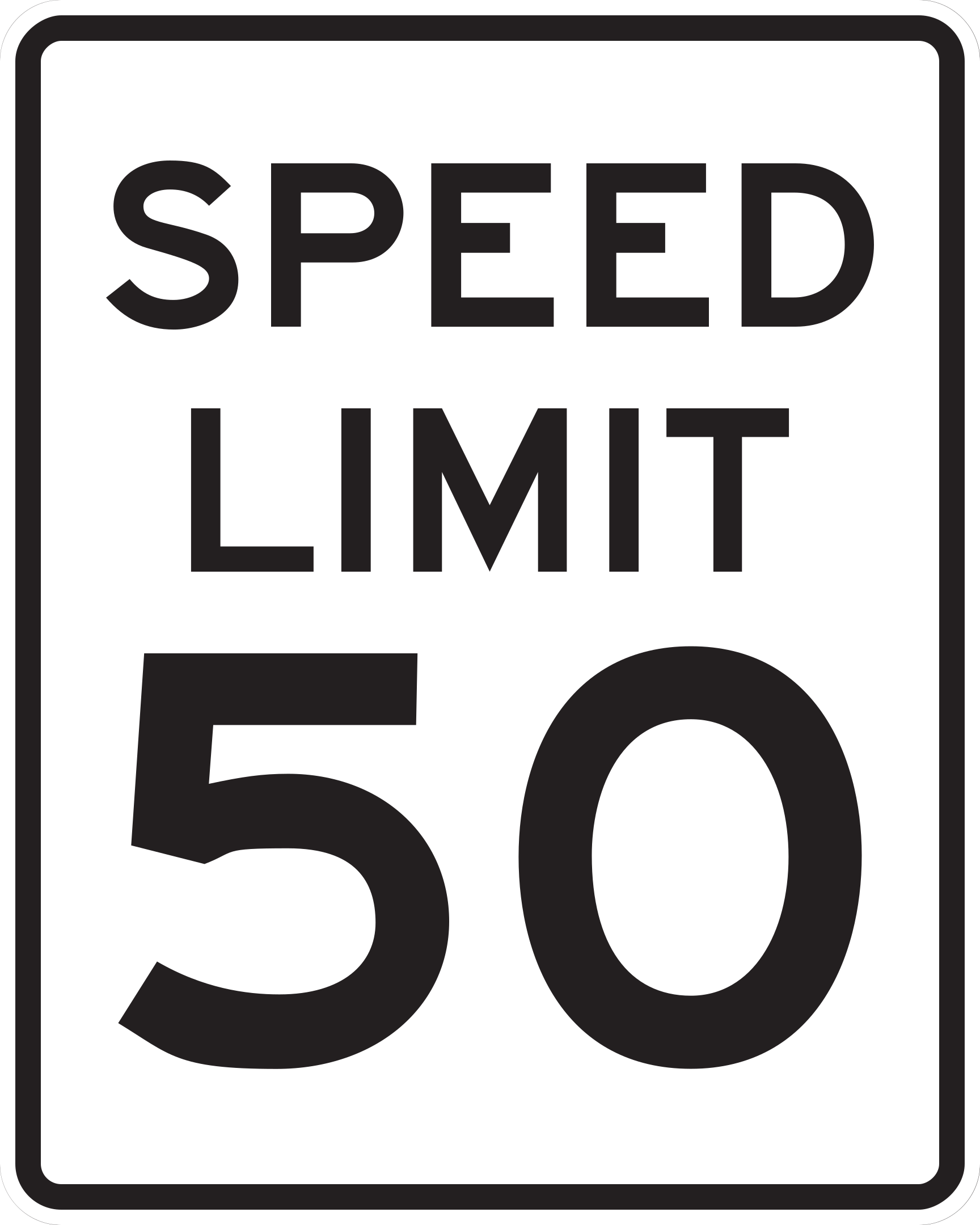
On a clear road, you see the pictured white sign. What does its large number state?
FHWA MUTCD / Standard Highway Signs — source and adaptations in /signs/LICENSES.md
Correct answer: A posted speed limit of 50 mph
SPEED LIMIT identifies a regulatory limit, not a route number or yellow advisory-speed warning. The number is not a promise that this speed is safe in every condition.