Michigan permit-test flashcards

Read an existing practice question, consider its choices, then reveal the answer and explanation. This set has 20 sourced cards selected from the existing Michigan printable sample.

A short sample of car driving questions. Read the handbook to cover the other topics you need.

Use Tab to reach a card’s answer control and Enter or Space to open it, or tap the control. This works without JavaScript. Cards do not record a score, save an attempt or change your quiz progress.

Recall the rule, then check the source

Card 1 · Left on red from a two-way street

You stop at a red light on a two-way street. The one-way road to your left carries traffic leftward. No device prohibits the turn. What may you do?

  1. Turn left after yielding as required
  2. Turn left without yielding after the stop
  3. Turn left only if your street is one-way
  4. Turn left only after a vehicle behind honks
Show answer for card 1

Correct answer: Turn left after yielding as required

Michigan permits a stopped left turn from a one-way or two-way street into a one-way road carrying traffic in the turn's direction, unless a traffic-control device prohibits it. Required yielding still applies.

Source: Michigan Judicial Institute Traffic Benchbook, Section 4.14 > B(3), quoting MCL 257.612(1)(c)(i)–(ii). HTML read 2026-09-12; statutory effective date not independently retrieved. ↗ · Original question review: 2026-09-12

Card 2 · Dark signal with no other direction

All lights at an intersection are out. No officer, temporary sign or other device directs traffic. What should you do?

  1. Proceed as though your light were green
  2. Yield only if your road is the narrower road
  3. Stop, yield to hazards, and proceed with care
  4. Wait without moving until electrical power returns
Show answer for card 2

Correct answer: Stop, yield to hazards, and proceed with care

With no other direction, stop at the marked line, or before the near crosswalk if no line exists, or before the intersection if neither exists. Yield to immediate hazards and use ordinary care.

Source: Michigan Judicial Institute Traffic Benchbook, Section 4.12 > A(2), quoting complete MCL 257.649(4)–(5); corroborated by MSP dark-signal FAQ. HTML read 2026-09-12; statutory effective date not independently retrieved. ↗ · Original question review: 2026-09-12

Card 3 · Vehicle already in the intersection

At an uncontrolled intersection, a car from another road has already entered before you arrive. What must you do?

  1. Enter first if your road looks wider
  2. Enter first if you are traveling straight
  3. Yield to the car already in the intersection
  4. Make the other driver stop by sounding your horn
Show answer for card 3

Correct answer: Yield to the car already in the intersection

The ordinary uncontrolled-intersection rule requires an approaching driver to yield to a vehicle that has already entered from a different road.

Source: Michigan Judicial Institute Traffic Benchbook, Section 4.12 > A(1), quoting MCL 257.649(1)–(3). HTML read 2026-09-12; statutory effective date not independently retrieved. ↗ · Original question review: 2026-09-12

Card 4 · Center turn lane and passing

A slow vehicle is ahead and the center two-way left-turn lane is empty. May you use that lane to pass it?

  1. Yes, because traffic can use the lane both ways
  2. Yes, if your left signal stays on while passing
  3. No; that lane is for left-turn movements
  4. Yes, unless an oncoming vehicle is turning
Show answer for card 4

Correct answer: No; that lane is for left-turn movements

A two-way left-turn lane serves left-turn maneuvers. An empty center turn lane is not a passing lane.

Source: MSP Traffic Laws FAQs, updated April 23, 2026 > Lane Use > Can the center left turn lane be used as a passing lane?. HTML read 2026-09-12; statutory effective date not independently retrieved. ↗ · Original question review: 2026-09-12

Card 5 · When the school-bus stop ends

You are stopped behind a school bus whose alternating red lights are on. Which event ends this particular requirement to remain stopped?

  1. You have waited for a full minute
  2. All visible students have reached the sidewalk
  3. The bus resumes moving or its visual signal stops
  4. Another driver waves you around the bus
Show answer for card 5

Correct answer: The bus resumes moving or its visual signal stops

The bus stop requirement continues until the bus resumes motion or its visual signals are no longer actuated. A guessed time or a wave from another driver does not end it.

Source: MSP Legal Update No.165, June 2025 > Stopping for a school bus displaying flashing red lights, MCL 257.682(1). HTML read 2026-09-12; statutory effective date not independently retrieved. ↗ · Original question review: 2026-09-12

Card 6 · Tow trucks and Move Over

A tow truck is stationary on your side of the road with its warning lights operating. Which statement is correct?

  1. The Move Over law also covers that road-service vehicle
  2. The law applies only to police cars and ambulances
  3. Moving over is optional unless a trooper is present
  4. You may keep full speed if the truck is off the pavement
Show answer for card 6

Correct answer: The Move Over law also covers that road-service vehicle

MSP identifies tow trucks as authorized road-service vehicles covered by the Move Over requirement when the specified warning lights are operating.

Source: MSP Move Over, Michigan's Move Over Law and FAQs > Michigan's Move Over Law > authorized vehicle list; FAQ > Do I have to move over for a tow truck?. HTML read 2026-09-12; statutory effective date not independently retrieved. ↗ · Original question review: 2026-09-12

Card 7 · Cooling-system preparation

Which approach is appropriate when preparing a car's cooling system for winter?

  1. Choose coolant only by its color without checking compatibility
  2. Assume coolant matters only during hot weather
  3. Use the specified coolant and have leaks or worn hoses checked
  4. Ignore recurring coolant loss if the engine still starts
Show answer for card 7

Correct answer: Use the specified coolant and have leaks or worn hoses checked

The correct coolant and a sound cooling system matter in winter too. Follow the vehicle manufacturer's instructions.

Source: NHTSA, Winter Weather Driving Tips > Preparing Your Vehicle > Cooling System (HTML safety guidance; reviewed September 12, 2026) ↗ · Original question review: 2026-09-12

Card 8 · Winter visibility equipment

Before a snowy trip, what preparation best supports a clear windshield?

  1. Summer washer fluid alone with worn blades
  2. Sound wipers, defrosters and winter washer fluid
  3. An empty washer reservoir to avoid leaks
  4. A small cleared viewing hole instead of working equipment
Show answer for card 8

Correct answer: Sound wipers, defrosters and winter washer fluid

Winter conditions can consume washer fluid quickly and demand effective wiping and defrosting.

Source: NHTSA, Winter Weather Driving Tips > Preparing Your Vehicle > Windshield Wipers (HTML practical guidance; reviewed September 12, 2026) ↗ · Original question review: 2026-09-12

Card 9 · Tire warning signs

A car develops persistent tire vibration and repeatedly loses pressure. What is the appropriate next step?

  1. Have a tire-service professional inspect it
  2. Hide the warning by adding air far above the specification
  3. Keep driving until the tire becomes visibly flat
  4. Assume it is harmless because the tread looks deep
Show answer for card 9

Correct answer: Have a tire-service professional inspect it

Repeated air loss and steady vibration point to damage such as a puncture, bent rim or broken belt. Have a tire shop inspect it before the problem turns into a blowout.

Source: NHTSA, TireWise > Aging > Should I replace my tires?, performance-issues bullet (HTML practical guidance; reviewed September 12, 2026) ↗ · Original question review: 2026-09-12

Card 10 · Daytime fatigue

Can drowsiness create a crash risk during an afternoon drive?

  1. No; fatigue crashes occur only after midnight
  2. No; sunlight prevents brief sleep episodes
  3. Only if the vehicle has no air conditioning
  4. Yes; sleepiness can cause crashes at any time
Show answer for card 10

Correct answer: Yes; sleepiness can cause crashes at any time

Drowsiness is not confined to darkness; late afternoon is among the common risk periods.

Source: NHTSA, Drowsy Driving > Crashes and Fatalities, introductory sentence and first factor (HTML practical guidance; reviewed September 12, 2026) ↗ · Original question review: 2026-09-12

Card 11 · Hidden crosswalk hazard

Another car is stopped at a crosswalk, blocking your view across it. What danger should you anticipate?

  1. The stop proves nobody is crossing
  2. The car's position guarantees you have priority
  3. A pedestrian may be hidden in front of that car
  4. Any pedestrian will necessarily remain on the sidewalk
Show answer for card 11

Correct answer: A pedestrian may be hidden in front of that car

A stopped vehicle can conceal a crossing pedestrian from the next driver.

Source: NHTSA, Pedestrian Safety > 8 Safety Tips for Drivers, item 6; Common Crash Types > Multiple Threat (HTML practical guidance; reviewed September 12, 2026) ↗ · Original question review: 2026-09-12

Card 12 · Vehicle condition after an animal collision

Your car still starts after hitting a deer. What should you conclude about continuing the trip?

  1. A running engine proves the whole vehicle is safe
  2. Check for damage before continuing
  3. Only visible paint scratches could matter
  4. Normal dashboard lighting rules out steering damage
Show answer for card 12

Correct answer: Check for damage before continuing

A deer strike can crack lights, puncture the radiator or bend steering parts even when the engine runs. Walk around the car, look for leaks and broken lights, and call a tow if anything is unsafe.

Source: Michigan State Police, Deer-Vehicle Crashes > What to Do if You Hit a Deer > Motorists and Motorcyclists (HTML safety guidance; reviewed September 12, 2026) ↗ · Original question review: 2026-09-12

Card 13 · Regulatory signs

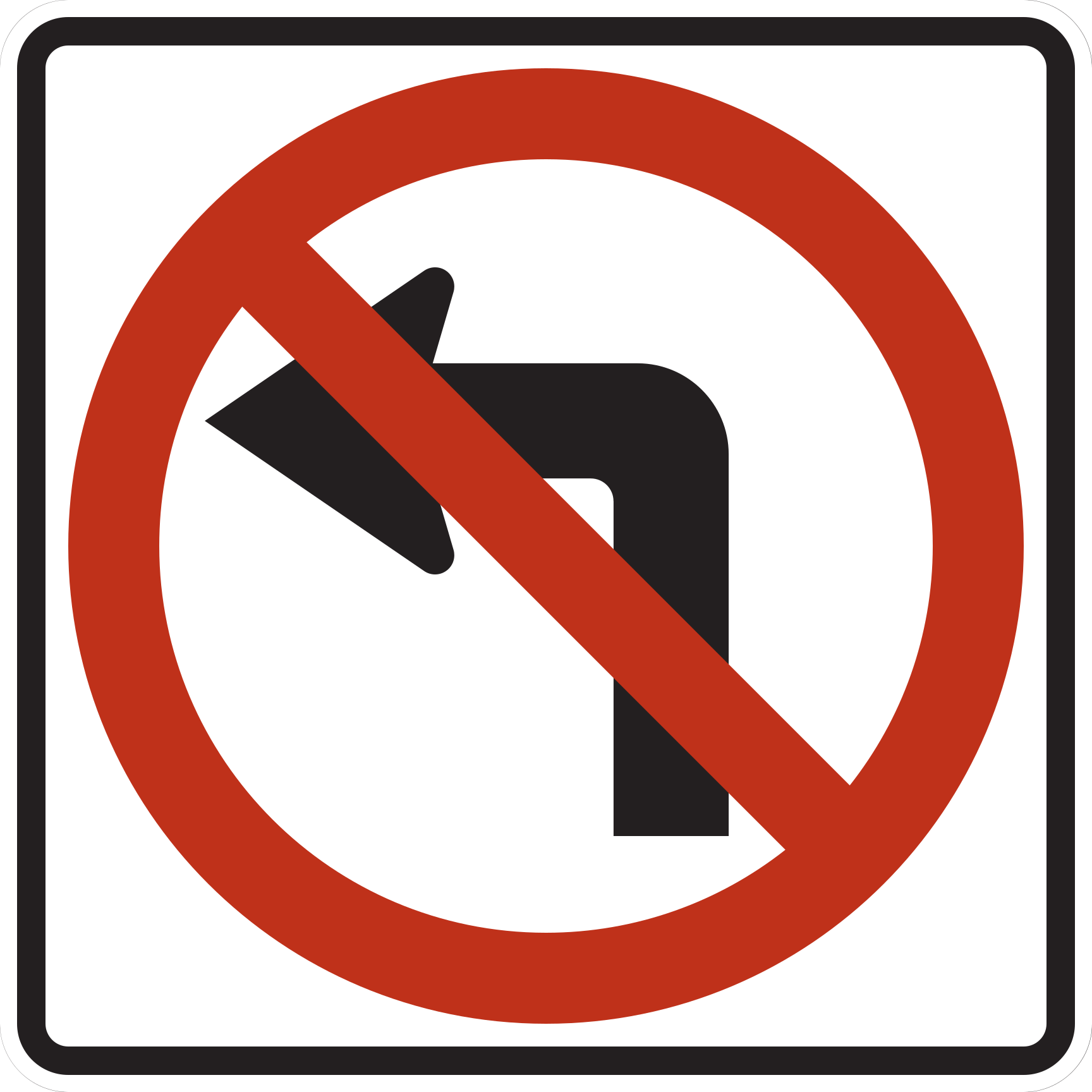
Your route calls for a left turn at an intersection displaying this sign. What does the sign tell you?

White square with a bent black arrow pointing left beneath a red circle and slash.
FHWA MUTCD / Standard Highway Signs — source and adaptations in /signs/LICENSES.md
  1. Make the turn after a complete stop
  2. Make the turn from the right lane
  3. Do not make the planned left turn
  4. Make the turn after yielding first
Show answer for card 13

Correct answer: Do not make the planned left turn

NO LEFT TURN prohibits the left-turn movement. Stopping, yielding, or choosing a different lane does not remove the displayed restriction.

Source: FHWA MUTCD, 11th Edition with Revision 1 (December 2025), Section 2B.26, paragraphs 01–03, R3-2; p. 89 · Original question review: 2026-09-12

Card 14 · Warning signs

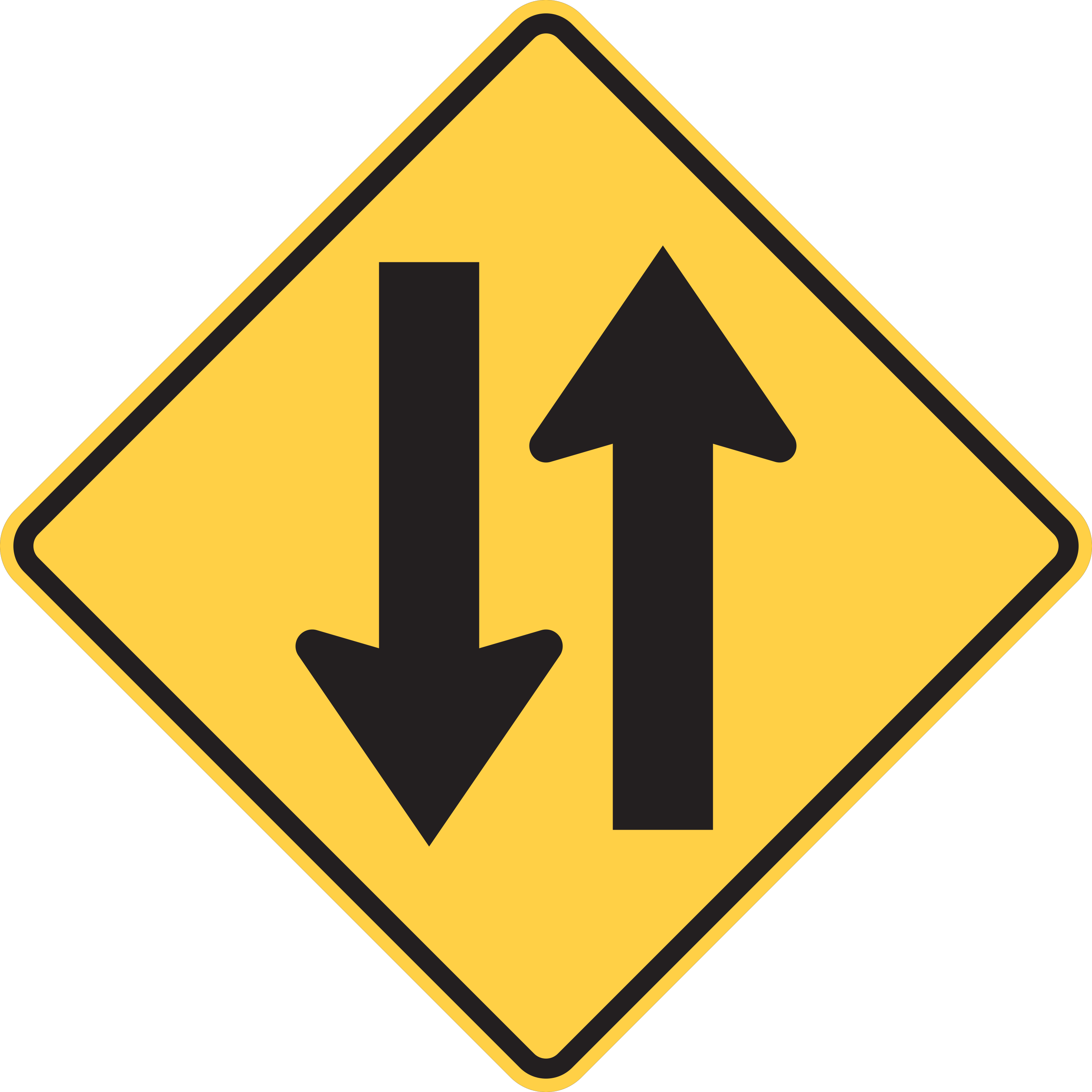
How should you interpret the two arrows pointing in opposite directions?

Yellow diamond with two vertical black arrows pointing in opposite directions.
FHWA MUTCD / Standard Highway Signs — source and adaptations in /signs/LICENSES.md
  1. Traffic must select one of two exits
  2. Traffic travels in both directions
  3. Both lanes travel in your direction
  4. Each lane is reserved for turning
Show answer for card 14

Correct answer: Traffic travels in both directions

TWO-WAY TRAFFIC warns that vehicles travel in opposite directions. It is not an added-lane sign or an instruction to choose an exit.

Source: FHWA MUTCD, 11th Edition with Revision 1 (December 2025), Section 2C.51, paragraphs 01–03, W6-3; p. 189 · Original question review: 2026-09-12

Card 15 · Warning signs

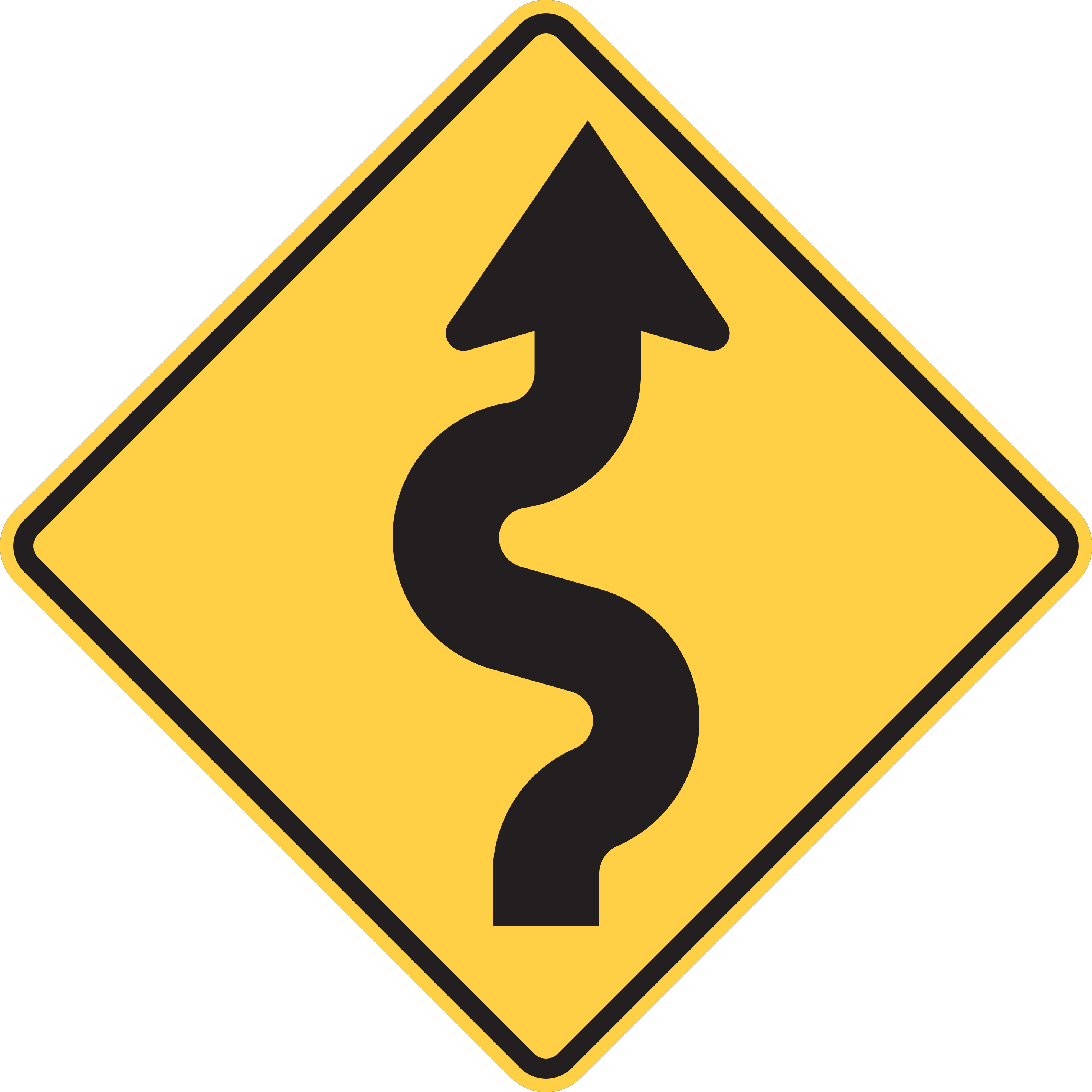
Which road alignment best matches the repeated bends in this arrow?

Yellow diamond with a black arrow following several alternating bends.
FHWA MUTCD / Standard Highway Signs — source and adaptations in /signs/LICENSES.md
  1. One sharp turn followed by a straight road
  2. A traffic circle with several exits
  3. A lane bending around a fixed island
  4. A series of closely spaced curves
Show answer for card 15

Correct answer: A series of closely spaced curves

WINDING ROAD warns of a series of changes in roadway direction. It conveys neither an exact speed nor a distance unless a separate plaque supplies that information.

Source: FHWA MUTCD, 11th Edition with Revision 1 (December 2025), Section 2C.07, paragraphs 05–06, W1-5; p. 155 · Original question review: 2026-09-12

Card 16 · Holding a phone with a shoulder

A fully licensed adult wedges a phone between the shoulder and ear during a routine call while driving. Both hands remain on the wheel. Does this satisfy Michigan's hands-free rule?

  1. No. Supporting the phone with a shoulder still counts.
  2. Yes. Keeping both hands on the wheel is sufficient.
  3. Yes. The rule covers texting rather than voice calls.
  4. Yes, if the conversation concerns work rather than personal matters.
Show answer for card 16

Correct answer: No. Supporting the phone with a shoulder still counts.

The rule includes supporting a phone with a hand, arm, or shoulder. A routine call does not become hands-free just because neither hand is holding the device.

Source: Go Hands-Free. Just Drive. It's the Law. — opening paragraph defining support by hands, arms or shoulders; current page includes April 2026 enforcement materials. ↗ · Original question review: 2026-09-12

Card 17 · Reasonable assistance after a crash

A person is injured in a crash involving your car and needs medical help. Beyond exchanging the required information, what responsibility does Michigan impose?

  1. Leave medical arrangements entirely to the other driver.
  2. Provide help only after someone proves you caused the crash.
  3. Wait for an insurance adjuster before arranging medical help.
  4. Give reasonable help in securing medical aid or transport.
Show answer for card 17

Correct answer: Give reasonable help in securing medical aid or transport.

Michigan requires reasonable assistance to an injured person in obtaining medical aid or arranging or providing transportation. Calling emergency services can help secure aid; this is not an instruction to perform untrained treatment or move an injured person regardless of the circumstances.

Source: Traffic Benchbook §5.2(A), Statutory Authority — MCL 257.619(c), reasonable medical-aid/transport assistance; §5.2(C), reasonableness depends on circumstances. ↗ · Original question review: 2026-09-12

Card 18 · Impaired driving in a public parking lot

After drinking, a person's ability to drive is visibly impaired. The person plans to move a car across a shopping-center lot open to the public without entering a street. Does Michigan's impaired-driving rule apply?

  1. Yes. The rule also covers public-access parking areas.
  2. No. It starts only when the car enters a public street.
  3. Only if the driver collides with a vehicle in the lot.
  4. Only if a government agency owns the parking lot.
Show answer for card 18

Correct answer: Yes. The rule also covers public-access parking areas.

Michigan's visibly impaired driving prohibition is not limited to streets and highways. It also covers places open to the public or generally accessible to motor vehicles, expressly including parking areas.

Source: Traffic Benchbook §9.6(A), Statutory Authority — MCL 257.625(3), public/general motor-vehicle access and parking-area applicability. ↗ · Original question review: 2026-09-12

Card 19 · Authorized skills examiner

Who administers the ordinary Michigan driving skills test?

  1. Any licensed friend chosen by the applicant
  2. Only the school that taught the applicant to drive
  3. An authorized independent driver testing business
  4. Any repair shop that inspects the test vehicle
Show answer for card 19

Correct answer: An authorized independent driver testing business

Michigan uses independent testing organizations with state-authorized examiners. Teaching or repairing vehicles alone does not confer testing authority.

Source: Michigan SOS, New drivers (18 and older) > Driving skills test, opening paragraph (current HTML service instructions read September 12, 2026) ↗ · Original question review: 2026-09-12

Card 20 · Carrying the Level 1 credential

Once a Michigan teen receives the Level 1 hard-card license, when does SOS say it must be carried?

  1. Only during the final skills test
  2. Whenever the teen drives
  3. Only when driving outside the home county
  4. Only when the supervisor is not a parent
Show answer for card 20

Correct answer: Whenever the teen drives

The Level 1 credential must accompany the teen whenever driving, not just during selected trips.

Source: Michigan SOS, New drivers (under 18) > GDL Level 1 Learner's License, hard-card paragraph (current HTML service instructions read September 12, 2026) ↗ · Original question review: 2026-09-12

These are selected learning examples, not state examination questions or complete handbook coverage. Read the original source when a condition or exception is unclear.