A compact Ohio reading view of 20 existing sourced practice explanations. Each card keeps the original question, correct answer and explanation together so that a qualified rule is not detached from its scenario.
A short sample of car driving questions. Read the handbook to cover the other topics you need.
Use this as a review aid after reading the handbook. It is not a state exam aid or a complete list of driving laws. Printing may use several pages; the layout does not shrink the text to promise a single sheet.
You can also use your browser’s Print menu. Review the preview for your paper size before saving.
Test-format qualifications
TIPIC knowledge examination: 40 questions. 30 correct are needed to pass, subject to the separate requirements below. Agency passing statement: 75 percent in each written part.
At least 75% must be achieved separately in the laws/rules and signs sections; 30 correct overall alone is not sufficient.
Source qualifications for this format
BMV publishes forty questions and 75%. The rule requires at least twenty in each of two parts and 75% separately; twenty per part follows from combining those sources.
Thirty total correct and ten total allowed mistakes are derived and conditional: no more than five errors in either section.
No timer or score-triggered early termination was verified.
A 2024 driver-training curriculum lists eight languages, but current operational completeness was not verified; languages remains null.
At an intersection, you face a flashing circular red signal rather than a steady red. What rule governs your movement?
Correct answer: Stop, then proceed under stop-sign yielding rules
A flashing circular red at an intersection requires a stop at the specified stopping point. After stopping, the same yielding conditions as at a stop sign govern whether you may proceed.
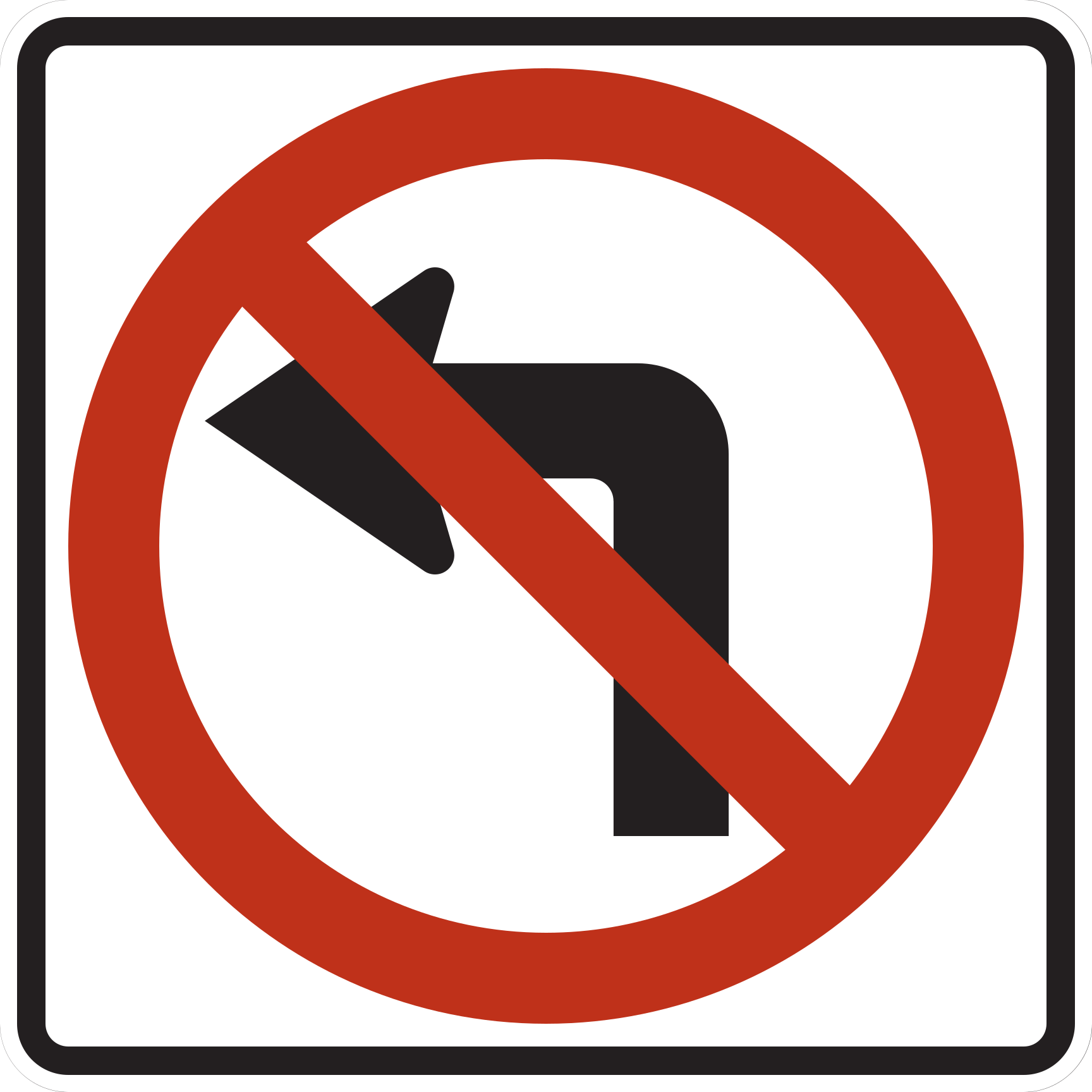
Both intersecting roads carry traffic in two directions, and no special markings alter the turn. Where should you approach a left turn?
Correct answer: In your half of the road nearest the center line
For this ordinary two-way intersection, approach from the part of the right half nearest the center line. Do not enter the opposing half early; complete the turn to the right of the entered road's center line.
You are leaving a parking lot to enter a highway. Who must yield under the rule for entering from a place other than another roadway?
Correct answer: You must yield to approaching roadway traffic
A driver coming out of a parking lot, driveway, or other private place onto a highway must give way to every vehicle approaching on that roadway, from either direction. A turn signal announces your intention but never obliges others to give way.
Review 5 · Slow vehicle and a marked no-passing zone
The posted limit is 50 mph and a vehicle travels at 30 mph in a marked no-passing zone. Does its speed satisfy Ohio's less-than-half-speed condition for the special passing exception?
Correct answer: No; 30 mph is not less than half of 50 mph
The special exception requires the slower vehicle to travel below half the applicable limit, the pass to stay within the limit, and sufficient clear sight distance. Here the first condition fails; ordinary no-passing directions still apply.
Review 7 · A posted limit does not guarantee a safe speed
Heavy traffic and a slick road make the posted limit too fast for the conditions. What does Ohio's basic speed rule require?
Correct answer: Choose a speed reasonable for the actual conditions
Ohio requires a reasonable and proper speed considering traffic, road surface, width, and other conditions. A posted limit is not a command to travel that fast when conditions demand less.
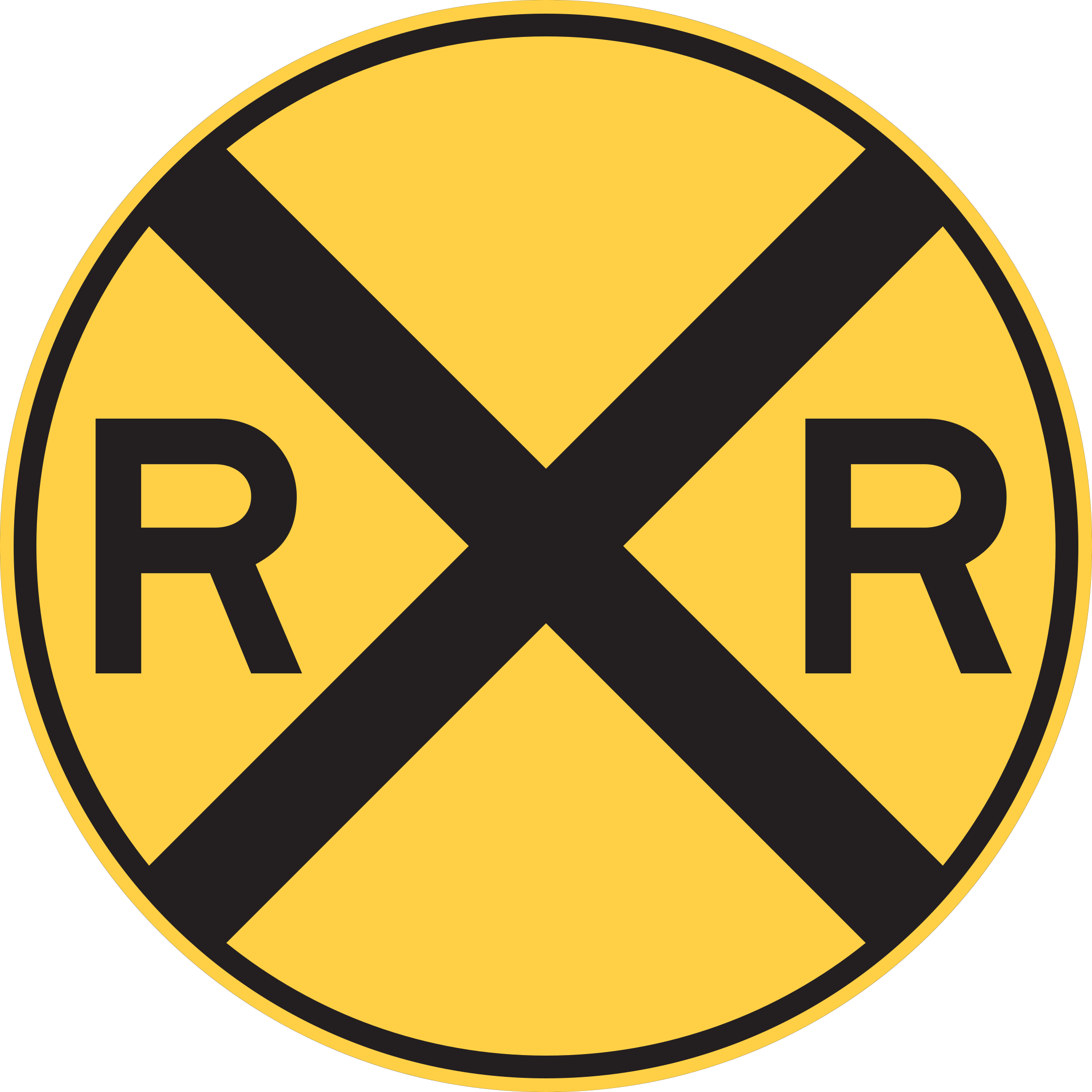
A railroad crossing signal warns that a train is immediately approaching. Within what distance range from the nearest rail must you stop?
Correct answer: At least 15 feet and no more than 50 feet away
Ohio sets the stopping range when a crossing signal warns of an approaching train keeping 15 to 50 feet of space between the car and the closest rail. Stay stopped while the warning continues, and cross only once the train has passed and the signals have cleared.
An Ohio TIPIC holder proposes a practice trip with six people in a car originally equipped with five occupant restraints. What must change?
Correct answer: Limit the occupants to five and have every person buckle up.
TIPIC conditions limit occupants to the vehicle's originally installed restraint count and require each person to use the available restraint elements properly.
An Ohio driver received a probationary license four months ago and wants to take two nonfamily friends on an afternoon trip without a parent, guardian or custodian. Which change satisfies the passenger restriction?
Correct answer: Take just one of the two nonfamily friends.
During the first 12 months of a probationary license, more than one nonfamily passenger requires the specified parent, guardian or custodian to accompany the driver.
A driver has the qualifying medical affidavit for a child's physical impairment. It includes specific recommendations for safely restraining that child. What must the driver do to rely on this Ohio exception?
Correct answer: Safely restrain the child according to the affidavit's recommendations.
The affidavit exception is conditional: the driver must safely and appropriately restrain the child in accordance with the professional's recommendations recorded in it. It is not blanket permission to leave the child unrestrained.
After a collision in a private parking lot outside any Ohio city or village, a driver stops but does not provide the identifying information required by the private-property crash law. What follow-up deadline and recipient does that law specify?
Correct answer: Report to the county sheriff within 24 hours.
For a crash off public roads, failing to provide the required information triggers a report within 24 hours. Outside a city or village, the recipient is the county sheriff. This does not replace the immediate stopping duty or an unattended-vehicle note when applicable.