Ohio permit-test flashcards

Read an existing practice question, consider its choices, then reveal the answer and explanation. This set has 20 sourced cards selected from the existing Ohio printable sample.

A short sample of car driving questions. Read the handbook to cover the other topics you need.

Use Tab to reach a card’s answer control and Enter or Space to open it, or tap the control. This works without JavaScript. Cards do not record a score, save an attempt or change your quiz progress.

Recall the rule, then check the source

Card 1 · Red-light stop position

A red light controls your lane. A painted stop line lies before the crosswalk. Where must you make the required stop?

  1. Before the stop line
  2. In the crosswalk
  3. Beside the traffic-signal pole
  4. At the far side of the intersection
Show answer for card 1

Correct answer: Before the stop line

Stop at the marked stop line. Without a line, stop before the near crosswalk; if neither exists, stop before entering the intersection.

Source: Ohio Revised Code 4511.13(C)(1)(a); current section effective 2025-06-30, reviewed 2026-09-12. ↗ · Original question review: 2026-09-12

Card 2 · Flashing circular red

At an intersection, you face a flashing circular red signal rather than a steady red. What rule governs your movement?

  1. Slow and proceed without a full stop if clear
  2. Wait until the flashing signal becomes green
  3. Stop, then proceed under stop-sign yielding rules
  4. Proceed first because cross traffic must stop longer
Show answer for card 2

Correct answer: Stop, then proceed under stop-sign yielding rules

A flashing circular red at an intersection requires a stop at the specified stopping point. After stopping, the same yielding conditions as at a stop sign govern whether you may proceed.

Source: Ohio Revised Code 4511.13(F)(1); current section effective 2025-06-30, reviewed 2026-09-12. ↗ · Original question review: 2026-09-12

Card 3 · Two-way-road left-turn approach

Both intersecting roads carry traffic in two directions, and no special markings alter the turn. Where should you approach a left turn?

  1. On the left half of the road before the intersection
  2. As close as possible to the right curb
  3. In whichever lane an oncoming driver leaves empty
  4. In your half of the road nearest the center line
Show answer for card 3

Correct answer: In your half of the road nearest the center line

For this ordinary two-way intersection, approach from the part of the right half nearest the center line. Do not enter the opposing half early; complete the turn to the right of the entered road's center line.

Source: Ohio Revised Code 4511.36(A)(2), (C); current section effective 2018-10-29, reviewed 2026-09-12. ↗ · Original question review: 2026-09-12

Card 4 · Entering from a parking lot

You are leaving a parking lot to enter a highway. Who must yield under the rule for entering from a place other than another roadway?

  1. The nearest highway driver must yield to you
  2. Only traffic coming from your left must be considered
  3. Highway traffic must stop after you signal
  4. You must yield to approaching roadway traffic
Show answer for card 4

Correct answer: You must yield to approaching roadway traffic

A driver coming out of a parking lot, driveway, or other private place onto a highway must give way to every vehicle approaching on that roadway, from either direction. A turn signal announces your intention but never obliges others to give way.

Source: Ohio Revised Code 4511.44(A); current section effective 2018-10-29, reviewed 2026-09-12. ↗ · Original question review: 2026-09-12

Card 5 · Slow vehicle and a marked no-passing zone

The posted limit is 50 mph and a vehicle travels at 30 mph in a marked no-passing zone. Does its speed satisfy Ohio's less-than-half-speed condition for the special passing exception?

  1. Yes; any speed below the limit satisfies the condition
  2. Yes; traveling 20 mph below the limit is enough
  3. Yes; any vehicle delaying two cars qualifies
  4. No; 30 mph is not less than half of 50 mph
Show answer for card 5

Correct answer: No; 30 mph is not less than half of 50 mph

The special exception requires the slower vehicle to travel below half the applicable limit, the pass to stay within the limit, and sufficient clear sight distance. Here the first condition fails; ordinary no-passing directions still apply.

Source: Ohio Revised Code 4511.31(A), (B)(1)-(3); current section effective 2018-10-29, reviewed 2026-09-12. ↗ · Original question review: 2026-09-12

Card 6 · Parking in a bicycle lane

You want to park your car in a bicycle lane to enter a shop. No officer, device, or traffic conflict requires stopping there. Is that permitted?

  1. Yes; a short shopping stop is exempt
  2. No; Ohio prohibits parking in a bicycle lane
  3. Yes; it is allowed whenever no cyclist is visible
  4. Yes; displaying hazard lights reserves the space
Show answer for card 6

Correct answer: No; Ohio prohibits parking in a bicycle lane

Ohio's prohibited-location list includes a bicycle lane. An ordinary personal errand is not one of the rule's traffic-compliance exceptions.

Source: Ohio Revised Code 4511.68(A), (A)(17); current section effective 2025-06-30, reviewed 2026-09-12. ↗ · Original question review: 2026-09-12

Card 7 · A posted limit does not guarantee a safe speed

Heavy traffic and a slick road make the posted limit too fast for the conditions. What does Ohio's basic speed rule require?

  1. Choose a speed reasonable for the actual conditions
  2. Maintain the posted limit because it is always safe
  3. Drive at least the limit so faster drivers are not delayed
  4. Use the posted limit unless a police officer is present
Show answer for card 7

Correct answer: Choose a speed reasonable for the actual conditions

Ohio requires a reasonable and proper speed considering traffic, road surface, width, and other conditions. A posted limit is not a command to travel that fast when conditions demand less.

Source: Ohio Revised Code 4511.21(A); current section effective 2025-06-30, reviewed 2026-09-12. ↗ · Original question review: 2026-09-12

Card 8 · Required railroad stopping zone

A railroad crossing signal warns that a train is immediately approaching. Within what distance range from the nearest rail must you stop?

  1. At least five feet and no more than ten feet away
  2. At least 15 feet and no more than 50 feet away
  3. At least 50 feet and no more than 100 feet away
  4. At least 100 feet and no more than 200 feet away
Show answer for card 8

Correct answer: At least 15 feet and no more than 50 feet away

Ohio sets the stopping range when a crossing signal warns of an approaching train keeping 15 to 50 feet of space between the car and the closest rail. Stay stopped while the warning continues, and cross only once the train has passed and the signals have cleared.

Source: Ohio Revised Code 4511.62(A)(1)(a), (A)(2)(a); current section effective 2025-06-30, reviewed 2026-09-12. ↗ · Original question review: 2026-09-12

Card 9 · Snowplow space

Why is traveling beside a working snowplow a poor choice?

  1. It may overlap lanes, turn widely or stop often
  2. It must always maintain a passenger car's speed
  3. Its driver can see every nearby vehicle
  4. The cleared lane beside it cannot contain snow
Show answer for card 9

Correct answer: It may overlap lanes, turn widely or stop often

Plow operations require room. Stay back and do not crowd the plow.

Source: NHTSA, Winter Weather Driving Tips > Driving in Winter Weather > The Basics, snowplow paragraph (HTML practical guidance; reviewed September 12, 2026) ↗ · Original question review: 2026-09-12

Card 10 · Recommended tire pressure

Where should you find the recommended cold tire pressure for your particular car?

  1. The vehicle's tire-information label or owner's manual
  2. The maximum pressure molded on the tire alone
  3. A nearby car's pressure label
  4. A single pressure value used for every passenger car
Show answer for card 10

Correct answer: The vehicle's tire-information label or owner's manual

Use the vehicle manufacturer's specification, which may differ from the tire's maximum marking.

Source: NHTSA, TireWise > Maintenance > Tire Pressure; Maintaining Proper Tire Pressure, step 1 (HTML practical guidance; reviewed September 12, 2026) ↗ · Original question review: 2026-09-12

Card 11 · Rest before a trip

You plan a long morning drive after a very short night's sleep. What is the safer preparation?

  1. Delay driving until adequately rested
  2. Replace sleep with a large energy drink
  3. Leave earlier to finish before you notice fatigue
  4. Rely on an open window for the whole trip
Show answer for card 11

Correct answer: Delay driving until adequately rested

A short night leaves you with slower reactions and a real chance of nodding off. Postponing the trip until you have slept is the only fix that works.

Source: NHTSA, Drowsy Driving > Tips to Drive Alert > How To Avoid Driving Drowsy, items 1–3 (HTML practical guidance; reviewed September 12, 2026) ↗ · Original question review: 2026-09-12

Card 12 · Blind-spot warning

Your car's blind-spot warning alerts as you prepare to change lanes. What is the alert intended to tell you?

  1. A vehicle may occupy the adjacent blind-spot area
  2. The neighboring lane is guaranteed clear
  3. The car has granted you right of way
  4. Your turn signal has forced other traffic to yield
Show answer for card 12

Correct answer: A vehicle may occupy the adjacent blind-spot area

The feature warns about nearby vehicles the driver might not see; it is not clearance or priority.

Source: NHTSA, Driver Assistance Technologies > Technologies Explained > Collision Warning > Blind Spot Warning (HTML practical guidance; reviewed September 12, 2026) ↗ · Original question review: 2026-09-12

Card 13 · Truck stopping room

After a safe pass, why should you leave extra space before merging ahead of a large truck?

  1. The truck needs substantial room to stop
  2. Its height guarantees a shorter stopping distance
  3. A close merge helps the truck react faster
  4. Your car's brake lights replace the need for a gap
Show answer for card 13

Correct answer: The truck needs substantial room to stop

Do not consume a large vehicle's stopping space by cutting in closely.

Source: FMCSA, Tips for Passenger Vehicle Drivers, updated May 12, 2026 > 2. Be Aware of Long Stopping Distances; 5. Merge and Pass Safely (HTML practical guidance; reviewed September 12, 2026) ↗ · Original question review: 2026-09-12

Card 14 · Regulatory signs

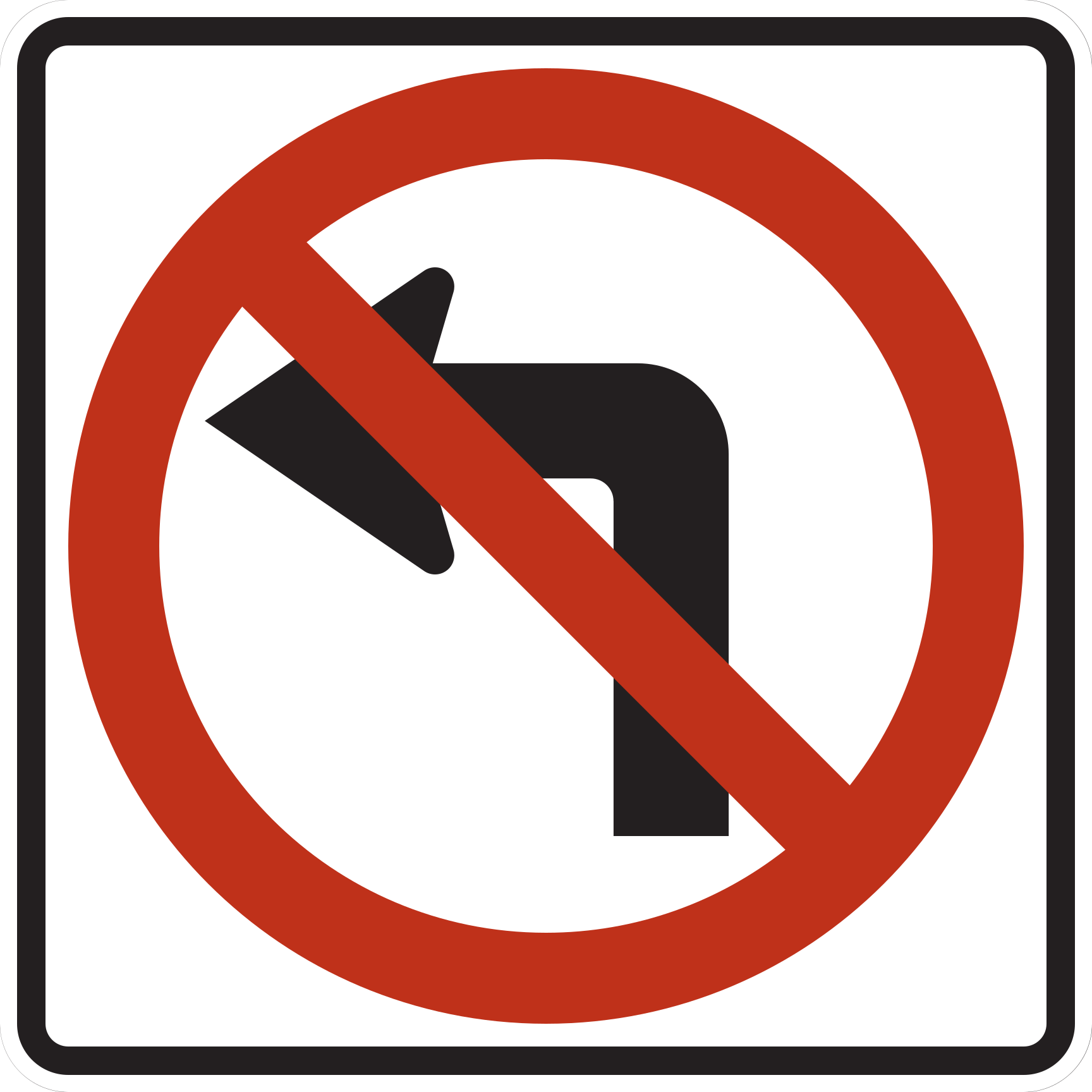
Your route calls for a left turn where this sign is posted. What does the sign require?

White square with a bent black arrow pointing left beneath a red circle and slash.
FHWA MUTCD / Standard Highway Signs — source and adaptations in /signs/LICENSES.md
  1. Turn left after yielding
  2. Do not make the left turn
  3. Turn left from either lane
  4. Stop, then make the left turn
Show answer for card 14

Correct answer: Do not make the left turn

The red slash cancels the left-turn movement shown by the black arrow.

Source: FHWA MUTCD, 11th Edition with Revision 1 (December 2025), Section 2B.26, paragraphs 01–03, R3-2; p. 89 · Original question review: 2026-09-12

Card 15 · Warning signs

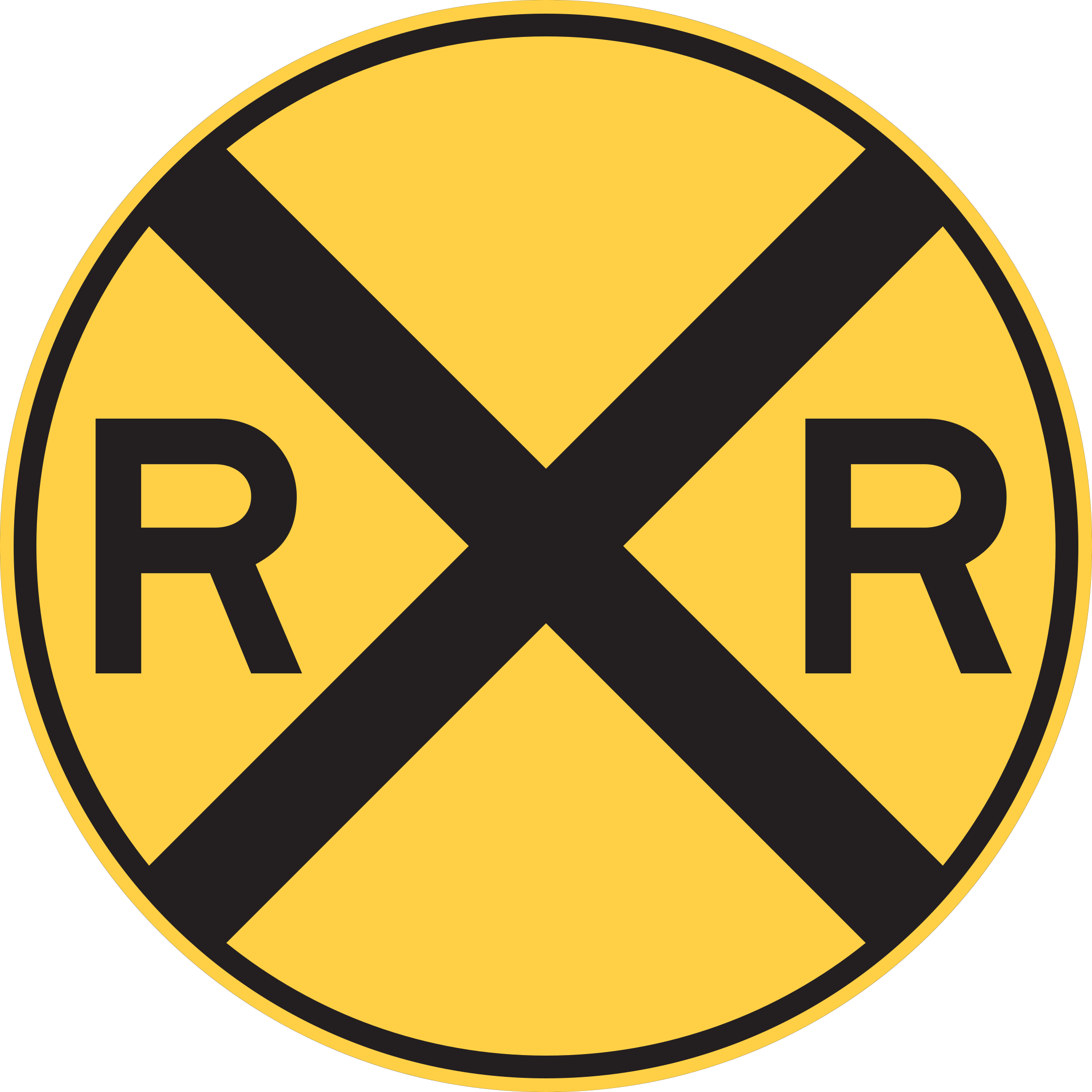
What location are you approaching when you see this round yellow sign?

Round yellow sign with a black diagonal cross and a black letter on each side.
FHWA MUTCD / Standard Highway Signs — source and adaptations in /signs/LICENSES.md
  1. A roundabout with two exits
  2. A road closed to all vehicles
  3. A railroad station parking area
  4. A railroad grade crossing
Show answer for card 15

Correct answer: A railroad grade crossing

The round sign is advance warning of a railroad crossing. It is not itself the STOP sign or active signal at the tracks.

Source: FHWA MUTCD, 11th Edition with Revision 1 (December 2025), Section 8B.06, paragraphs 01–07, W10-1; p. 1001 · Original question review: 2026-09-12

Card 16 · Minimum TIPIC age

Maya is planning her first ordinary Ohio car temporary-permit application. What is the earliest age at which she may qualify for a TIPIC?

  1. 15 years and 6 months.
  2. 15 years exactly.
  3. 16 years exactly.
  4. 16 years and 6 months.
Show answer for card 16

Correct answer: 15 years and 6 months.

Ohio's ordinary car TIPIC process starts at age 15 years 6 months. The age threshold does not replace the other application and testing requirements.

Source: ORC 4507.05(A), opening eligibility paragraph; current version effective March 20, 2026. ↗ · Original question review: 2026-09-12

Card 17 · TIPIC passenger restraints

An Ohio TIPIC holder proposes a practice trip with six people in a car originally equipped with five occupant restraints. What must change?

  1. Keep six people, but have the extra passenger sit in back.
  2. Keep six people if every passenger agrees to the arrangement.
  3. Limit the occupants to five and have every person buckle up.
  4. Allow six people if the qualified supervisor takes the front seat.
Show answer for card 17

Correct answer: Limit the occupants to five and have every person buckle up.

TIPIC conditions limit occupants to the vehicle's originally installed restraint count and require each person to use the available restraint elements properly.

Source: ORC 4507.05(A)(1)(c) and (A)(2)(c), occupant count and properly adjusted restraints; effective March 20, 2026. ↗ · Original question review: 2026-09-12

Card 18 · First-year probationary passengers

An Ohio driver received a probationary license four months ago and wants to take two nonfamily friends on an afternoon trip without a parent, guardian or custodian. Which change satisfies the passenger restriction?

  1. Use a larger car with more available seat belts.
  2. Take just one of the two nonfamily friends.
  3. Get written permission from both friends' parents.
  4. Keep the trip entirely on residential streets.
Show answer for card 18

Correct answer: Take just one of the two nonfamily friends.

During the first 12 months of a probationary license, more than one nonfamily passenger requires the specified parent, guardian or custodian to accompany the driver.

Source: ORC 4507.071(B)(4), first-12-month limit on nonfamily passengers and accompanying-adult exception; effective July 1, 2015. ↗ · Original question review: 2026-09-12

Card 19 · Documented child-restraint exception

A driver has the qualifying medical affidavit for a child's physical impairment. It includes specific recommendations for safely restraining that child. What must the driver do to rely on this Ohio exception?

  1. Choose any standard booster instead of the documented arrangement.
  2. Safely restrain the child according to the affidavit's recommendations.
  3. Let the accompanying parent decide whether any restraint is used.
  4. Treat the affidavit as permission to ignore its restraint recommendations.
Show answer for card 19

Correct answer: Safely restrain the child according to the affidavit's recommendations.

The affidavit exception is conditional: the driver must safely and appropriately restrain the child in accordance with the professional's recommendations recorded in it. It is not blanket permission to leave the child unrestrained.

Source: ORC 4511.81(H), qualifying affidavit and safe restraint according to recorded recommendations; current version effective March 20, 2025. ↗ · Original question review: 2026-09-12

Card 20 · Private-property collision reporting

After a collision in a private parking lot outside any Ohio city or village, a driver stops but does not provide the identifying information required by the private-property crash law. What follow-up deadline and recipient does that law specify?

  1. Report to the nearest deputy registrar within 24 hours.
  2. Report to the county sheriff within seven days.
  3. Report to the vehicle's insurer within ten days.
  4. Report to the county sheriff within 24 hours.
Show answer for card 20

Correct answer: Report to the county sheriff within 24 hours.

For a crash off public roads, failing to provide the required information triggers a report within 24 hours. Outside a city or village, the recipient is the county sheriff. This does not replace the immediate stopping duty or an unattended-vehicle note when applicable.

Source: ORC 4549.021(A)(1)–(3), especially (A)(2), information not provided after a nonpublic-road collision; current version effective September 13, 2016. ↗ · Original question review: 2026-09-12

These are selected learning examples, not state examination questions or complete handbook coverage. Read the original source when a condition or exception is unclear.