Pentagon-Shaped Signs
The five-sided school panel calls attention to children, but the complete assembly tells you more. Compare a school-area sign, a school symbol with advance information and a school-crossing assembly with a downward arrow. Those differences help you decide where to focus attention. The shape does not print a school-zone speed or a universal operating schedule. Read any separate restriction and its actual conditions instead of transferring a number from another road or state's handbook. A supplemental plaque can announce a crossing ahead or locate the crossing itself.
Pentagon-shaped examples in the library
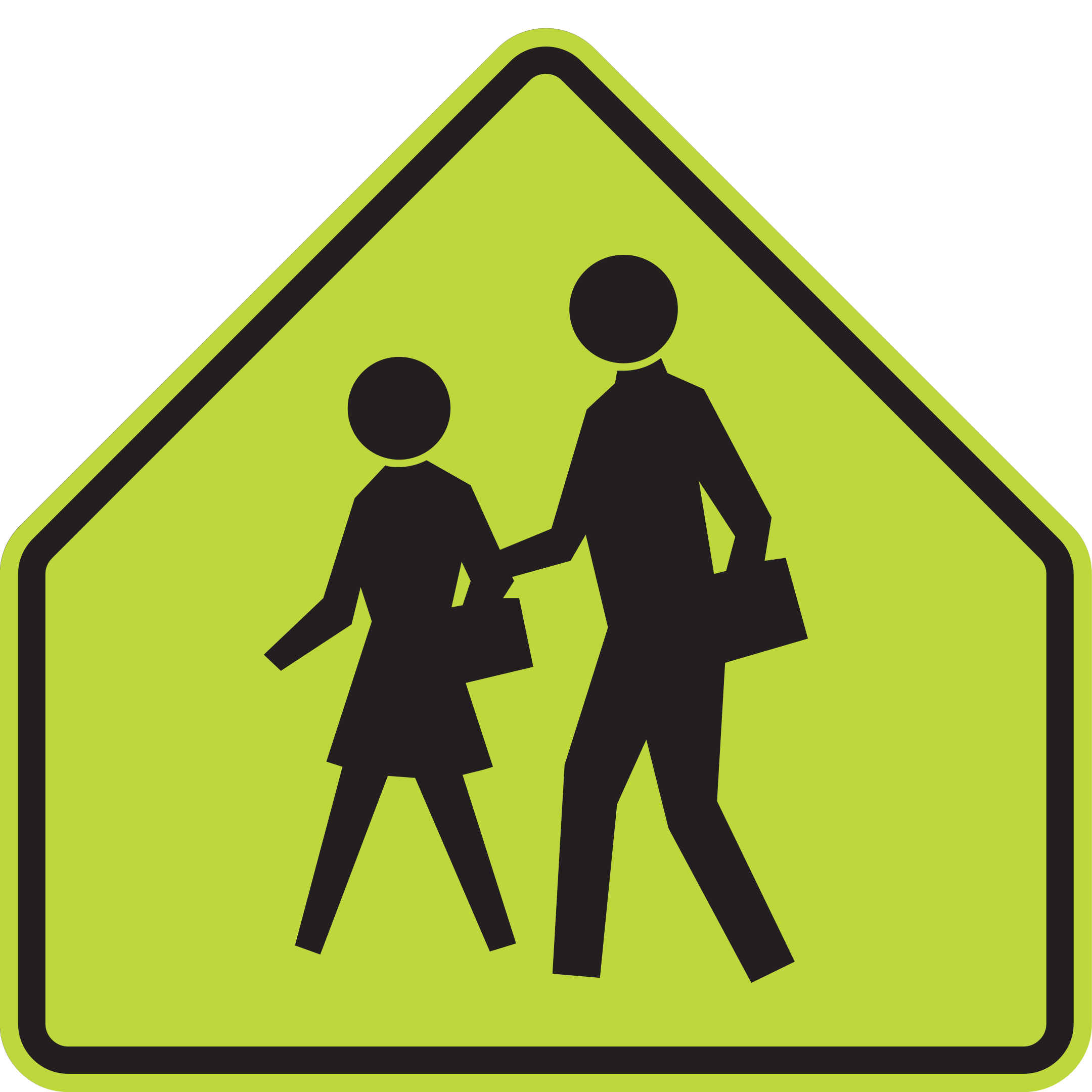

Read below the school symbol
In the pictured school-crossing assembly, the downward-pointing arrow identifies the location. Do not replace that arrow with a guessed distance. The school-area guide and crossing guide preserve their original illustrations and explanations so you can see the distinction rather than learning a single label for every school-related picture.
Compare the people and the panel
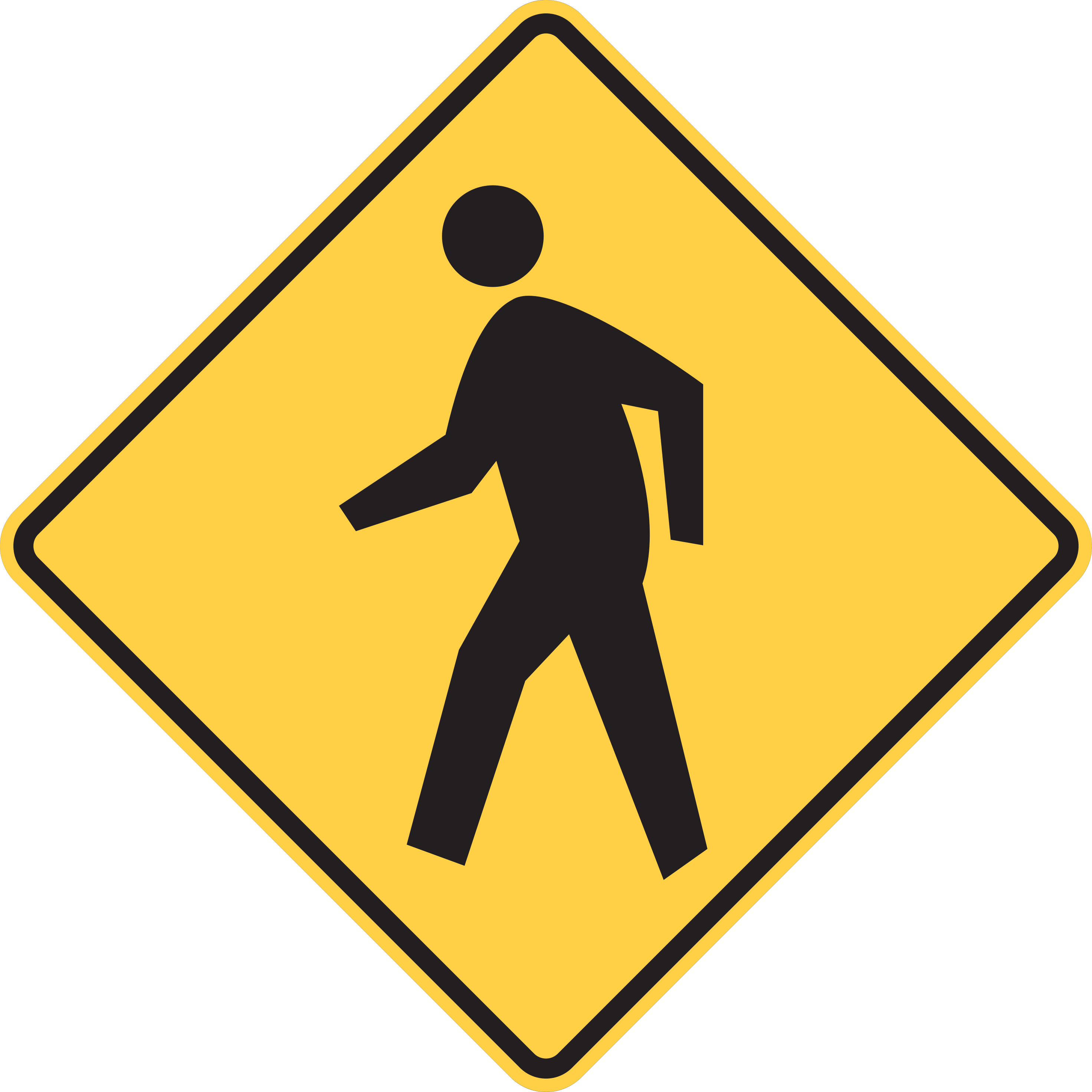
A pedestrian warning also asks you to watch for people, but it uses a different figure and panel shape. A quick glance at a walking person is therefore not enough to identify the exact school message. Name the outline, then the symbol, then the plaque. On the road, continue looking at the crossing approaches and the travel path instead of keeping your eyes on the sign after its meaning is understood.
Keep local numerical rules separate
The school symbol does not provide a speed, start time or end time on its own. A real school-speed assembly may add conditions that must be read at that location. This recognition guide does not infer them from the color of an illustration. Use your state handbook for local application and the actual posted sign for the present road. The national contrast questions remain independent study records, not a published school-zone rule or a passing guarantee.