
Road-sign category · 2 illustrated guides
Railroad Crossing Signs
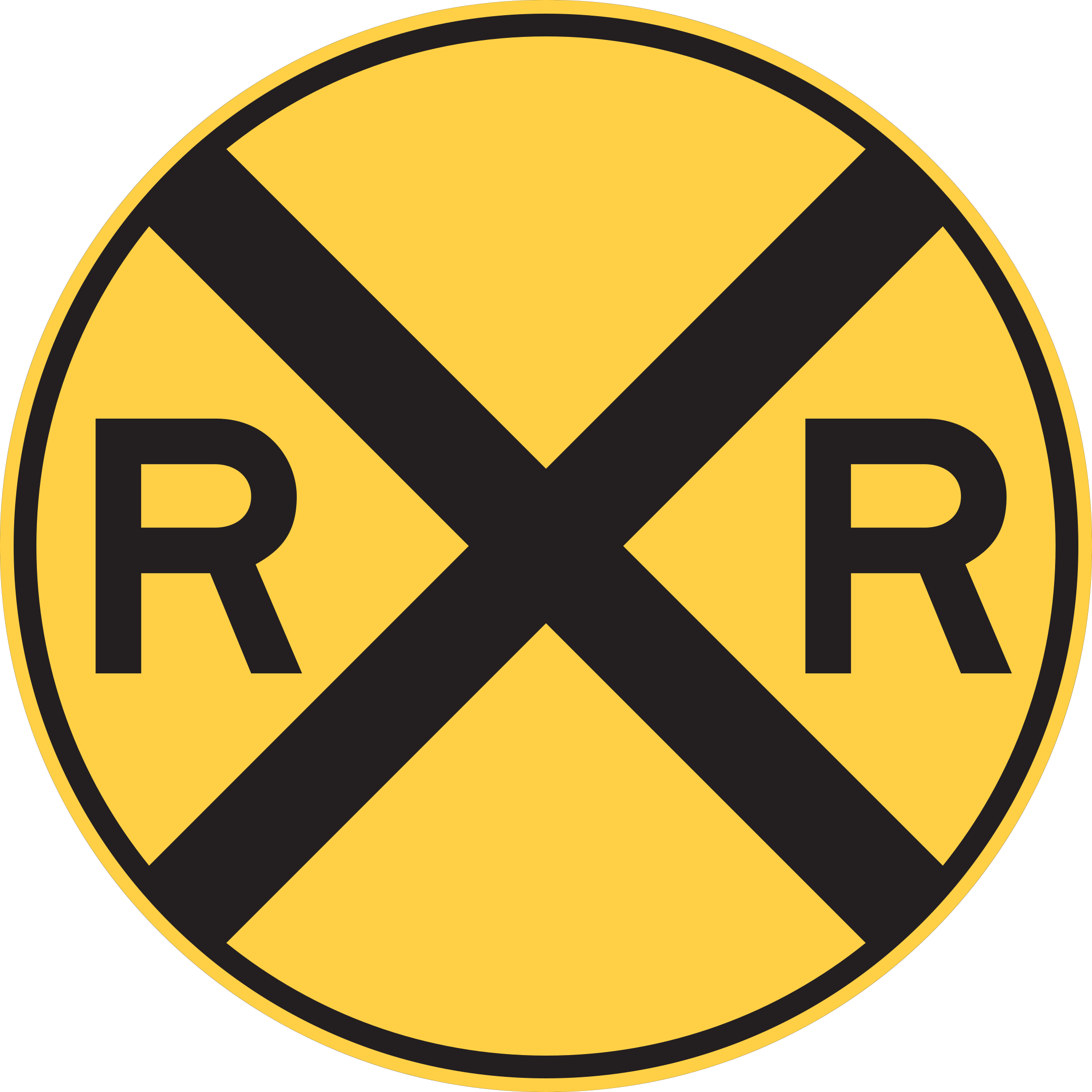
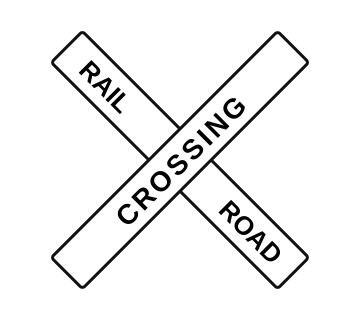
Railroad signs make an important distinction between advance notice and the crossing itself. The round yellow railroad warning prepares you before the tracks. The crossbuck marks the crossing location. Neither picture tells you that a train is absent, and the lack of a gate does not remove the need to observe rail traffic and actual crossing controls. Read STOP or YIELD signs, signals, gates and track information as part of the complete installation. The examples below explain those different roles, including why available space beyond the tracks matters before a vehicle begins crossing.
Illustrated signs in this category
Read the message before choosing the response
Separate advance warning from the crossing location
The round yellow warning gives notice before the tracks. Its circle, X and two Rs help identify a railroad crossing ahead, leaving time to look for the crossing and traffic waiting there. The white crossbuck serves a different location role: its crossed boards and RAILROAD CROSSING words identify the crossing at the tracks. Do not confuse preparing for a later crossing with having reached it. The linked guides retain both pictures and their own original practice questions so the distinction can be checked directly, not learned from a substituted railroad image.
Read the complete crossing installation
At the crossing, look for the actual STOP or YIELD sign, signals, gates and track information. A crossbuck does not promise that trains are absent or that the line is abandoned. An advance warning likewise does not say that a train is present at that instant. The lack of a gate is not a reason to stop observing rail traffic. Look and listen, yield to approaching trains and obey the controls used at that location rather than expecting every crossing to have the same equipment or traffic arrangement.
Check the space beyond the tracks
Before entering, consider whether the available space beyond the tracks can hold the whole vehicle. Being able to start across is not enough if a queue would leave part of the vehicle on the crossing. Use the advance warning to notice slowing traffic early and the crossing controls to judge the situation at the tracks. Keep the two roles separate when practicing: one sign announces what is ahead, while the other identifies the location. Neither sign removes the need to observe trains, waiting vehicles and the actual path through the crossing.