Road-sign category · 29 illustrated guides

Warning Signs

Warning signs give you time to prepare for a condition ahead. Three useful groups are road alignment, changing space and changing surface. A curve, a lane ending and slippery pavement all call for attention, but not the same decision. Trace the pictured path, identify which dimension is restricted or read which surface is affected. The yellow family tells you to look ahead; the actual symbol tells you what to look for. These examples preserve their individual direction and values, rather than treating a familiar yellow diamond as a universal answer.

Illustrated signs in this category

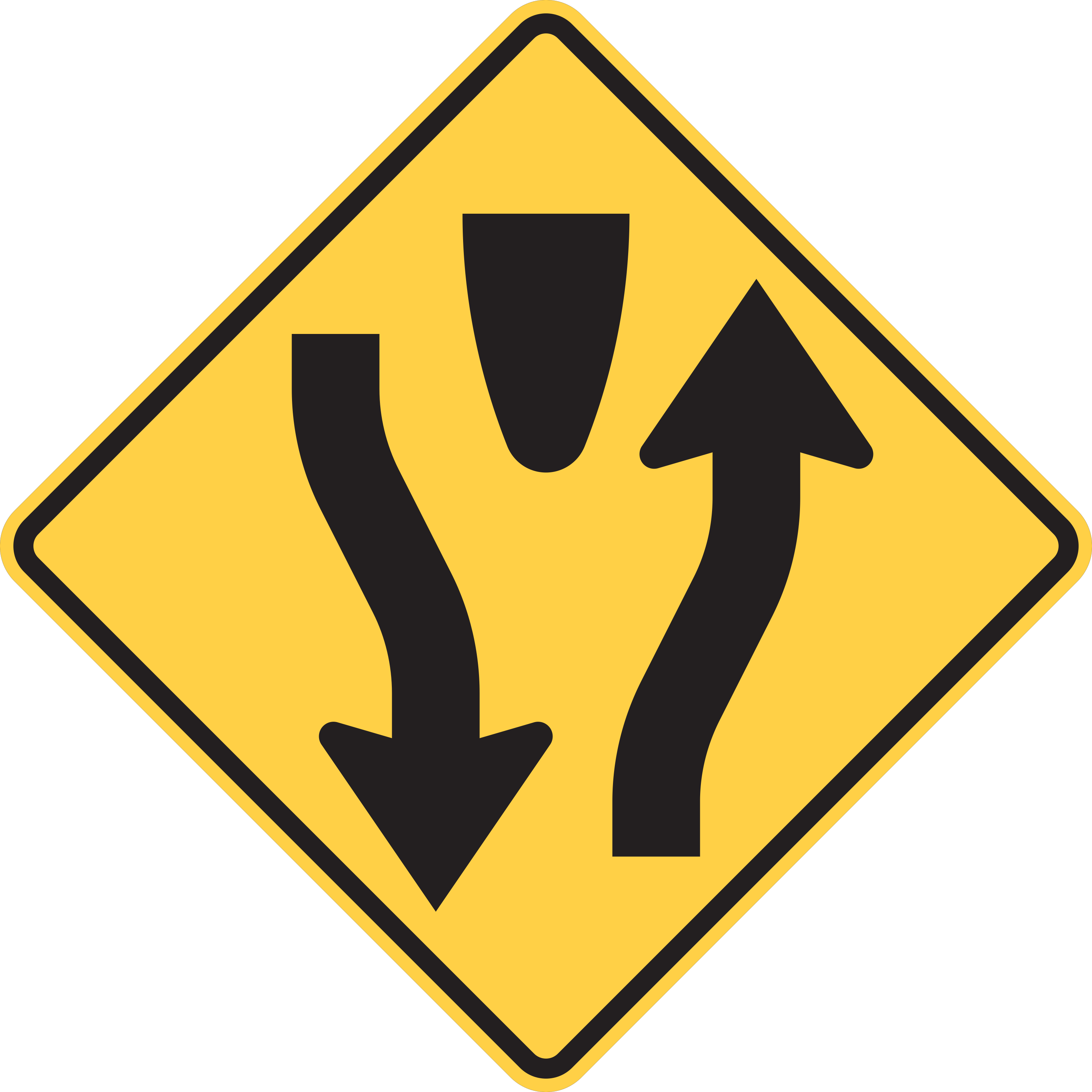
Yellow diamond with opposing black arrows and a black divider near the top.

Divided Highway Ahead Sign

The road ahead separates opposing traffic with a median or another physical barrier.

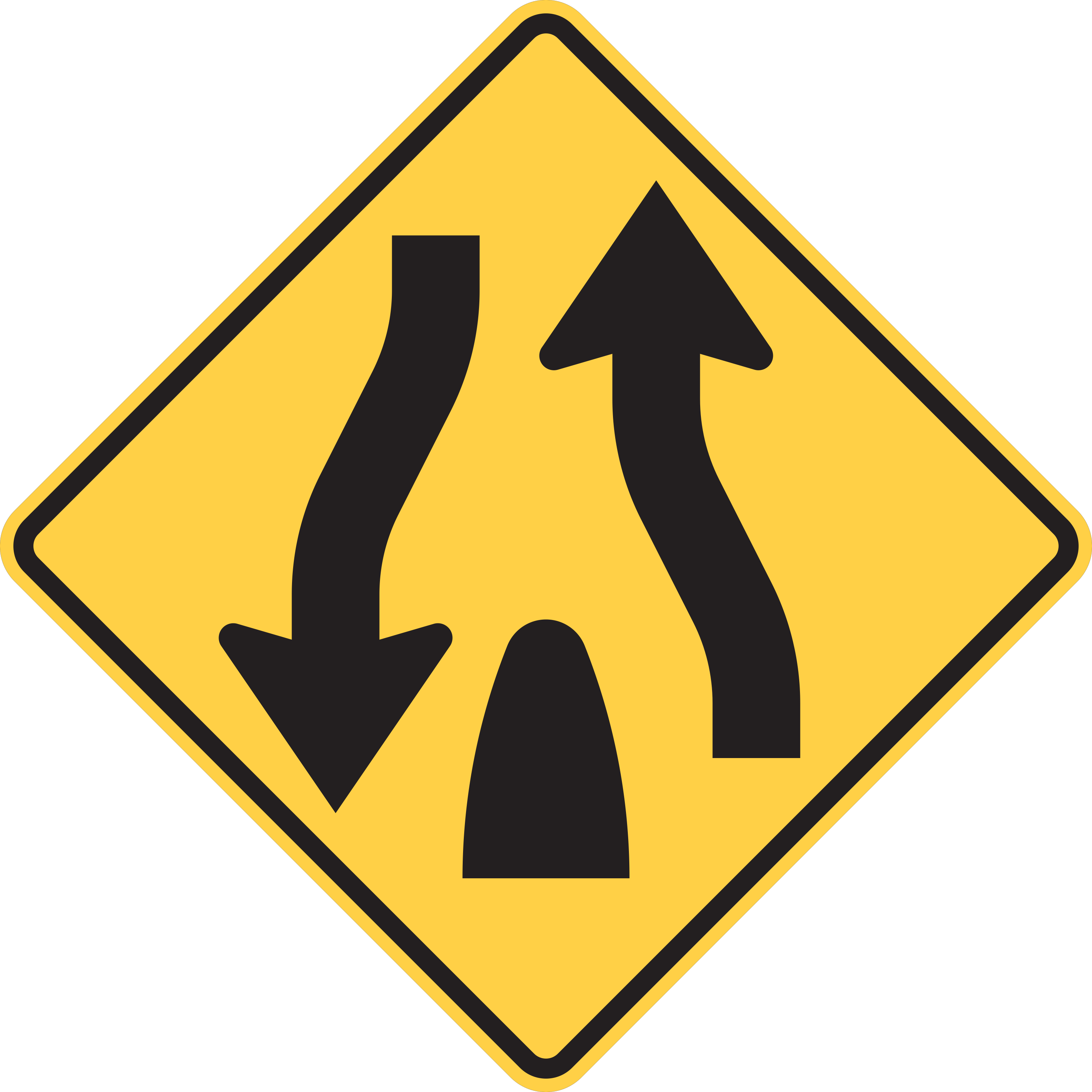
Yellow diamond with opposing black arrows and a black divider near the bottom.

Divided Highway Ends Sign

The physical separation between opposing traffic is ending ahead.

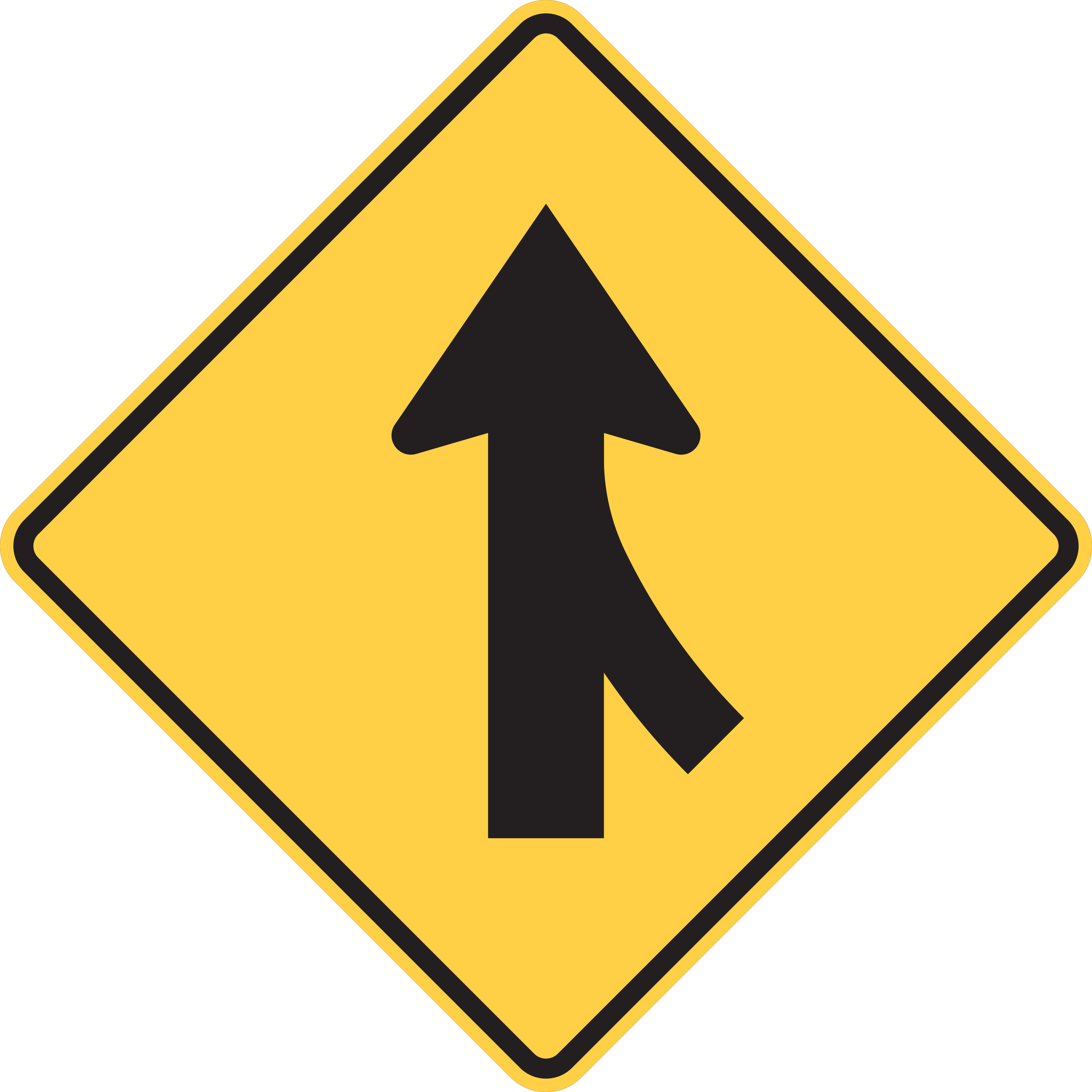
Yellow diamond with a main upward arrow joined by a branch from the right.

Merge Sign (Merging Traffic)

Traffic from another roadway will join the main stream ahead.

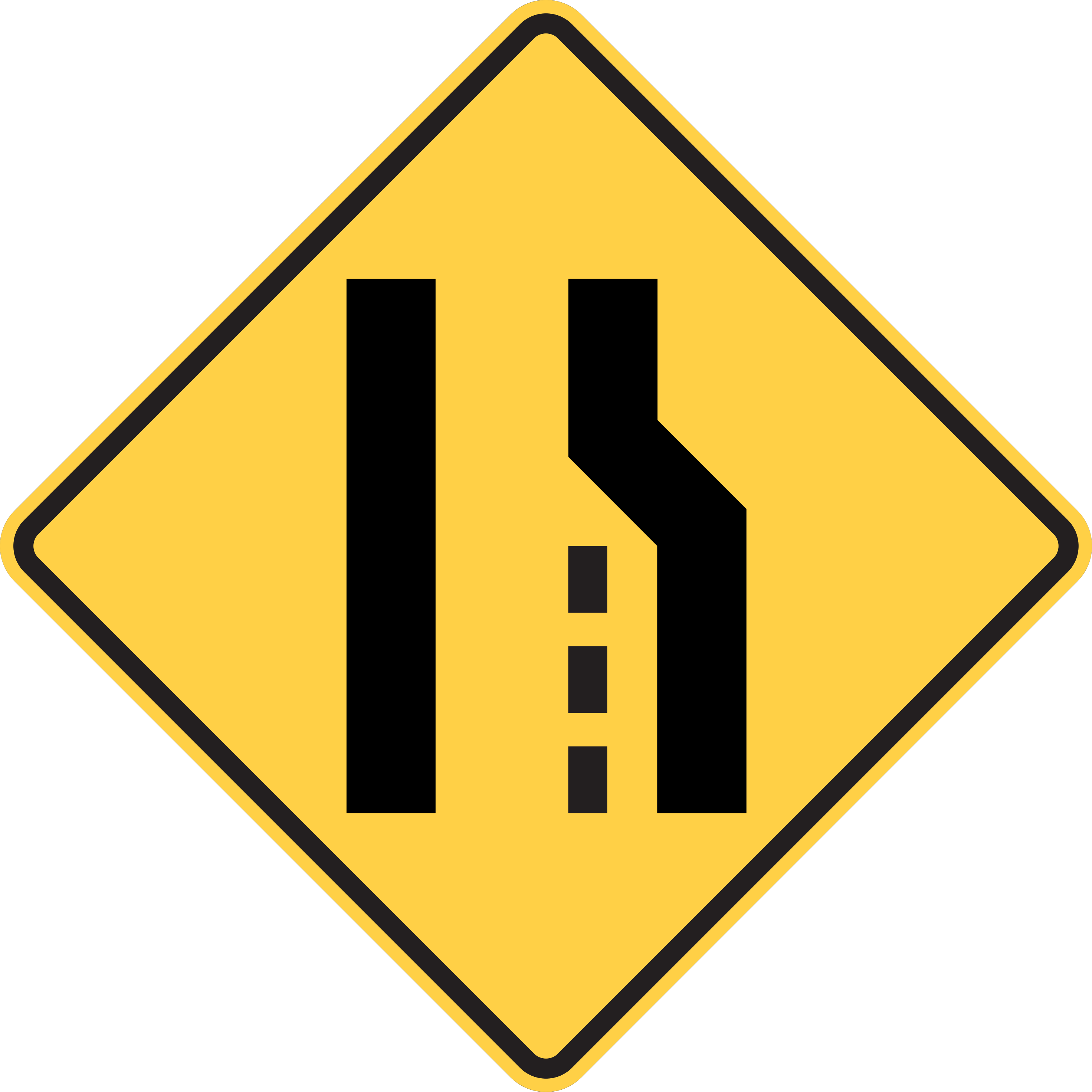
Yellow diamond with a straight left line and a right line tapering left.

Lane ends

The number of lanes carrying traffic in your direction will decrease ahead.

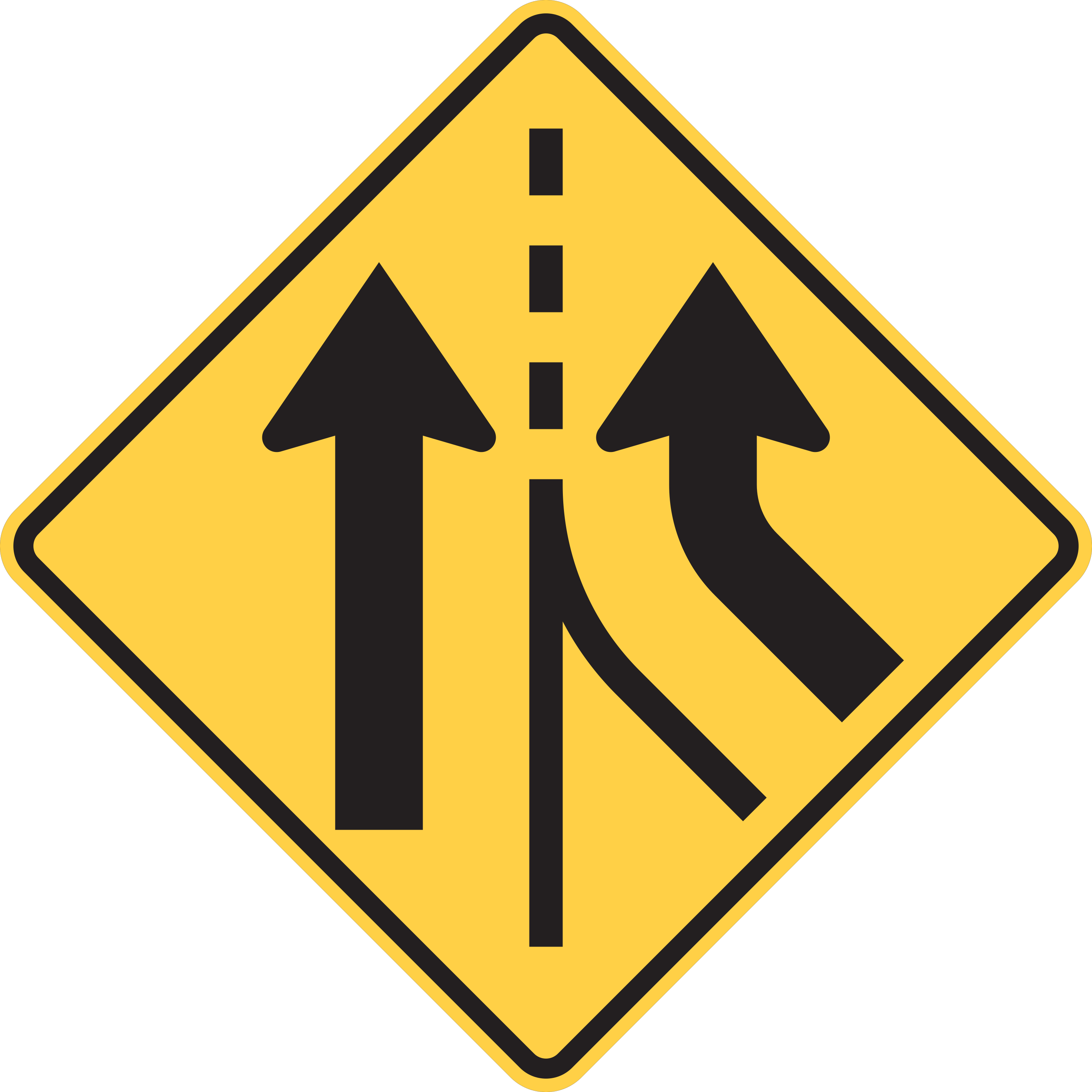
Yellow diamond with two upward arrows separated by a dashed line, the right arrow curving inward.

Added lane

Another roadway joins and becomes a separate additional lane.

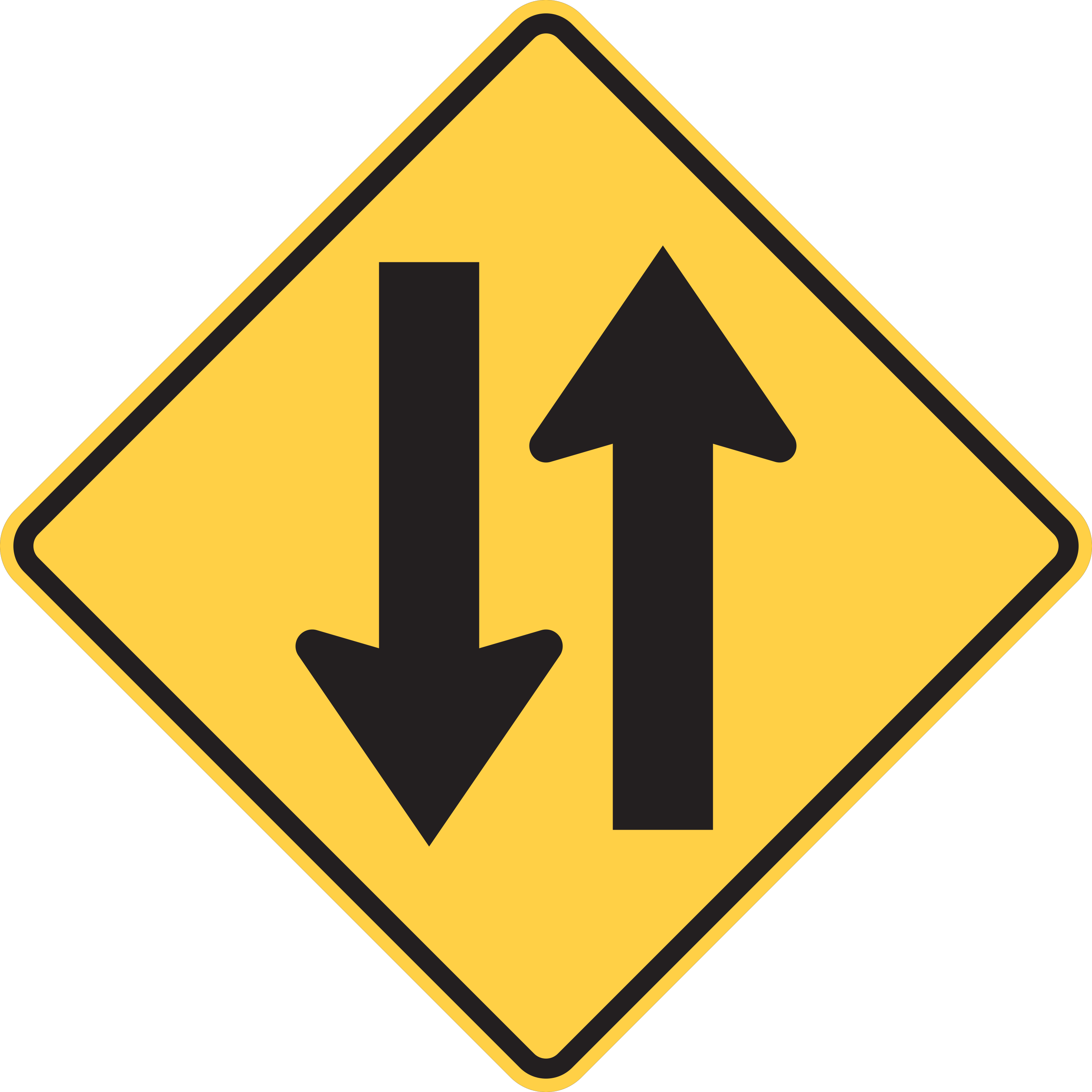
Yellow diamond with one downward arrow and one upward arrow.

Two-way traffic

Traffic travels in both directions on the roadway ahead or along the section being marked.

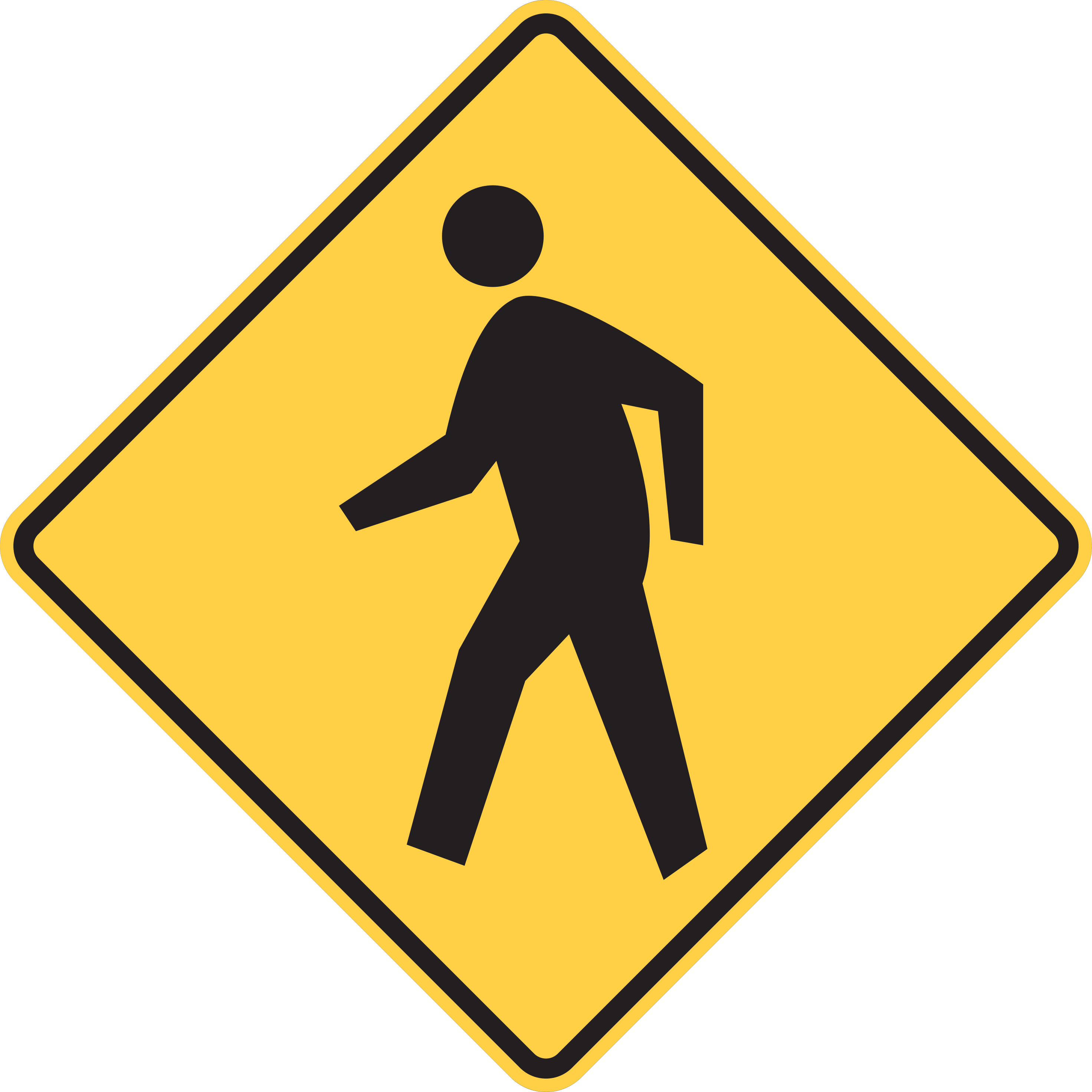
Yellow diamond containing a walking-person silhouette.

Pedestrian crossing warning

People may enter, cross, or share the roadway in the area.

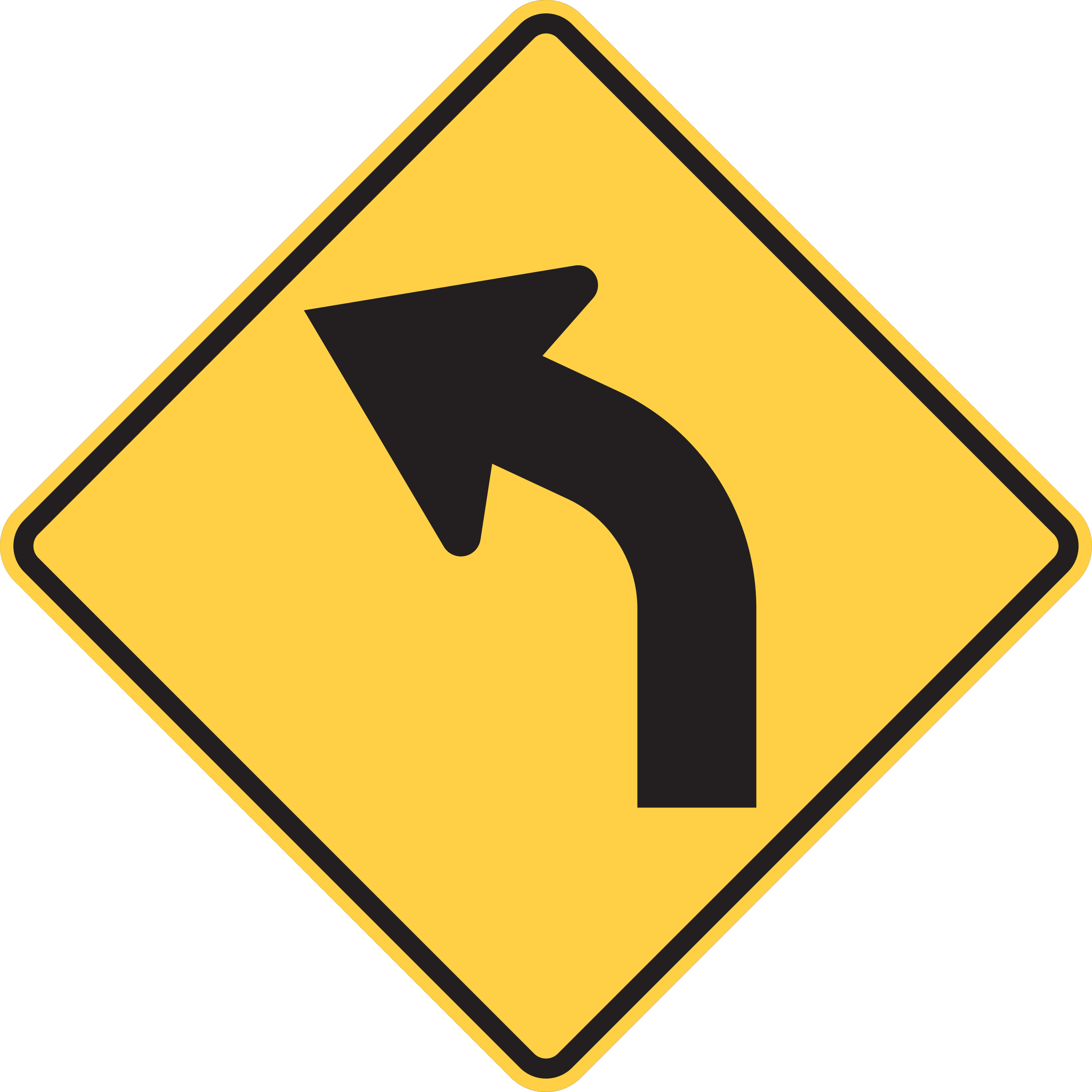
Yellow diamond with an arrow curving left.

Curve left

The road curves to the left ahead.

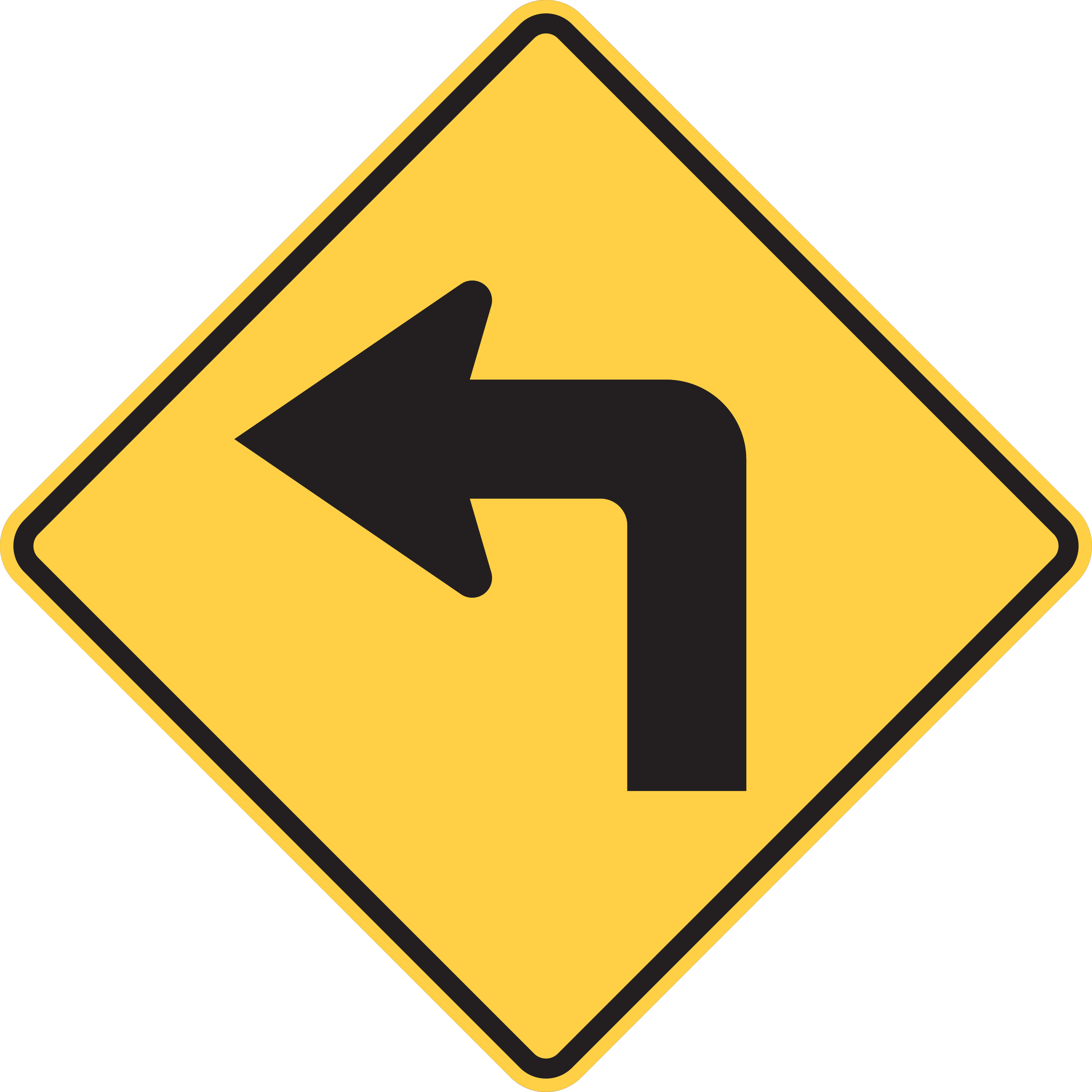
Yellow diamond with a sharply bent black arrow pointing left.

Sharp turn left

A sharp left turn in the road is ahead.

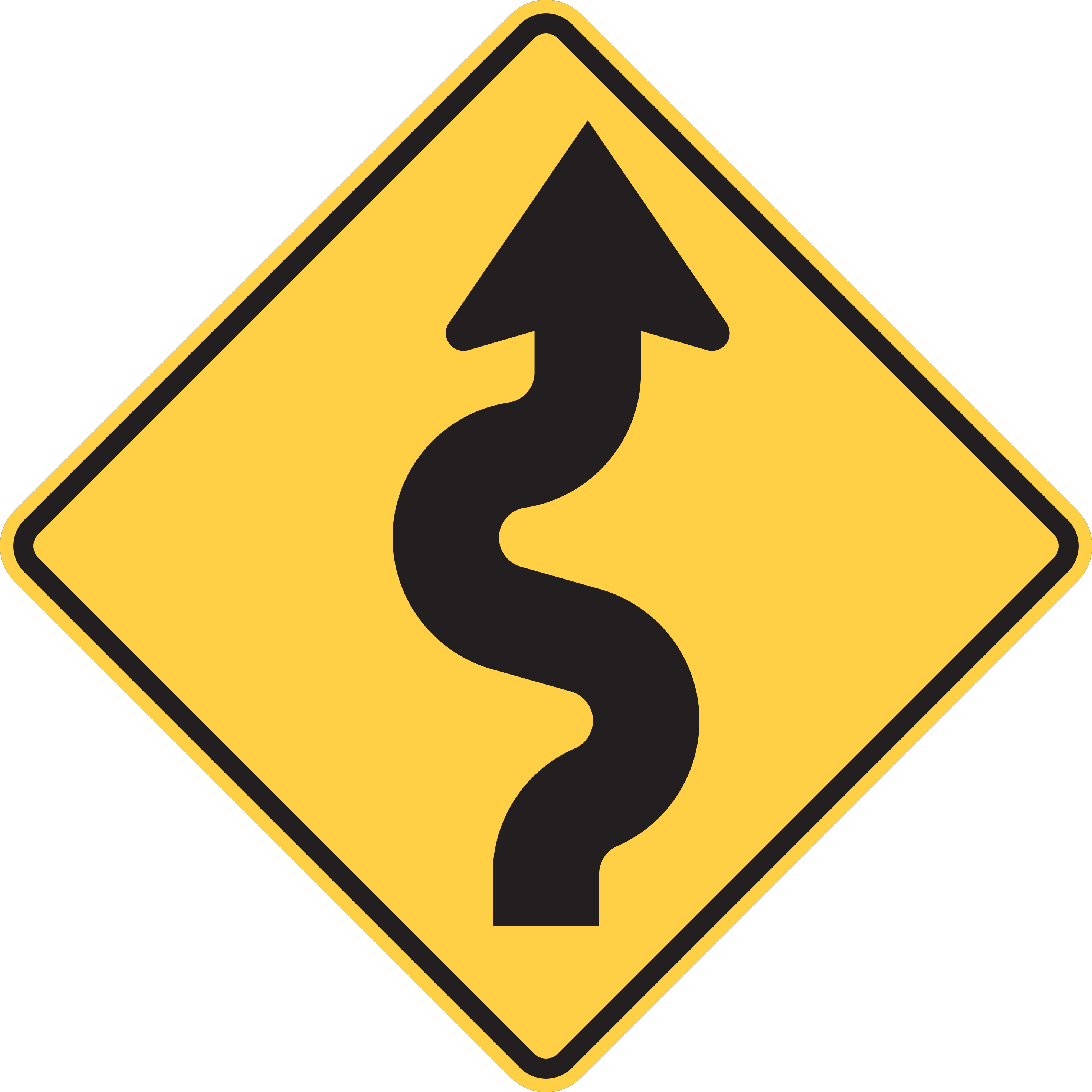
Yellow diamond with a single winding black arrow.

Winding road

Several curves are close together ahead.

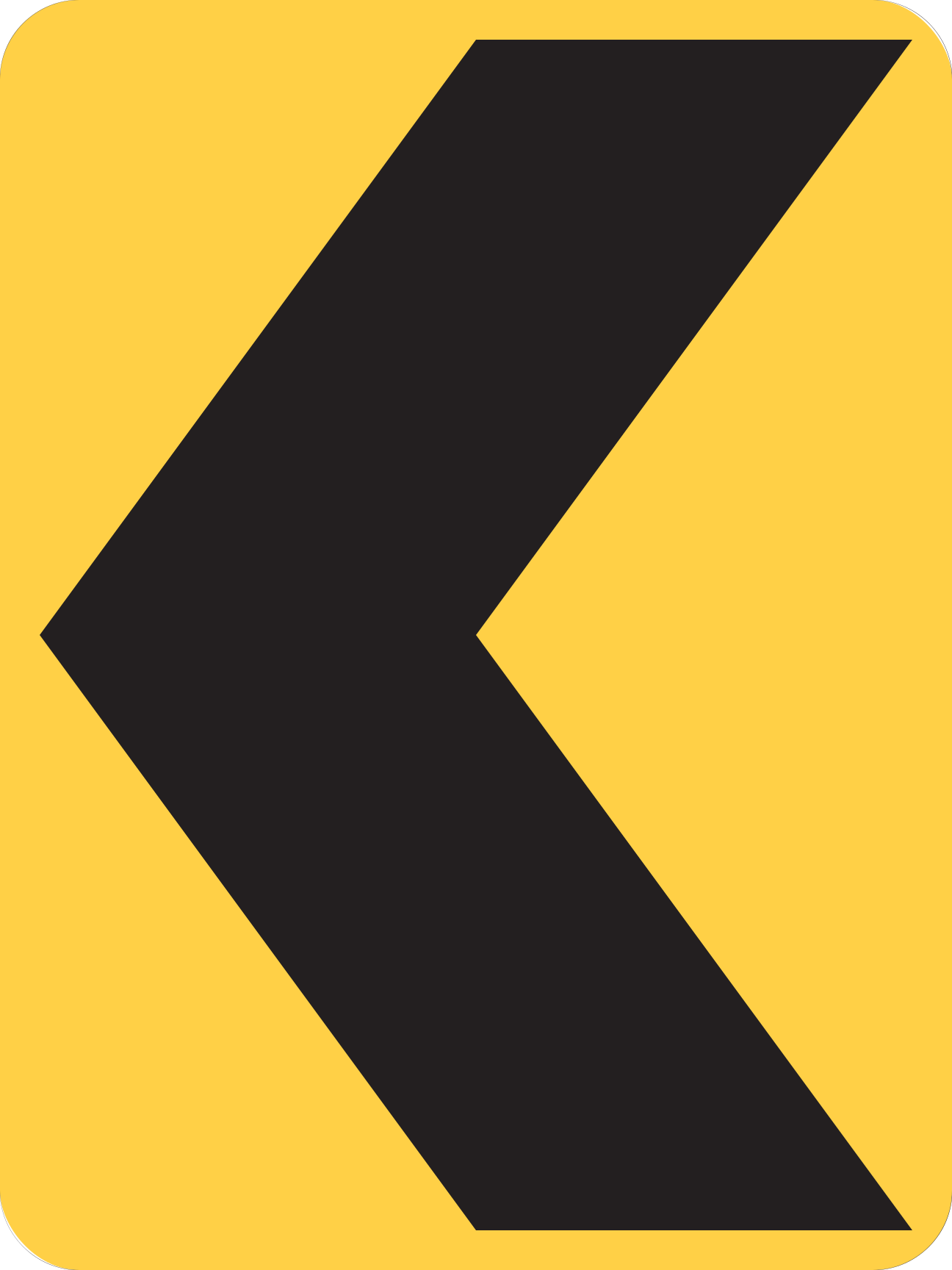
Yellow vertical rectangle with a bold black chevron pointing left.

Chevron alignment

Chevrons show the direction of a turn or curve and add guidance along its outside edge.

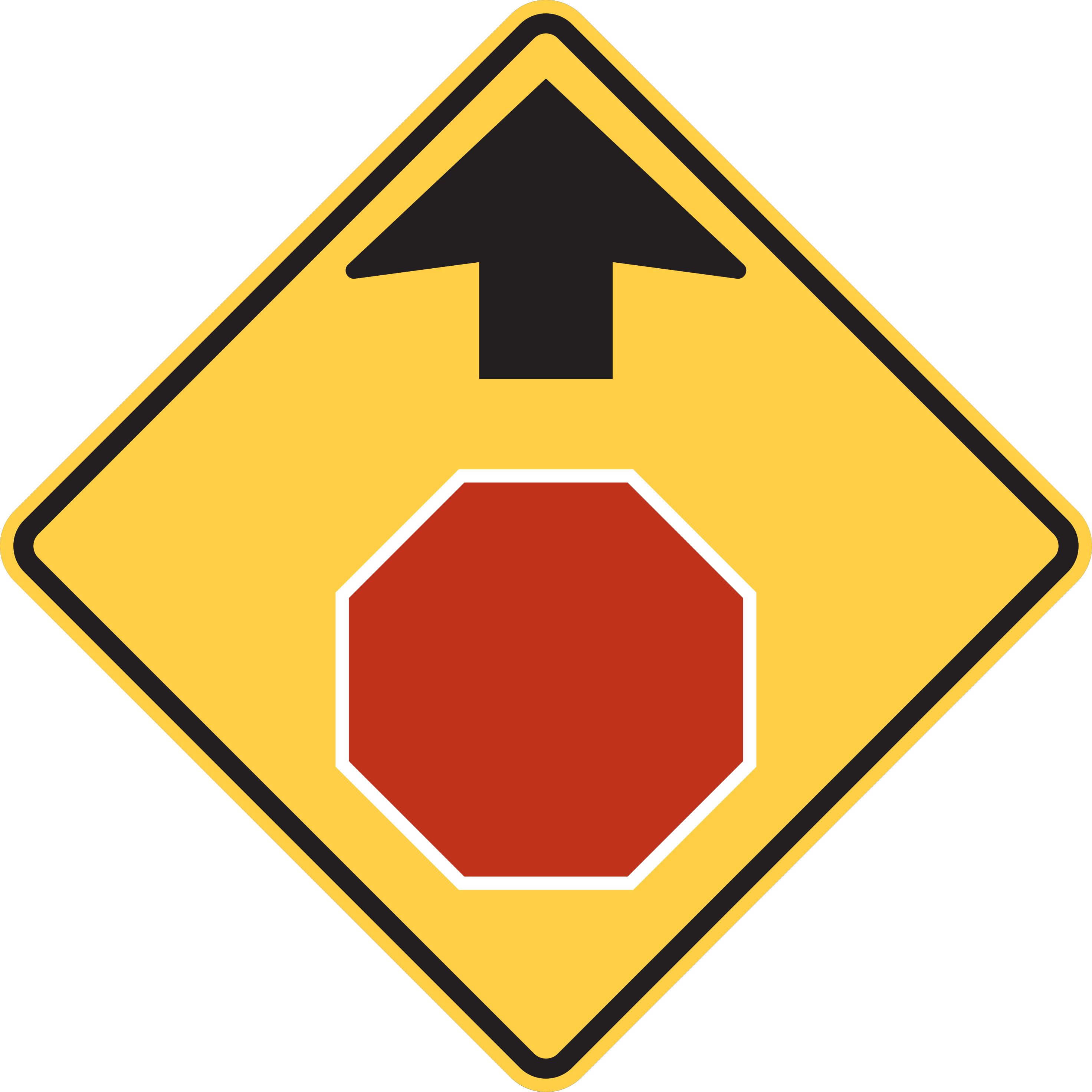
Yellow diamond with an upward arrow above a red octagon.

Stop ahead

A STOP sign controls traffic farther ahead.

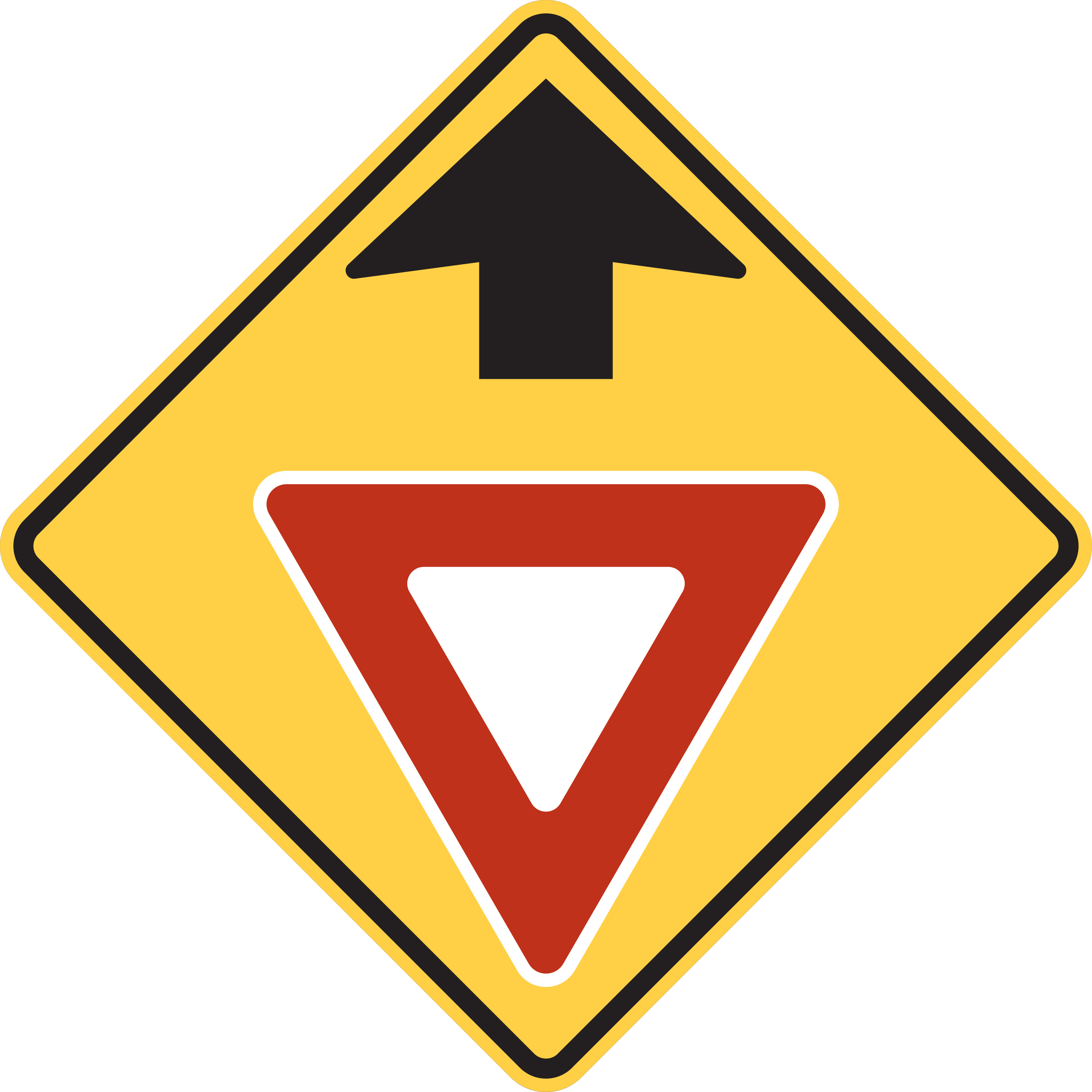
Yellow diamond with an upward arrow above a red-and-white triangle.

Yield ahead

A YIELD sign is ahead.

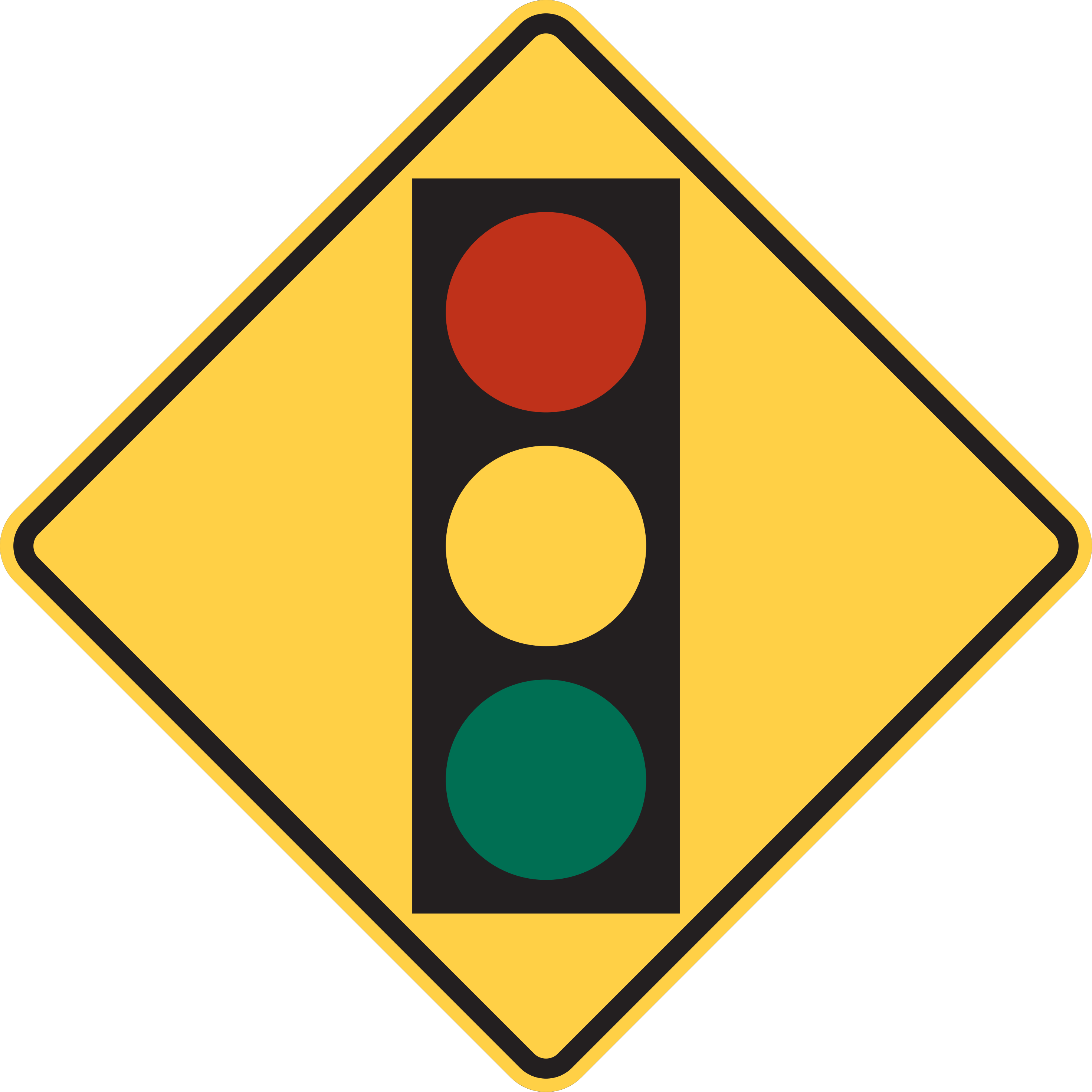
Yellow diamond containing a vertical red-yellow-green traffic signal.

Signal ahead

A traffic signal is ahead.

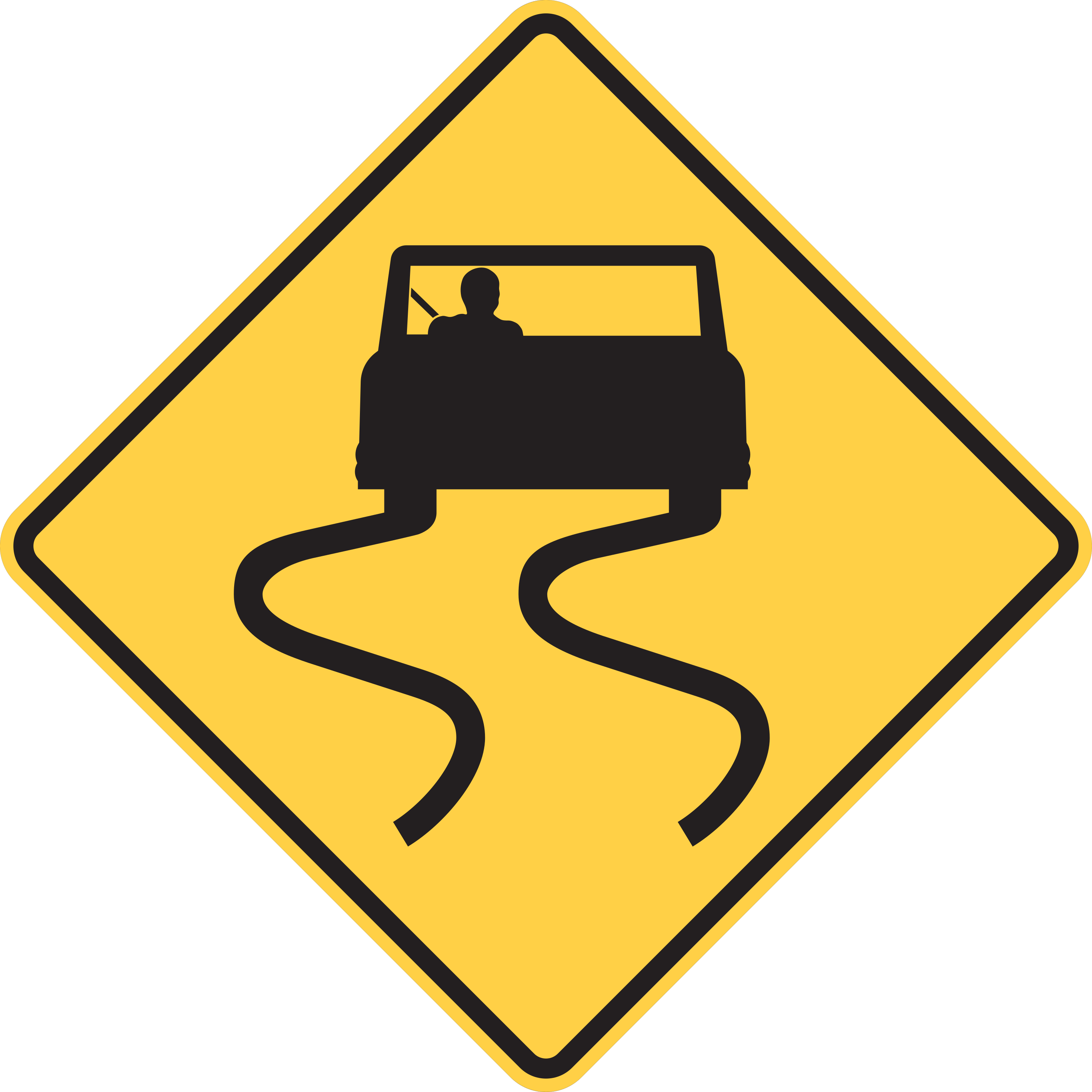
Yellow diamond with a car above two wavy tire tracks.

Slippery when wet

The road may become unexpectedly slippery, especially when wet.

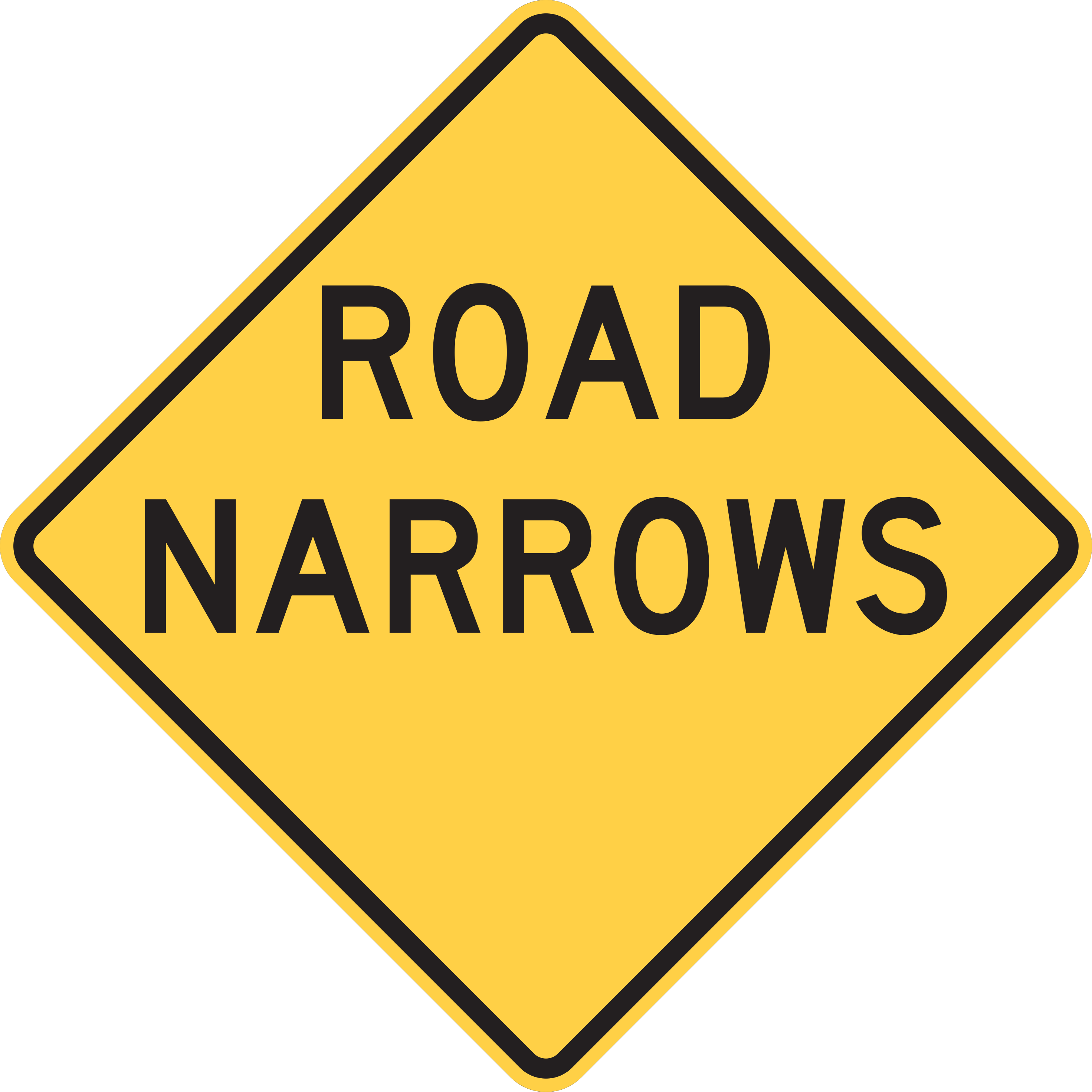
Yellow diamond with black ROAD NARROWS lettering.

Road narrows

The roadway becomes narrower ahead.

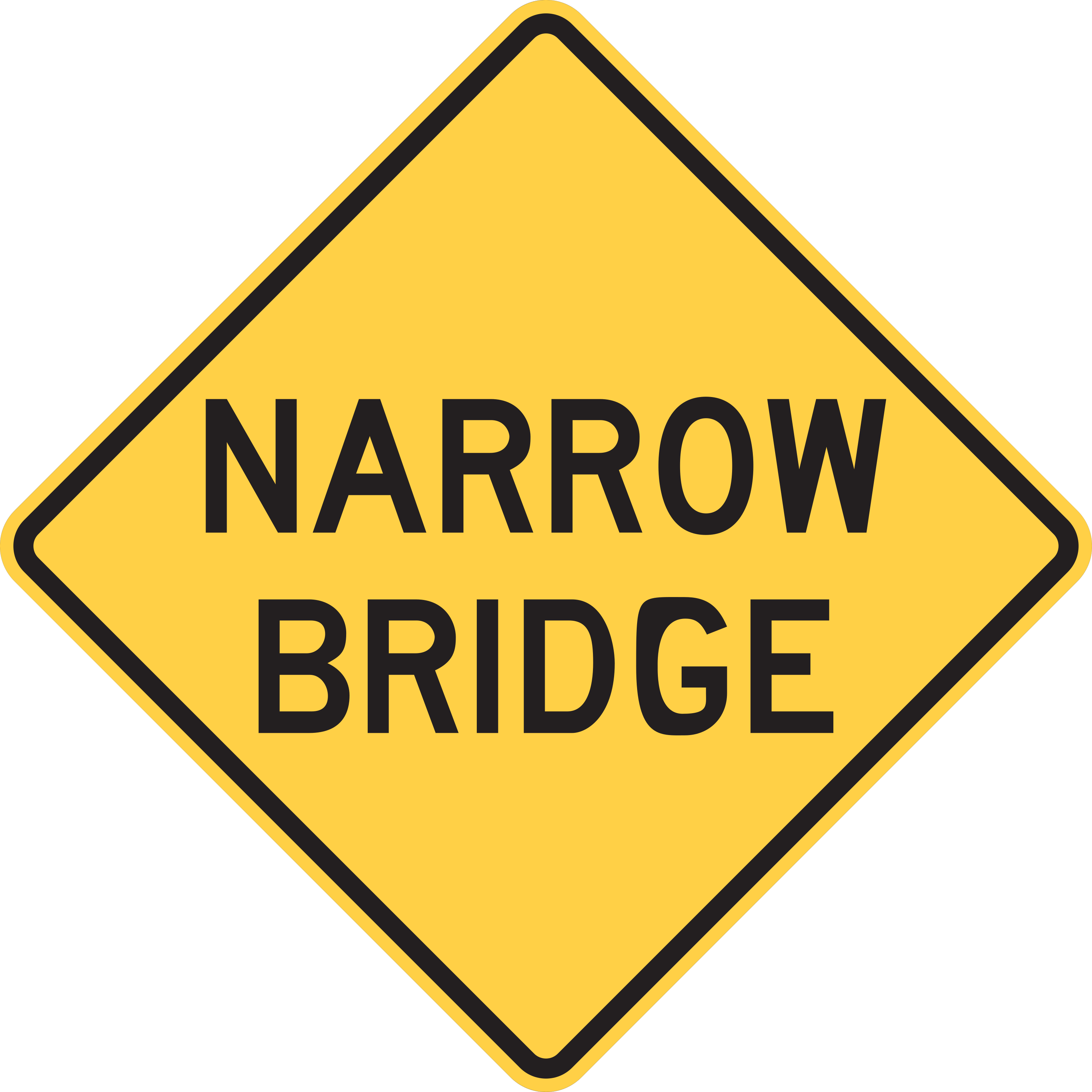
Yellow diamond with black NARROW BRIDGE lettering.

Narrow bridge

The bridge ahead provides less side-to-side clearance than you may expect from the approach.

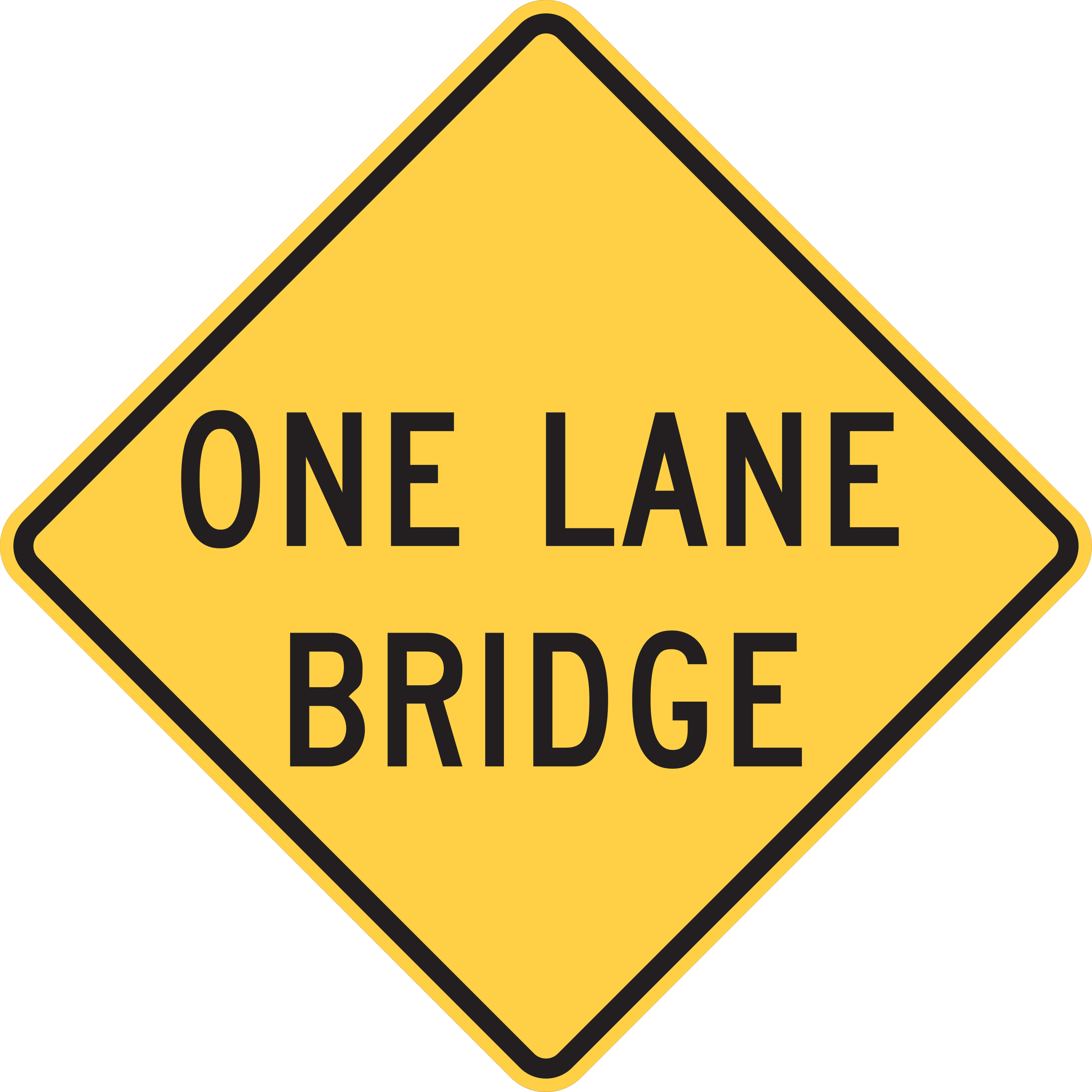
Yellow diamond with black ONE LANE BRIDGE lettering.

One lane bridge

The bridge ahead has only one usable traffic lane.

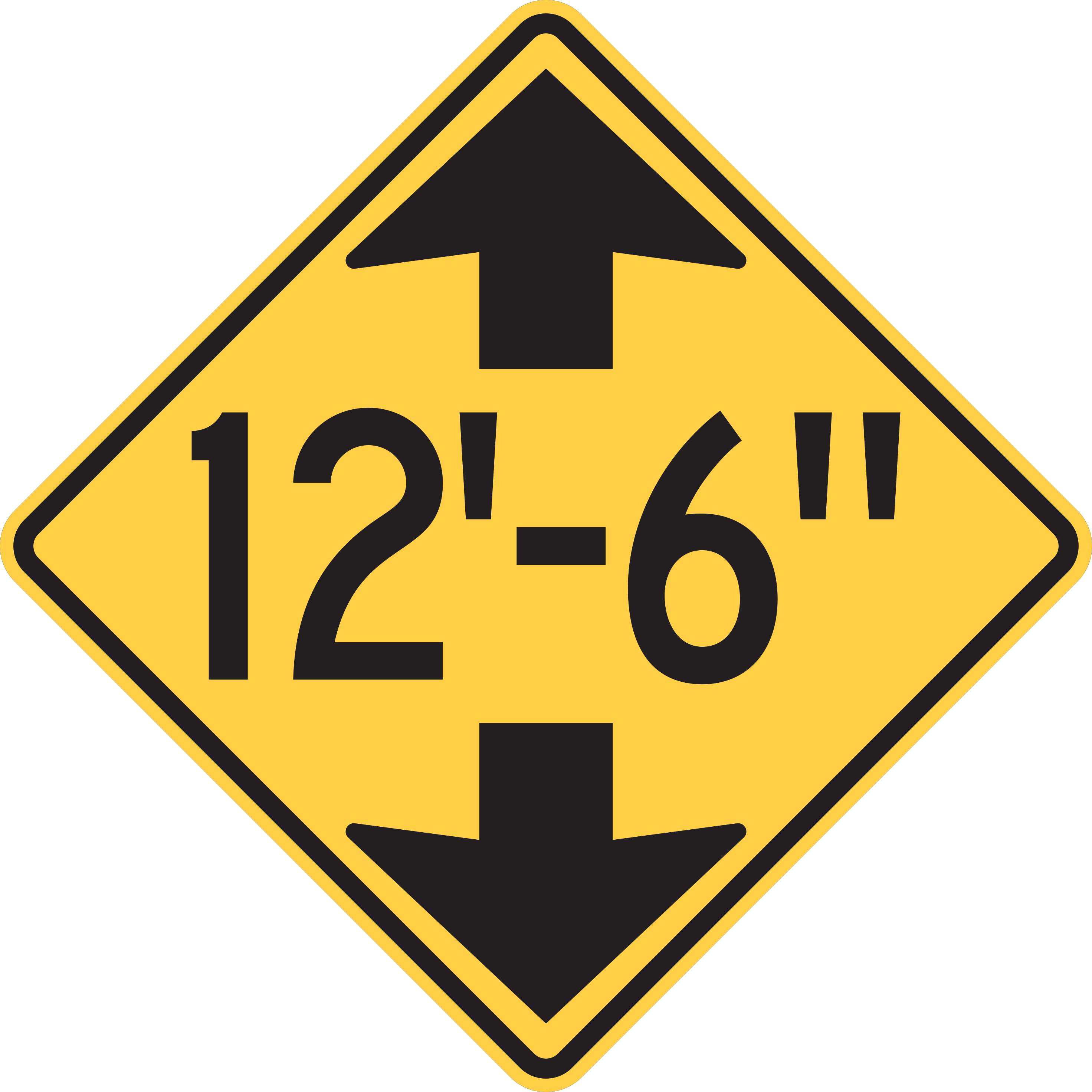
Yellow diamond with 12 feet 6 inches between an upward arrow and a downward arrow.

Low clearance

An overhead obstruction ahead has the vertical clearance shown.

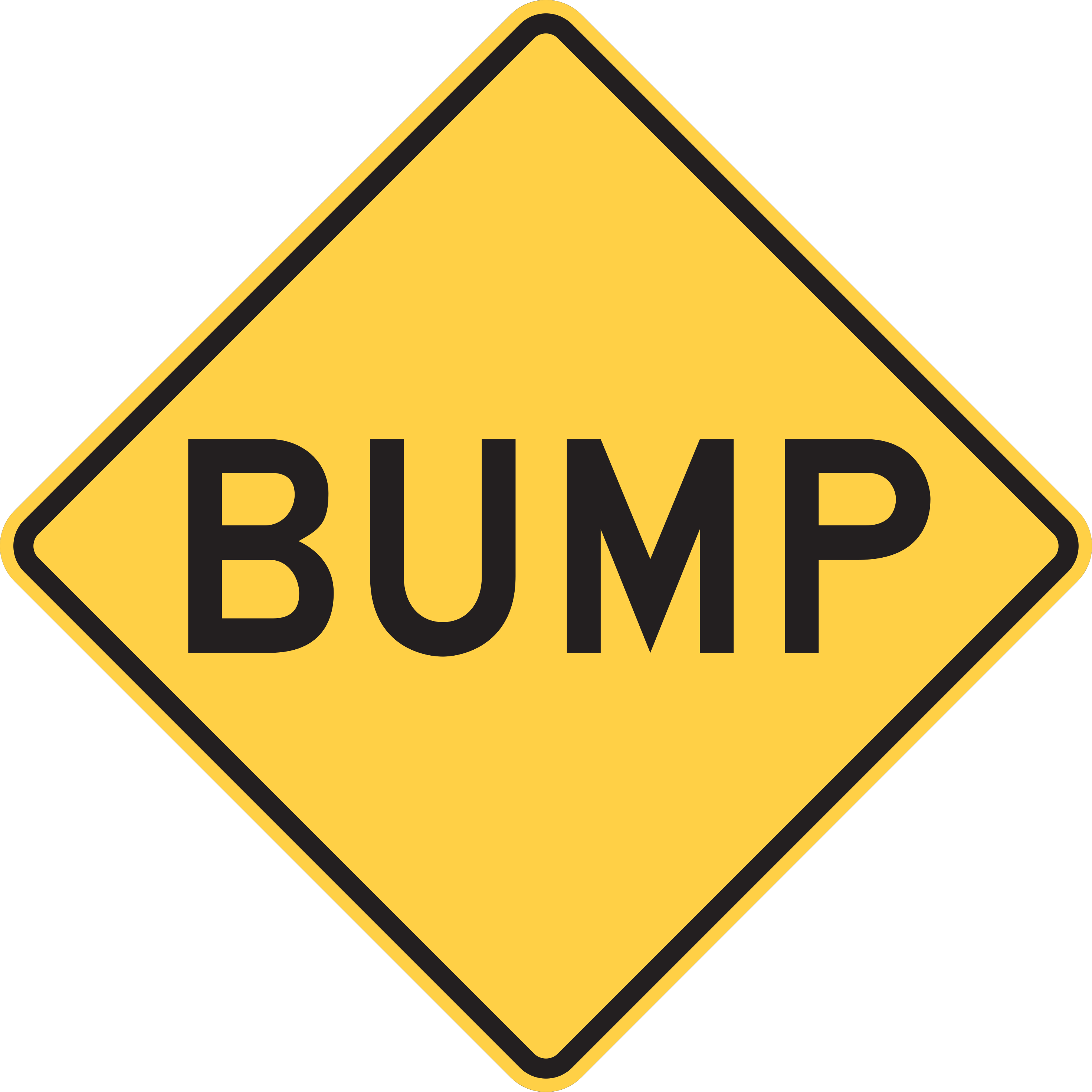
Yellow diamond reading BUMP.

Bump

A sharp rise or raised irregularity is ahead in the road surface.

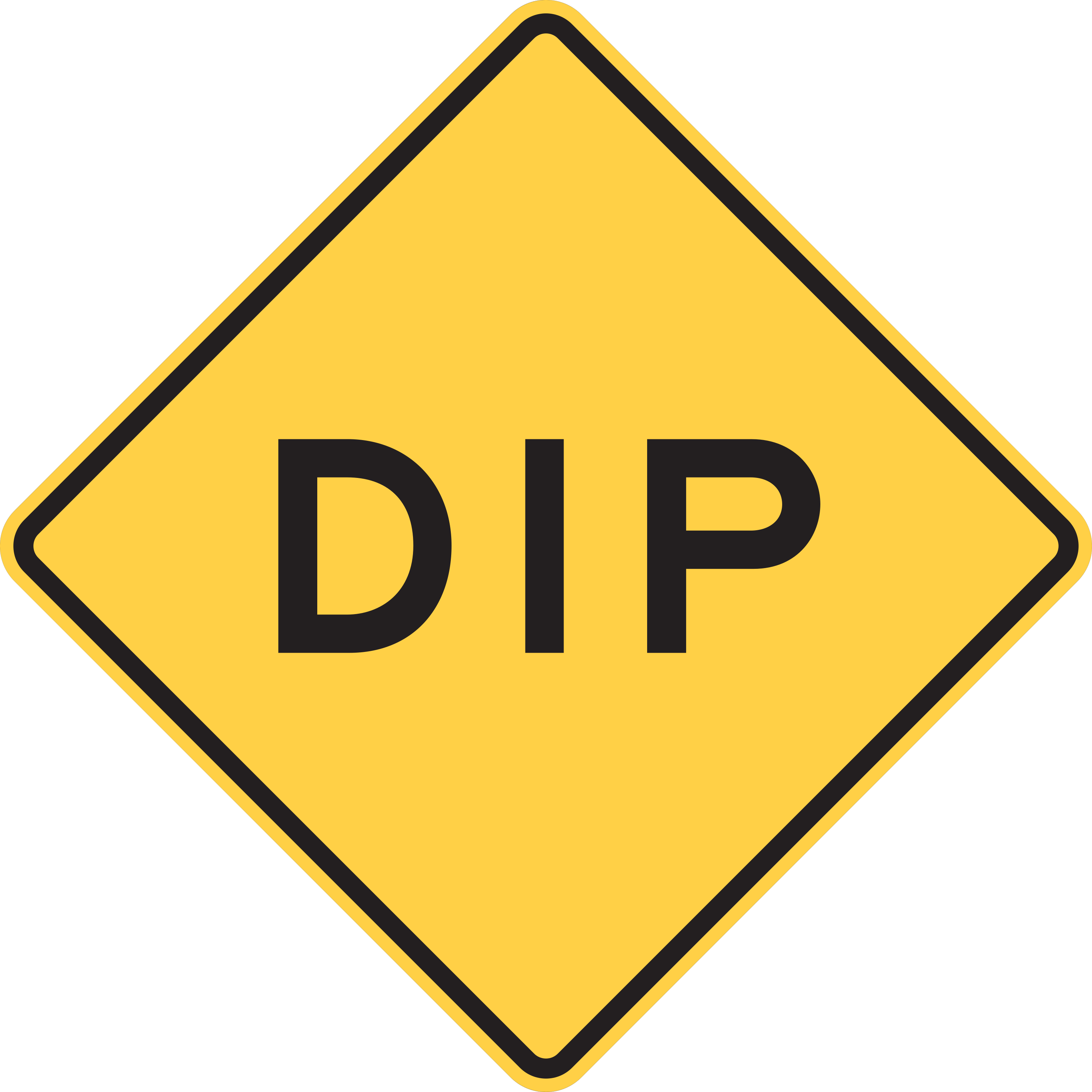
Yellow diamond reading DIP.

Dip

A depression in the roadway is ahead.

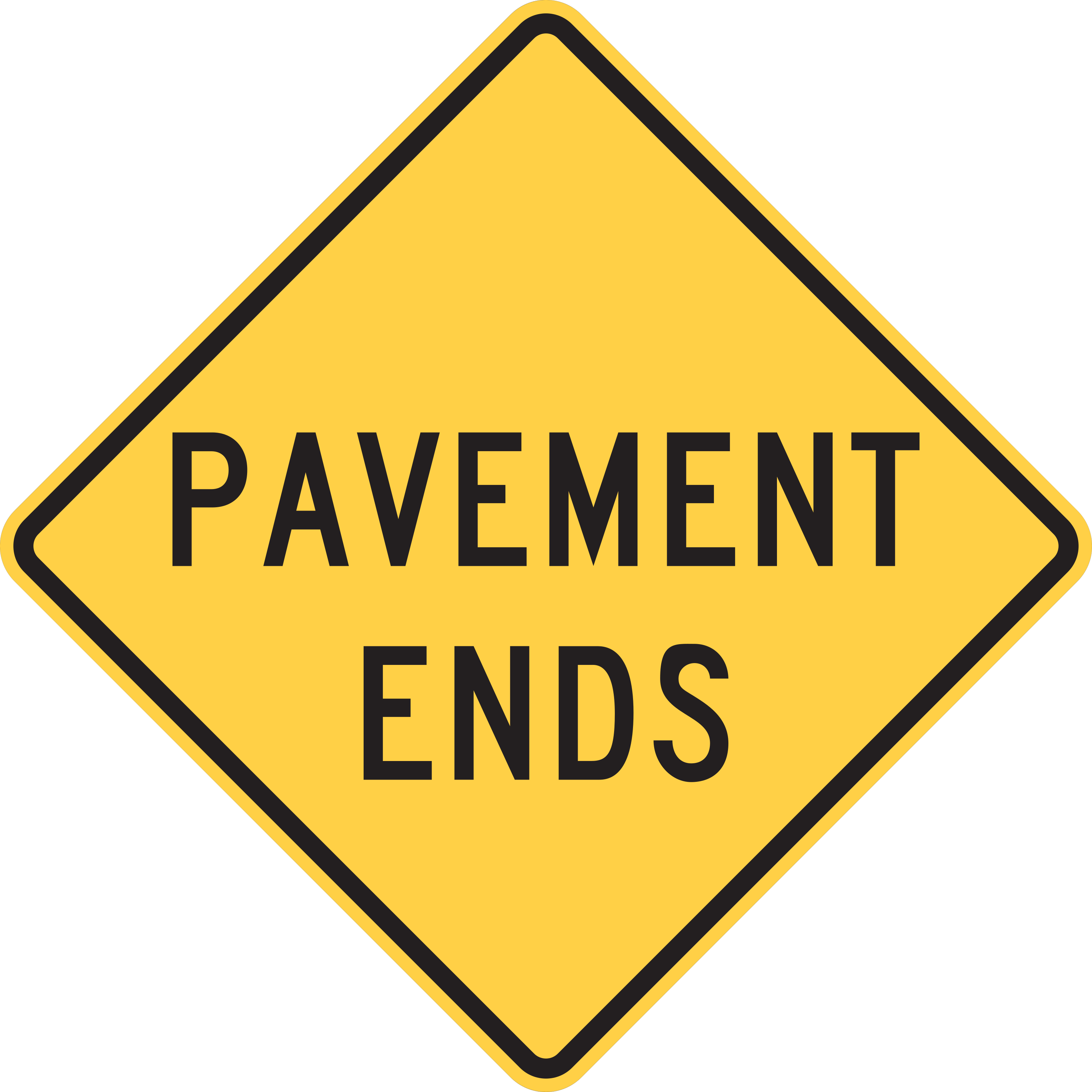
Yellow diamond reading PAVEMENT ENDS.

Pavement ends

The paved roadway changes to an unpaved surface such as gravel or earth ahead.

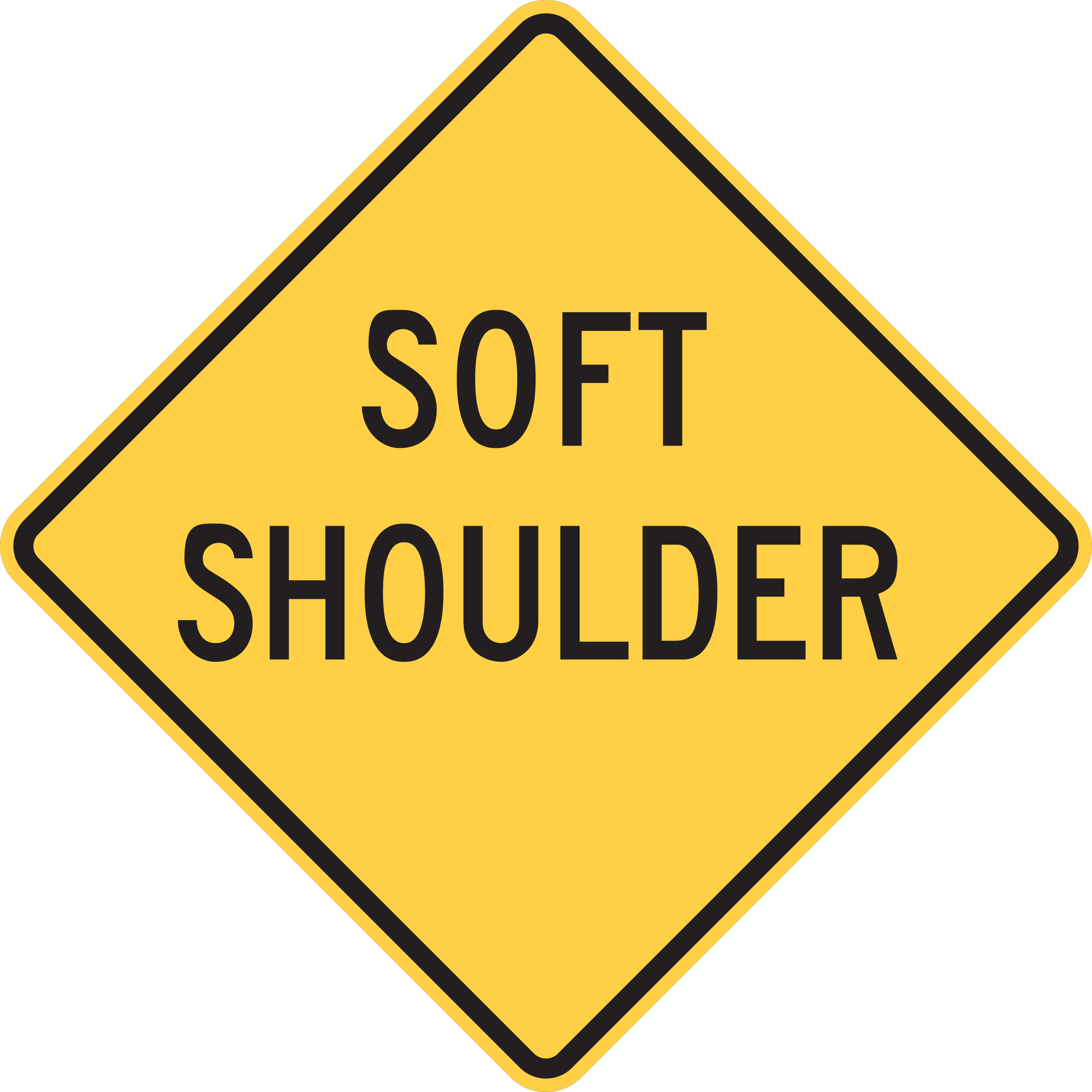
Yellow diamond reading SOFT SHOULDER.

Soft shoulder

The shoulder beside the traveled roadway is soft and may not support a vehicle like the main road surface.

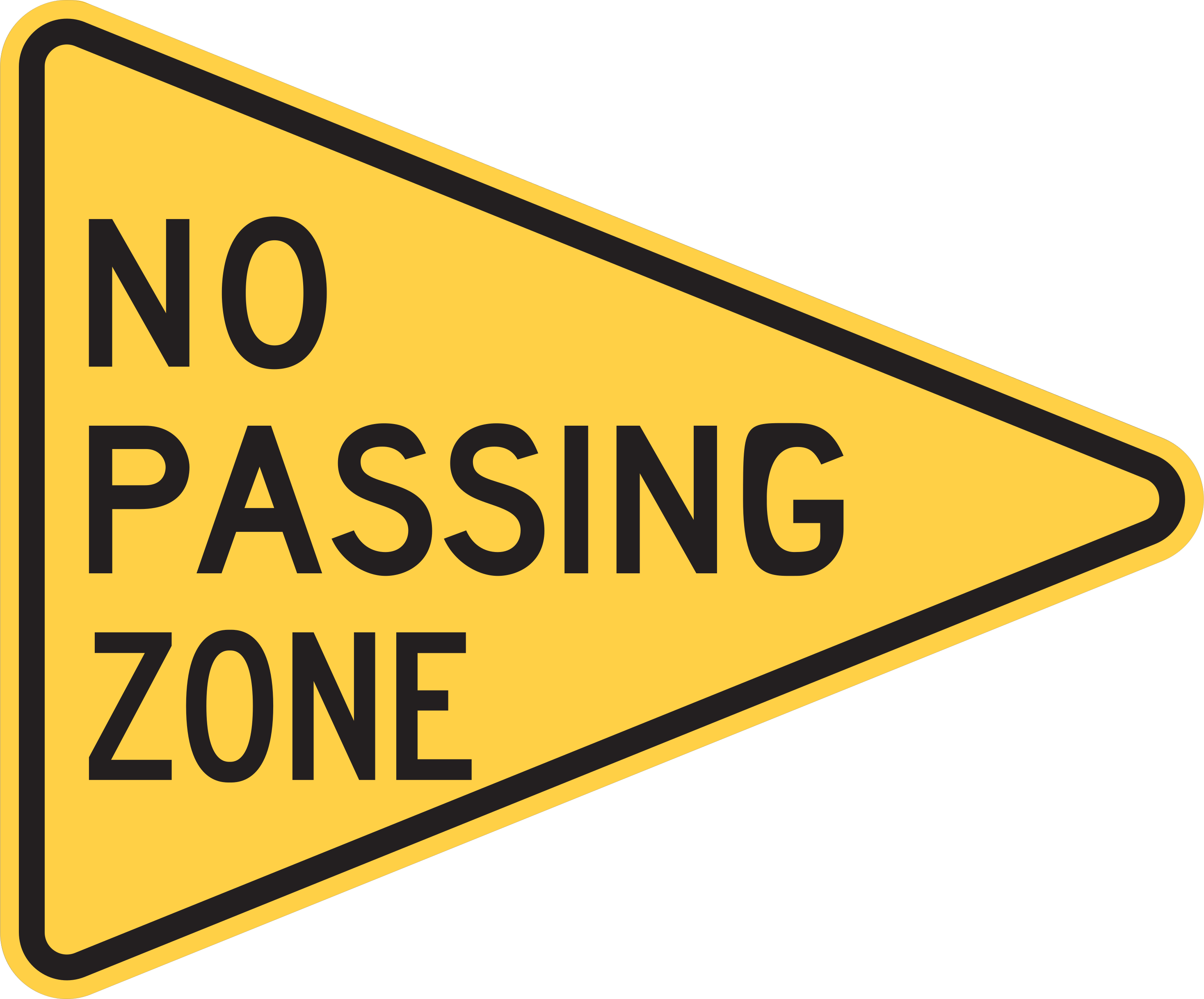
Yellow pennant-shaped sign reading NO PASSING ZONE.

No Passing Zone sign

The yellow pennant identifies the beginning of a no-passing zone.

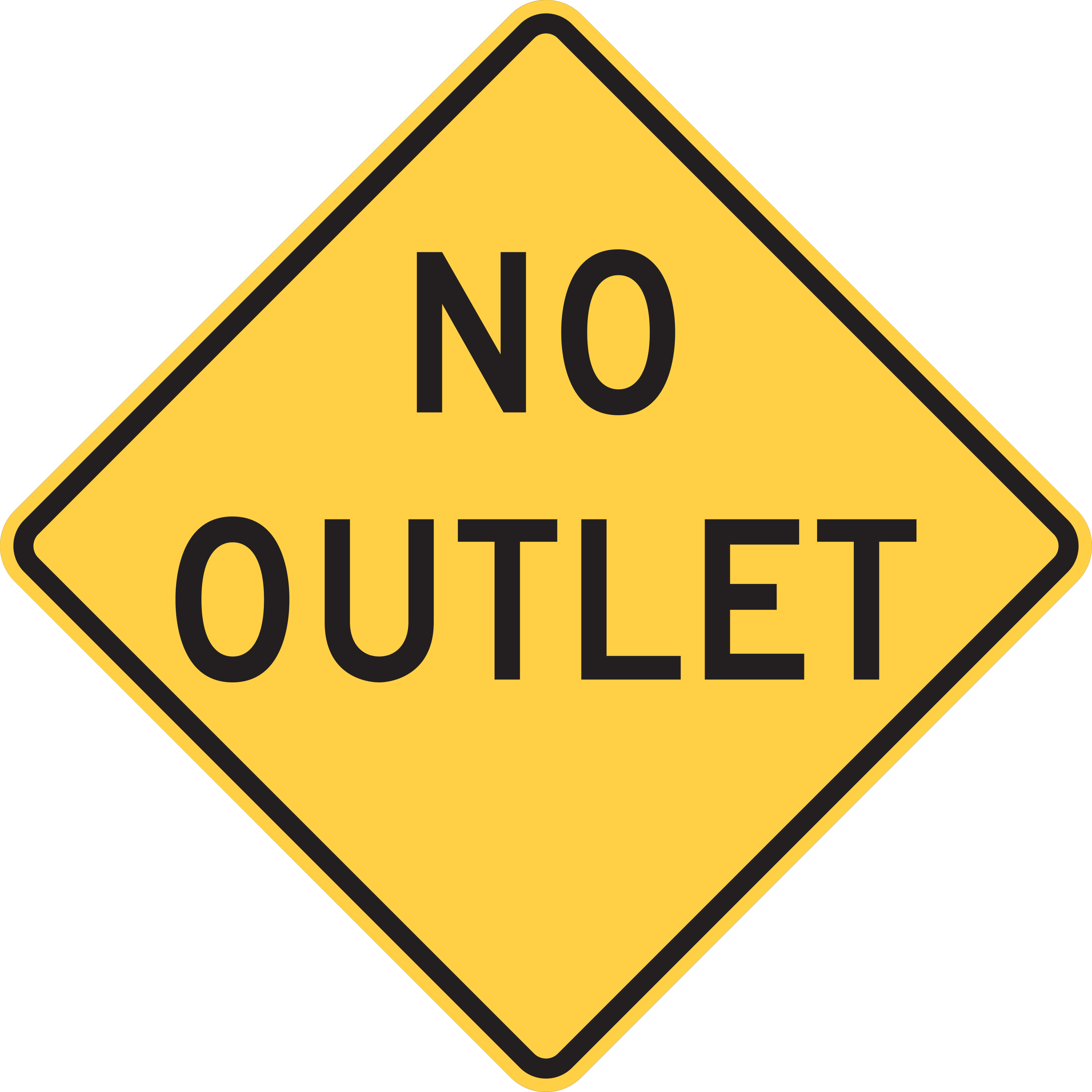
Yellow diamond with black NO OUTLET lettering.

No Outlet sign

NO OUTLET warns that the road or road network ahead has no other exit.

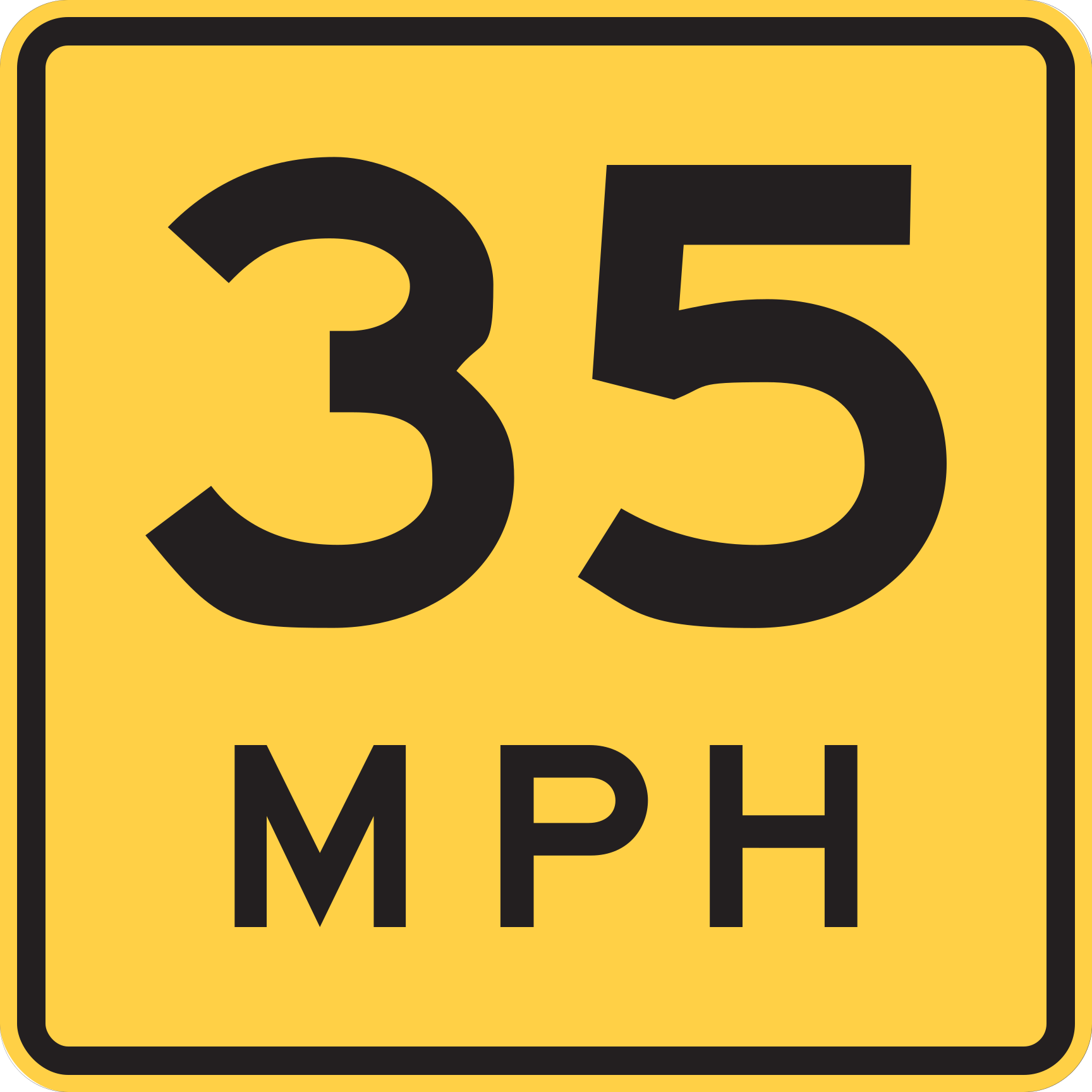
Yellow advisory-speed plaque displaying 35 MPH.

Advisory speed plaque

A yellow advisory-speed plaque supplements a warning sign with a speed recommendation for the condition ahead.

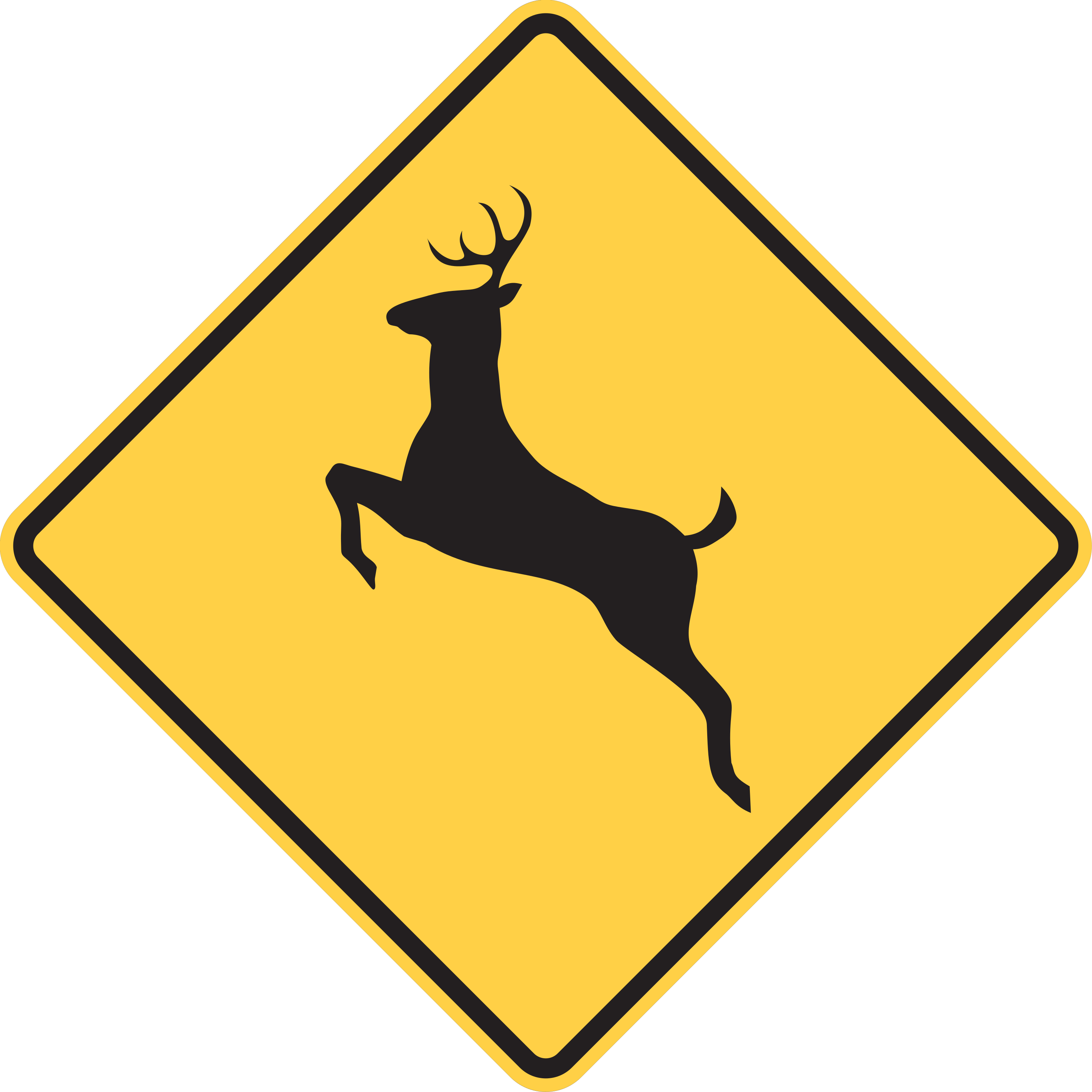
Yellow diamond with a black deer silhouette.

Deer crossing sign

The deer silhouette warns that deer may enter or cross the road.

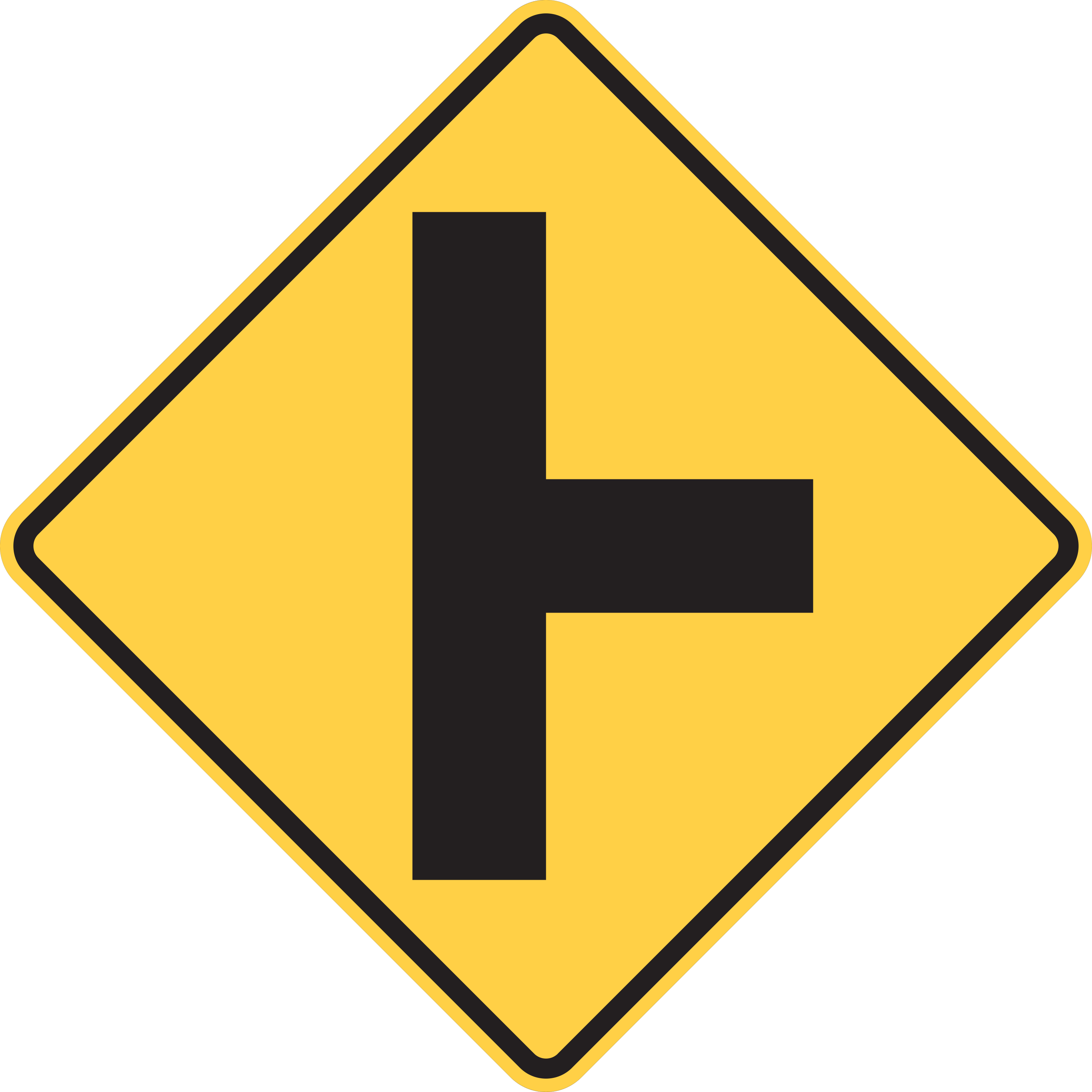
Yellow diamond with a vertical black line and a right-side branch.

Side road sign

A side road joins from the side shown by the branch.

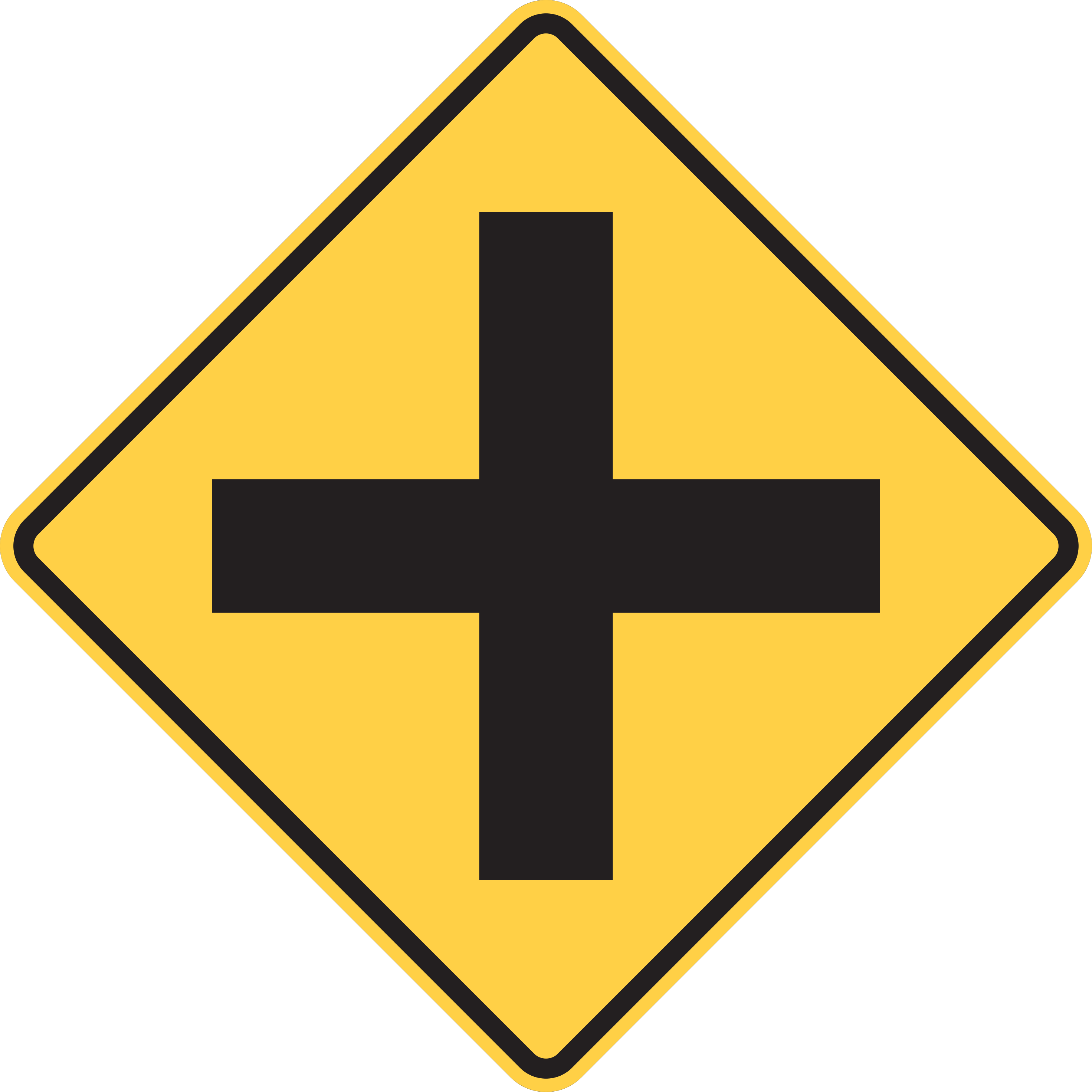
Yellow diamond with a black vertical and horizontal cross.

Crossroad sign

Another road crosses the highway ahead.

Read the message before choosing the response

Trace the path instead of guessing a turn

Follow the lines in the symbol. A merge branch joins a main path; an added-lane picture shows paths continuing separately. A lane-ending boundary narrows into the continuing lane. Those are different layouts, even when the panels share a yellow diamond. Alignment warnings likewise describe the road ahead rather than automatically directing a turn at a junction. Compare the pictured path before deciding which movement or nearby traffic needs your attention.

Identify the changing space or surface

Ask what changes. ROAD NARROWS concerns available width; LOW CLEARANCE concerns vertical room. BUMP and DIP describe the surface profile, while PAVEMENT ENDS describes a change of material. SOFT SHOULDER places its concern beside the traveled roadway. These messages do not call for an identical response. Read the symbol or words, relate them to your vehicle and prepare before reaching the condition rather than recognizing the diamond and overlooking the actual warning.

Distinguish advance notice from the control itself

STOP AHEAD, YIELD AHEAD and SIGNAL AHEAD prepare you for a later control. The warning panel is not the stopping location or a live traffic-signal indication. A supplemental advisory-speed plaque belongs with the particular warning above it. Read that complete assembly and the conditions around you; neither a familiar shape nor a pictured numeral supplies a universal speed or a guarantee that the same response fits every road.

Keep the pictured numbers with their particular warnings

Low clearance

An overhead obstruction ahead has the vertical clearance shown. This illustration reads 12 feet 6 inches, but the number on the sign you encounter is the one to compare with your vehicle's full height, including its load.

Reference for this example · 1

Advisory speed plaque

A yellow advisory-speed plaque supplements a warning sign with a speed recommendation for the condition ahead. The pictured 35 MPH is an example for the warned condition, not a new general regulatory limit or a guarantee of safe speed in rain, ice, or other poor conditions.

Reference for this example · 1

Reference for this example · 2

Reference for this example · 3