Crossroad Sign
A crossroad warning identifies another road crossing the one you are following. Look toward the crossing approaches and for the actual intersection controls ahead. The black cross describes the road layout; it is not a statement about which approach has priority. Keep the warning separate from the later decision to stop, yield or proceed under the signs or signals at the junction. An empty-looking approach does not turn the printed layout into a guarantee that no conflict can develop. The road branches appear on both sides of the vertical line.
What does crossroad sign mean?
Another road crosses the highway ahead. The crossing lines describe the junction layout, not railway tracks or a mandatory turn. Look for cross traffic and the actual signs or signals at the intersection.
What to do when you see it
- Watch for traffic approaching from the crossing road.
- Look ahead for the actual intersection controls.
- Keep a controlled path and do not infer priority from a yellow warning alone.
How to recognize it
- Yellow diamond with a black vertical and horizontal cross.
- The symbol has road branches, without the R letters of a railroad warning.
On the road
A rural highway has a crossroad warning before a junction. You look for traffic from the crossing road and read the controls ahead instead of assuming the cross means a railroad crossing.
Read the complete sign, not just the outline
On the exact side-road illustration in this library, there is a branch on only the right. A railroad advance warning instead uses a round yellow panel with an X and two Rs. Naming the outline and the actual marks helps separate an ordinary road intersection from railway tracks. The original questions keep their own artwork, so the practice comparison does not rely on using one generic cross picture for both subjects.
A common mistake to avoid
Do not interpret the symbol as a required turn, a T-intersection where your road ends, or a merge into one lane. Those are different layouts. Also do not infer an unprinted right-of-way rule from a yellow warning. Its supported purpose is preparation for cross traffic. Read the actual controls at the crossing and use the available view rather than adding a priority assumption to the picture.
Don’t confuse it with
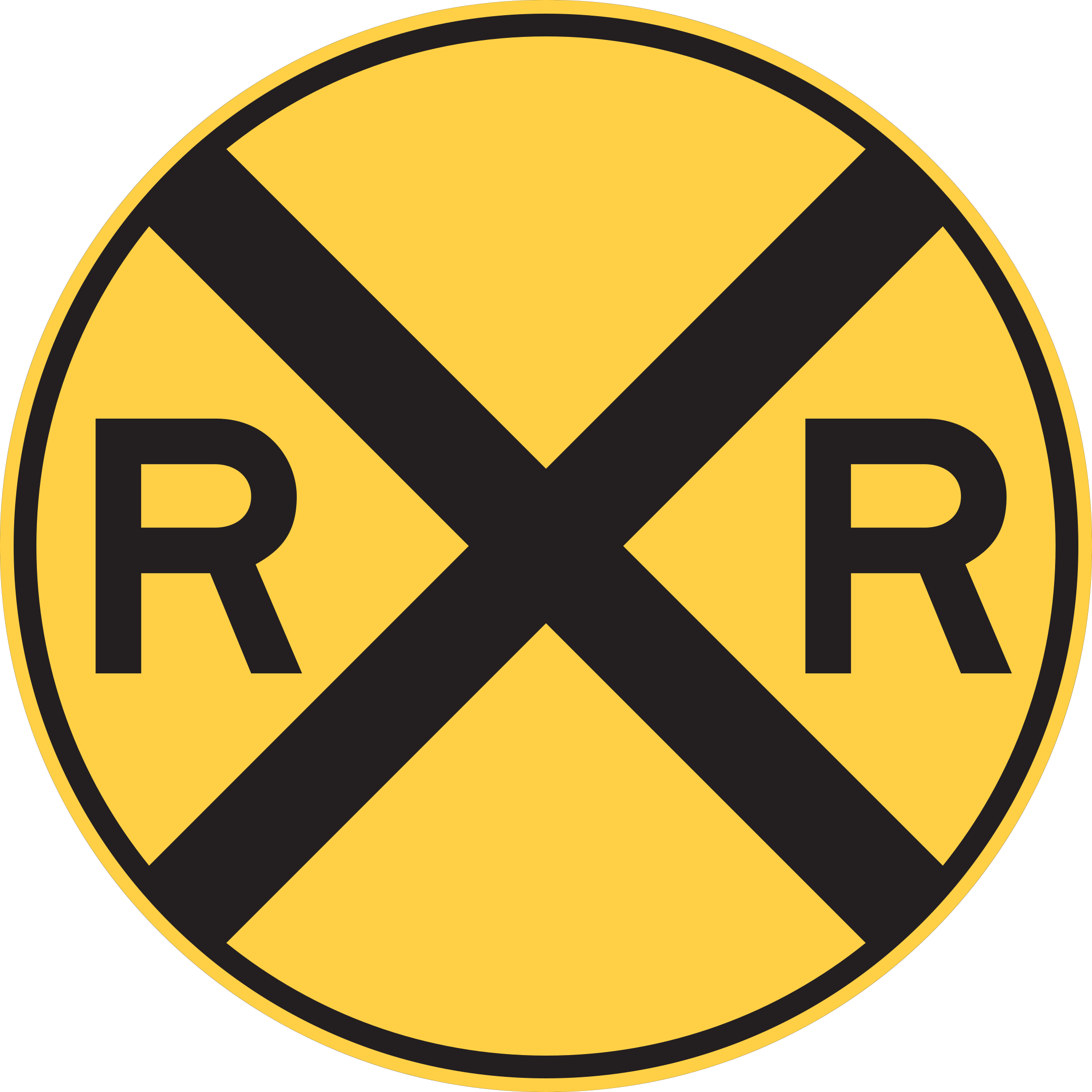
Railroad Crossing Ahead Sign
The round railroad warning has an X and two Rs; this diamond shows a road intersection.
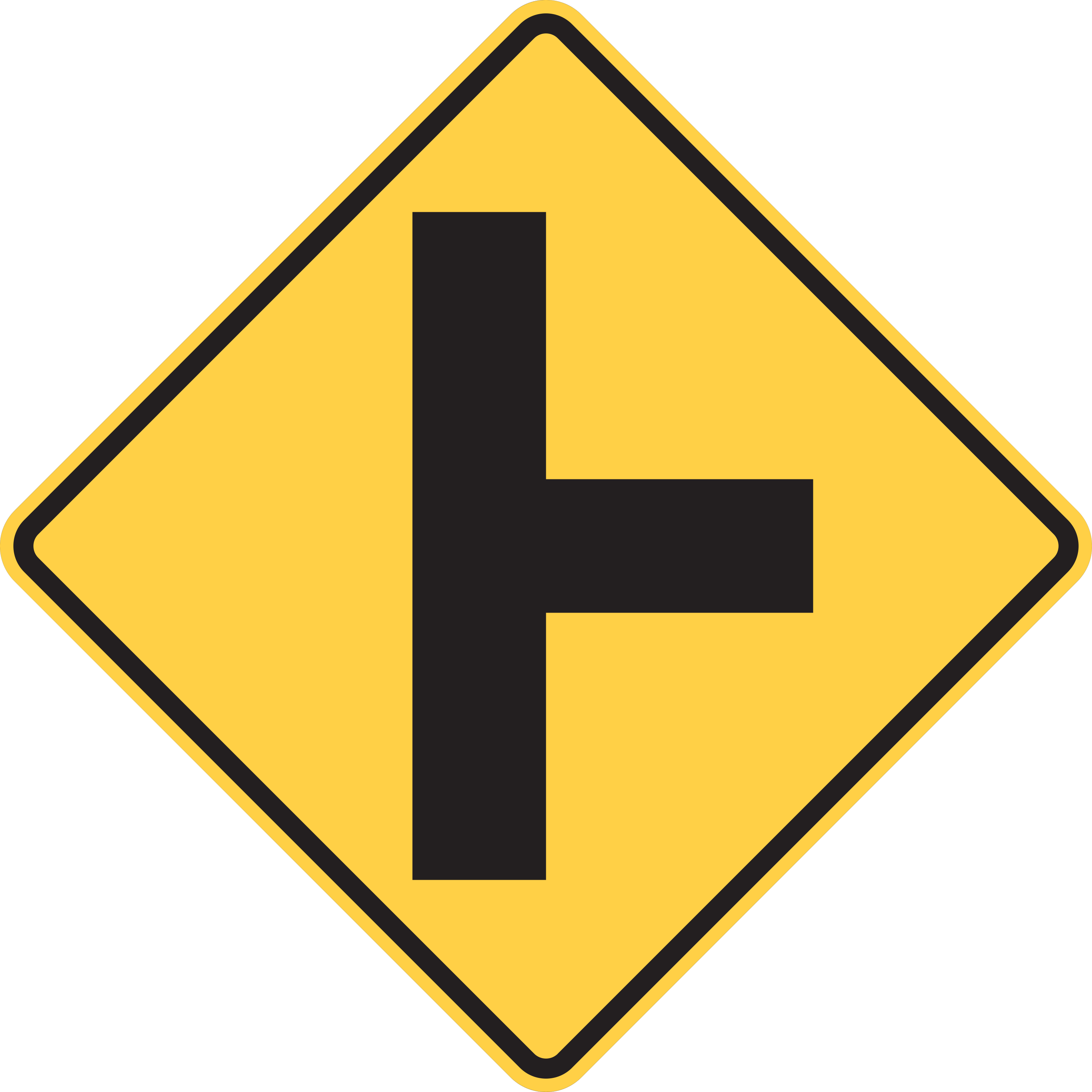
Side road sign
The crossroad has branches on both sides; the proposed side-road illustration has a branch on only the right.
Target sign and lookalikes: three-question practice
This contrast set covers crossroad sign, railroad crossing ahead sign, side road sign. Each question keeps its original illustration and source. This reference exercise does not add to state-test history or mastery.
Existing question contexts: Utah, Arizona. State-specific wording remains attached to its original question.
Study tools & help
Loading tools…
Continue with your state
Use a state-specific exercise for local rules and handbook context. These are independent practice resources, not DMV exams.