Side Road Sign
The branch in this exact illustration extends to the right, announcing a side-road intersection on that side. It is a cue to look for traffic entering or crossing your path rather than a command that every vehicle turn right. Continue reading the road and the controls at the actual junction. A warning about the layout does not, by itself, tell you that the side road has a stop sign or that every other driver has already seen you. Trace the vertical road line and the side branch.
What does side road sign mean?
A side road joins from the side shown by the branch. In this exact illustration it joins from the right. Watch for traffic entering or crossing your path; the symbol is not a command for you to turn right.
What to do when you see it
- Identify the side shown by the branch.
- Watch traffic approaching the junction and the actual controls there.
- Follow your roadway unless your lawful intended route calls for a turn.
How to recognize it
- Yellow diamond with a vertical black line and a branch to the right.
- The branch describes an intersection, not a lane-ending taper.
On the road
The sign appears before a small road joins from your right. You check that approach for entering traffic while continuing to follow your own lane and the controls at the junction.
Read the complete sign, not just the outline
Then compare it with MERGE, where a joining path becomes part of the main arrow, and LANE ENDS, where a boundary tapers inward. The similar right-hand elements describe different arrangements. This guide and its original Utah target record retain the right-side orientation; a left-side version on the road must be read in its own direction. Do not mirror a picture mentally just to make it fit a remembered answer.
A common mistake to avoid
A common error is calling every branch a lane that is ending. Another is taking the branch as an instruction to leave the main road. Neither follows from the side-road symbol. Identify the intersection, observe the traffic and follow the actual lane and controls. The three-question contrast set names the side road, merge and lane-ending messages explicitly instead of substituting one illustration for another.
Don’t confuse it with
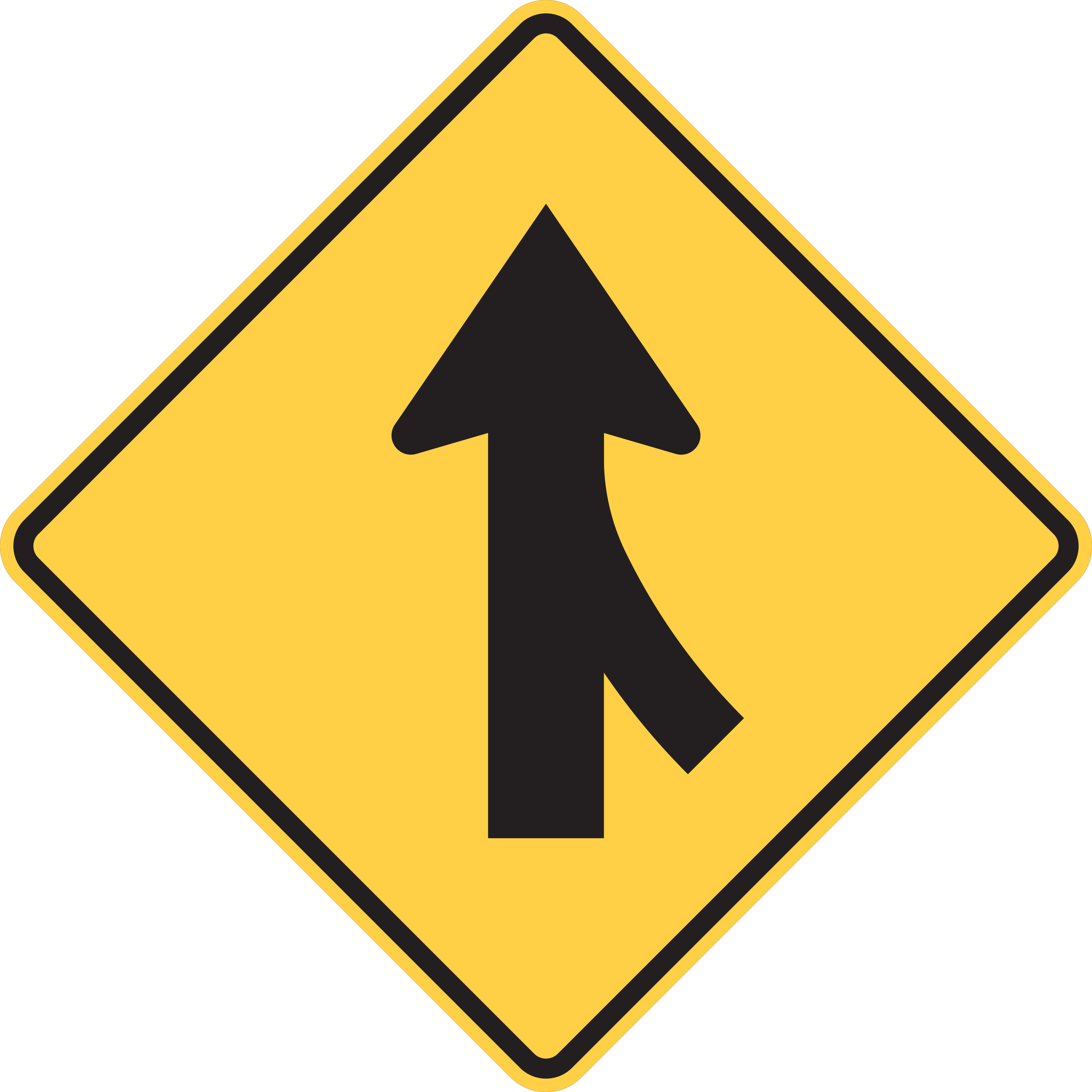
Merge Sign (Merging Traffic)
A side-road symbol identifies an intersection; the merge arrow depicts another stream joining a shared path.
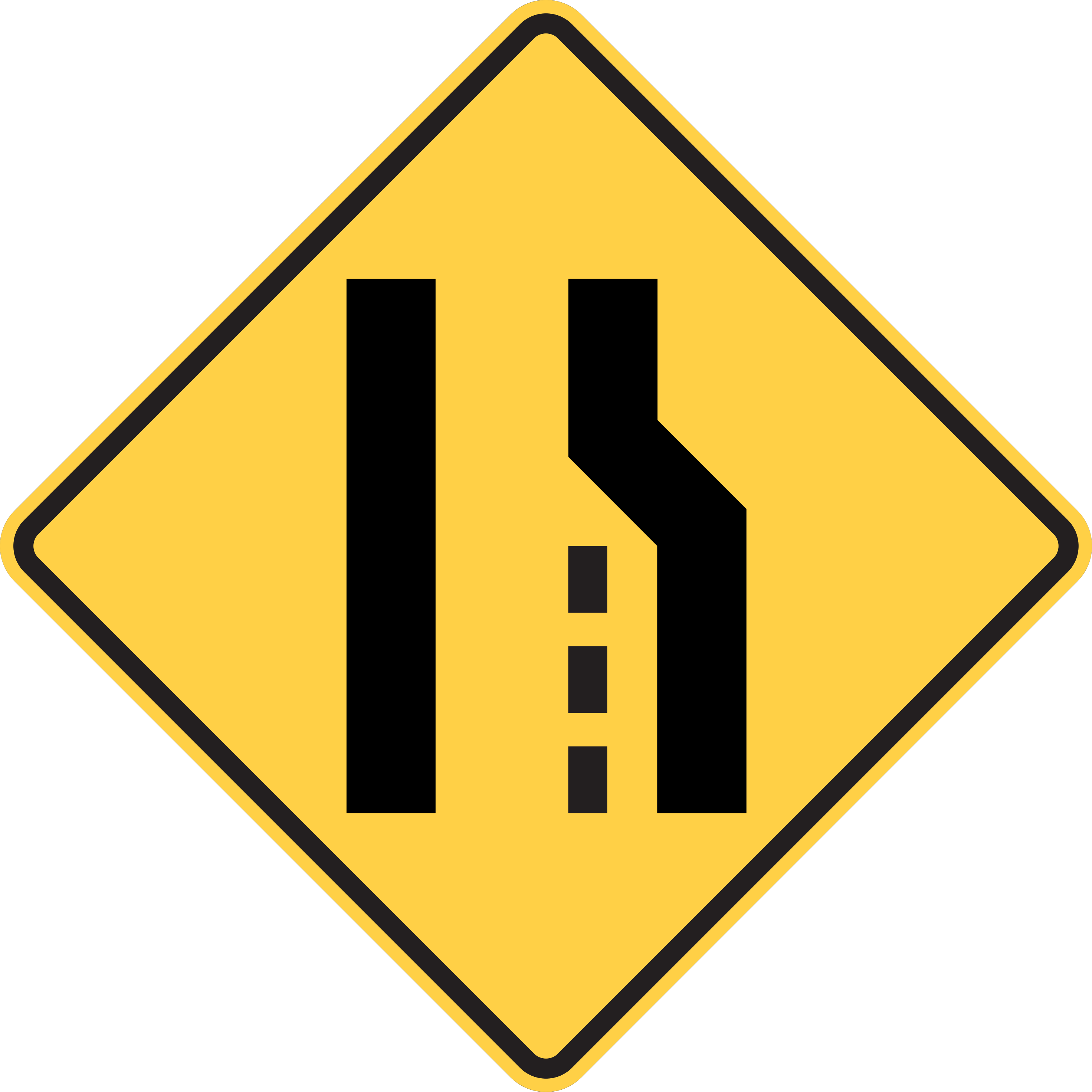
Lane ends
A tapering boundary warns of an ending lane, not a side-road junction.
Target sign and lookalikes: three-question practice
This contrast set covers side road sign, merge sign (merging traffic), lane ends. Each question keeps its original illustration and source. This reference exercise does not add to state-test history or mastery.
Existing question contexts: Utah, Arizona. State-specific wording remains attached to its original question.
Study tools & help
Loading tools…
Continue with your state
Use a state-specific exercise for local rules and handbook context. These are independent practice resources, not DMV exams.